
Editorial note: This article supports local trust-building inside UMC’s broader digital marketing cluster and pairs closely with local SEO, website trust signals, and social proof strategy.
Your online reputation is the single most important factor influencing whether potential customers choose your business or your competitor’s. Before anyone visits your website, calls your phone, or walks through your door, they check your reviews. In Lucknow, where word-of-mouth has always been powerful, online reviews have amplified this effect to an unprecedented scale. A single negative review can cost you dozens of customers, while a strong review profile can be your most powerful marketing asset.
This guide covers everything you need to know about online reputation management for businesses in Lucknow, from building a stellar reputation from scratch to recovering from reputation damage.
The Business Impact of Online Reputation
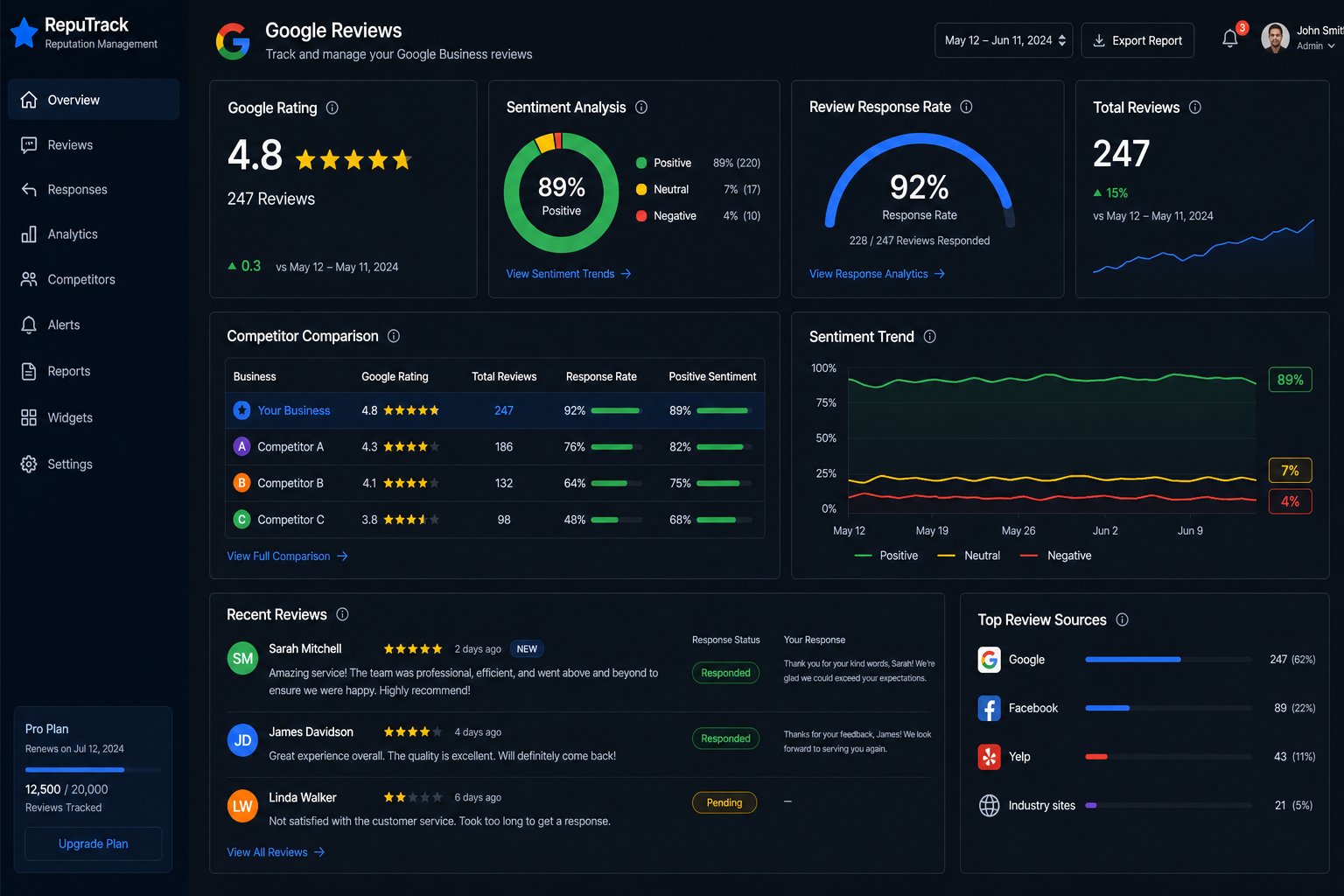
Research consistently demonstrates that online reputation directly impacts revenue:
- 93% of consumers read online reviews before making a purchase decision
- 84% of people trust online reviews as much as personal recommendations from friends
- Businesses with 4.5+ star ratings receive 3-5x more enquiries than those with lower ratings
- A one-star improvement in average rating increases revenue by 5-9%
- Businesses with 100+ reviews are perceived as more established and trustworthy than those with fewer reviews
- Negative reviews deter 60% of potential customers from considering a business
- Businesses that respond to reviews are 1.7x more trustworthy than those that do not
Where Your Reputation Lives: The Key Platforms
| Platform | Importance | Best For | Impact on SEO |
|---|---|---|---|
| Google Reviews | Essential (highest impact) | All businesses | Directly impacts local rankings |
| Justdial | Very High (India-specific) | Local services, restaurants | Indirect impact through citations |
| Facebook Reviews | High | Consumer businesses, brands | Social signals for SEO |
| Practo | Essential | Doctors, clinics, hospitals | Healthcare-specific rankings |
| Zomato | Essential | Restaurants, cafes | Food-specific discovery |
| TripAdvisor | High | Hotels, tourism, restaurants | Tourism-specific discovery |
| Google Play/App Store | High | App-based businesses, e-commerce | App store rankings |
| Medium-High | B2B businesses, professionals | Professional credibility |
Building a 5-Star Reputation: A Systematic Approach
Step 1: Deliver Exceptional Experiences
No amount of marketing can compensate for consistently poor experiences. The foundation of a strong reputation is genuinely excellent products and services. Focus on:
- Exceeding customer expectations at every touchpoint
- Training staff to deliver consistent, professional service
- Resolving problems quickly and generously when they occur
- Collecting feedback proactively and acting on it
- Creating memorable moments that customers want to share
Step 2: Make Reviewing Effortless
The easier you make it for happy customers to leave reviews, the more reviews you will receive:
- Direct review links: Create short, direct links to your Google review page and share them via WhatsApp, email, SMS, and QR codes
- QR codes at premises: Display review QR codes at billing counters, reception desks, tables, and exit points where customers can scan and review in seconds
- Review cards: Physical cards with your review link that staff can hand to satisfied customers with a personal request
- Post-service timing: Send review requests within 2-4 hours of service delivery when the experience is fresh and satisfaction is highest
- Multiple platform options: Provide links to Google, Facebook, Justdial, and industry-specific platforms so customers can choose their preferred platform
Step 3: Implement a Review Generation System
Consistent review generation requires a systematic process, not ad hoc requests:
- Automated WhatsApp sequences: Automated messages sent 2-4 hours after service with personalised thank-you messages and direct review links
- Email follow-ups: For businesses with customer email addresses, automated review request emails sent 24 hours after purchase or service
- Staff incentive programmes: Reward staff members who generate the most reviews, creating internal motivation to request reviews from satisfied customers
- Review targets: Set monthly review targets (15-30 new reviews per month for most businesses) and track progress against these targets
- Review velocity monitoring: Google rewards consistent review growth. Aim for steady weekly growth rather than sporadic bursts
Step 4: Respond to Every Review
Responding to reviews is not optional. It is one of the most impactful reputation management activities:
Responding to Positive Reviews
- Thank the reviewer by name within 24 hours
- Reference specific details from their review to show you read it carefully
- Reinforce the positive experience they mentioned
- Invite them to visit again and mention upcoming offerings
- Keep responses warm, genuine, and under 100 words
Responding to Negative Reviews
- Respond within 24 hours (faster is better for damage control)
- Acknowledge their experience without being defensive
- Apologise for any shortcomings, even if you disagree with their assessment
- Explain what you are doing to address the issue
- Offer to discuss privately (provide direct contact information)
- Never argue, make excuses, or blame the customer publicly
- Follow up privately to resolve the issue and request review update
Advanced Reputation Management Strategies
Review Gating (Ethical Approach)
While you should never suppress negative reviews (this violates platform policies), you can implement ethical review gating:
- Send a satisfaction survey before the review request
- Customers who rate 4-5 stars receive a direct review link
- Customers who rate 1-3 stars receive a private feedback form where you can address their concerns before they post publicly
- This approach captures negative feedback privately while encouraging positive reviews publicly
Reputation Monitoring and Alerts
Stay informed about what people are saying about your business across all platforms:
- Set up Google Alerts for your business name to receive email notifications of new mentions
- Use reputation management tools that monitor reviews across multiple platforms simultaneously
- Check your Google Business Profile daily for new reviews and Q&A entries
- Monitor social media mentions and tags for both positive and negative content
- Track competitor reviews to understand their strengths and weaknesses relative to yours
Building Social Proof Beyond Reviews
Reviews are one form of social proof. Strengthen your reputation with additional trust signals:
- Customer testimonials: Detailed written and video testimonials on your website that tell complete customer stories
- Case studies: In-depth case studies showing specific results achieved for specific clients
- Media mentions: Features in newspapers, magazines, TV, and online publications that validate your expertise
- Awards and certifications: Industry awards, professional certifications, and recognitions that demonstrate excellence
- Trust badges: Security badges, payment badges, and partnership logos on your website that reduce purchase anxiety
- User-generated content: Customer photos, videos, and social media posts that provide authentic social proof
Reputation Recovery: Fixing a Damaged Reputation
If your business has accumulated negative reviews or suffered a reputation crisis, recovery is possible with a systematic approach:
Step 1: Honest Assessment
Before attempting to fix your reputation, honestly assess whether the negative feedback contains valid criticisms. If customers are consistently complaining about the same issues, those issues need to be fixed at the operational level before reputation management will be effective.
Step 2: Address Root Causes
Fix the underlying problems that generated negative reviews. This might involve staff training, process improvements, product quality upgrades, or facility renovations. Reputation management without operational improvement is unsustainable.
Step 3: Aggressive Positive Review Generation
The most effective way to dilute negative reviews is to generate a large volume of positive reviews. A business with 5 negative reviews and 100 positive reviews has a 4.5-star average. The same 5 negative reviews among 20 total reviews creates a much lower average.
Step 4: Professional Response to Negatives
Respond to every negative review professionally and empathetically. Well-crafted responses to negative reviews can actually build trust with future customers who see that you take feedback seriously and handle criticism gracefully.
Step 5: Content Marketing for Reputation
Create positive content that ranks in search results for your business name. Blog posts, press releases, social media profiles, and directory listings that appear when people search for your business push negative content lower in search results.
Reputation Management by Industry
| Industry | Critical Platforms | Key Reputation Factors | Review Target |
|---|---|---|---|
| Restaurants | Google, Zomato, TripAdvisor | Food quality, service, ambience, hygiene | 20-50 new reviews/month |
| Hotels | Google, Booking.com, TripAdvisor | Cleanliness, service, location, value | 15-40 new reviews/month |
| Healthcare | Google, Practo, Justdial | Doctor expertise, wait times, outcomes, bedside manner | 15-30 new reviews/month |
| Schools | Google, Facebook, education portals | Academic results, faculty, infrastructure, safety | 10-20 new reviews/month |
| Real Estate | Google, MagicBricks, 99acres | Transparency, delivery, quality, trust | 10-25 new reviews/month |
| Salons | Google, Instagram, Justdial | Quality, hygiene, pricing, staff behaviour | 15-30 new reviews/month |
Frequently Asked Questions
How many Google reviews do I need?
For competitive visibility in Lucknow, aim for a minimum of 50 reviews with a 4.5+ star average. For top Map Pack rankings in competitive categories, 100-200+ reviews may be necessary. The key metrics are review count (more is better), average rating (4.5+ is ideal), and review velocity (consistent weekly growth signals an active, trusted business).
Can I remove negative Google reviews?
You cannot remove legitimate negative reviews. Google only removes reviews that violate their policies: fake reviews, spam, off-topic content, conflicts of interest, or inappropriate content. You can flag reviews that violate policies for Google’s review, but approval rates are low. The best approach is to respond professionally to negatives and generate more positive reviews to dilute their impact on your average rating.
Is it legal to incentivise reviews?
Offering incentives for Google reviews violates Google’s policies and can result in review removal or profile suspension. However, you can incentivise feedback collection (surveys, feedback forms) without tying incentives to positive reviews specifically. Never offer discounts, free products, or payments in exchange for Google reviews. Focus on making the review process effortless and requesting reviews at moments of maximum satisfaction.
How do I monitor my online reputation?
Set up Google Alerts for your business name, check your Google Business Profile daily, monitor industry-specific platforms (Practo, Zomato, etc.) weekly, and use reputation management tools for comprehensive cross-platform monitoring. A professional digital marketing agency can manage this monitoring as part of a comprehensive reputation management service.
How long does reputation recovery take?
Reputation recovery depends on the severity of damage and the volume of positive reviews you can generate. Mild reputation issues (a few negative reviews) can be recovered in 1-3 months through aggressive positive review generation. Severe reputation damage (many negative reviews, media coverage) may take 6-12 months of sustained effort. The key is consistent positive review generation combined with genuine operational improvements.
How does reputation management connect to my overall marketing?
Online reputation is the foundation that makes all other marketing more effective. Strong reviews improve local SEO rankings, increase Google Ads click-through rates, boost Meta Ads conversion rates, and increase website conversion rates. Every marketing rupee you spend delivers better results when supported by a strong online reputation. Invest in reputation management first, then scale other marketing channels.
Ready to Build a 5-Star Online Reputation?
Get a free reputation audit and discover exactly how your business appears to potential customers online. Contact UMC today and start building the reputation your business deserves.
Related trust and visibility resources
- Local SEO Guide: How to Rank Your Business on Google Maps in Lucknow — where reviews directly influence local visibility and trust.
- B2B Website Essentials for Tier-2 Cities — website proof points that reinforce reputation.
- Social Media Marketing Strategy for Small Businesses in Lucknow — owned social presence that supports public perception and brand consistency.
- Best Digital Marketing Company in Lucknow — partner-selection guidance if reputation and visibility issues require outside support.




1 comment