Visual content planning, seasonal pin calendars, and trend-based creative
Shopping Campaigns
Catalog integration, shopping pins, and product promotion optimization
Audience Targeting
Interest targeting, keyword targeting, actalike audiences, and retargeting
Creative Production
Pin design, video pins, idea pins, and carousel creation
Key Results
2-4x ROAS, 50% lower CPC than Facebook, high purchase intent traffic
Investment
$2,000-$6,000/month management + ad spend
Pinterest is a visual discovery and planning platform where people search, save, organize, and act on ideas. Users may be planning a purchase, designing a home, preparing an event, researching a product, exploring a recipe, choosing a service, or building a future project. This creates an important advertising opportunity: brands can reach people while they are forming preferences and considering what to do next.
Pinterest advertising is not simply a process of uploading an image. High-performing campaigns require strong visual communication, search-aware copy, accurate product data, relevant keywords, useful landing pages, conversion tracking, audience strategy, seasonal planning, and a clear understanding of the time between discovery and purchase.
Unified Management Consulting helps businesses connect Pinterest Ads Manager, business accounts, audiences, product catalogues, product groups, Pinterest Tag, Conversions API, ecommerce platforms, CRM data, creative production, and management reporting into one measurable growth system.
Illustrative Cost-per-Purchase or Qualified-Lead Graph
This graph is an illustrative planning model, not a performance guarantee. Actual Pinterest results depend on product, creative, offer, audience, seasonality, budget, competition, tracking, and customer behavior.
textIllustrative cost per qualified action

100 | ████████████████████████████████████████  Baseline audit
 90 | ██████████████████████████████████        Creative and keyword refinement
 81 | ███████████████████████████████           Tag and event repair
 72 | ███████████████████████████               Landing-page improvement
 63 | ███████████████████████                   Catalogue and product-group cleanup
 54 | ███████████████████                       Retargeting and offer optimization
 45 | ███████████████                           Controlled seasonal scaling
     +-------------------------------------------------------------------
       Month 1       Month 2       Month 3       Month 4       Month 5
The Pinterest Advertising Customer Journey
textCustomer intent, seasonality, and visual category research
                     ↓
Keyword, interest, audience, and creative hypothesis
                     ↓
Promoted Pin, video, carousel, collection, or shopping impression
                     ↓
Save, close-up, outbound click, product view, or catalogue interaction
                     ↓
Website visit, signup, add-to-cart, checkout, booking, or purchase
                     ↓
Accurate event tracking and customer qualification
                     ↓
Revenue, margin, repeat purchase, and customer lifetime value
                     ↓
Creative, keyword, catalogue, audience, and budget optimization
Example Pinterest Advertising Message Table
Customer intent
Pin title or headline
Description direction
Creative format
CTA
Product discovery
Ideas for a More Organized Home
Explore practical products and simple ways to create a better daily setup.
Vertical lifestyle image or carousel
Shop now
Seasonal planning
Plan Your Next Celebration With Confidence
Discover a step-by-step guide, product ideas, and expert recommendations.
Collection or video Pin
Explore ideas
High-intent product
Find the Right [Product Category]
Compare features, view details, and choose an option that fits your needs.
Product Pin or carousel
View products
Service research
A Better Way to Plan Your Project
Get useful guidance, examples, and a clear next step from experienced specialists.
Educational video or image
Learn more
Retargeting
Still Considering Your Saved Ideas?
See the details, proof, availability, and next step that can help you decide.
Product carousel
Complete your purchase
What Are Pinterest Advertising Management Services?
Pinterest advertising management services cover the strategy, planning, setup, creative, targeting, launch, monitoring, optimization, and reporting of paid campaigns in Pinterest Ads Manager. Depending on the business model and current platform features, services may include:
Awareness and reach campaigns.
Consideration and traffic campaigns.
Video-view campaigns.
Conversion campaigns.
Catalogue sales and shopping campaigns.
Standard image or Promoted Pin campaigns.
Video Pins.
Carousel Pins.
Collection Pins.
Product-focused and shopping formats.
Lead-generation or signup campaigns where available.
App promotion campaigns where available.
Keyword targeting.
Interest and category targeting.
Customer-list and visitor audiences.
Actalike or similar audience strategies where available.
Engagement and pin-interaction retargeting.
Product-view, cart, and checkout retargeting.
Seasonal and event-driven campaigns.
Local service and appointment campaigns.
Professional management can also include Pinterest Business account governance, Pinterest Tag implementation, enhanced match, Conversions API assessment, product feed and catalogue management, product groups, event mapping, UTM conventions, domain review, audience exclusions, creative testing, landing-page recommendations, ecommerce integration, CRM reporting, and executive dashboards.
Why Pinterest Advertising Is Different From Other Paid Media
Pinterest users often discover ideas before they are ready to buy. A person may save a product, recipe, destination, room design, outfit, project plan, or service idea and return later. This creates a longer and more visually driven path to conversion than a direct-response search query.
Pinterest combines discovery with planning. Advertising should therefore be useful, relevant, inspirational, and actionable. A product image can attract attention, but a stronger Pin may also show the product in context, explain the benefit, provide a useful idea, and lead to a page that continues the visual story.
Search-aware language matters because people actively search Pinterest. However, keyword targeting should not lead to robotic titles or descriptions. The creative and copy must serve both user intent and the platform’s understanding of the category.
Seasonality is also important. People may plan holidays, weddings, renovations, education, purchases, celebrations, or lifestyle changes well before the event. A campaign that starts only when demand peaks may miss the planning window. Unified Management Consulting helps businesses plan creative, budgets, catalogue updates, and retargeting around the customer’s decision calendar.
Our Pinterest Advertising Management Process
1. Business, Customer, and Category Discovery
We begin by understanding your products, services, customer segments, average order value, gross margin, sales cycle, geographic market, visual identity, inventory, offer, seasonal demand, and business objectives.
We identify whether Pinterest should support:
Product discovery and ecommerce sales.
Seasonal demand generation.
Home, lifestyle, fashion, beauty, food, travel, or event planning.
Lead generation and service enquiries.
Local appointments and project research.
Content distribution and education.
Product launches and collection awareness.
Catalogue retargeting.
App promotion.
Cross-sell, replenishment, and repeat purchase.
We also assess the offer and the customer’s planning stage. A cold audience may need inspiration or education. A product viewer may need specifications, proof, reviews, availability, or shipping information. A cart user may need reassurance, customer support, or a clear reason to complete the purchase.
2. Pinterest Business Account and Ads Manager Audit
For existing advertisers, we review the Pinterest Business account, ad account, claimed website, profile connection, billing, user access, Pinterest Tag, Conversions API where applicable, audiences, catalogues, product groups, campaigns, ad groups, Pins, keywords, interests, placements, budgets, bids, and reporting.
The audit can identify:
Campaign objectives that do not match the real business goal.
Traffic campaigns being used when purchase or lead signals are available.
Keyword targeting that is too broad, too narrow, or poorly grouped.
Duplicate audience segments competing for budget.
Missing exclusions for purchasers, leads, or existing customers.
Product feeds with incorrect prices, links, images, or availability.
Product groups that combine products with different margins or goals.
Tags firing on page views rather than completed actions.
Missing purchase values or currencies.
Duplicate checkout or purchase events.
Landing pages that are slow or inconsistent with the Pin.
Creative that lacks vertical mobile formats.
Seasonal campaigns launched too late.
Inconsistent UTM parameters and analytics reporting.
Account access, domain, or policy issues.
We prioritize measurement and tracking problems before recommending additional budget. Scaling a campaign with unreliable conversion data can make automated optimization less effective and obscure the true business result.
3. Campaign and Ad Group Architecture
Pinterest campaigns are typically organized around a campaign objective, ad groups, targeting, budget, schedule, and creative. We structure accounts around meaningful differences such as:
Prospecting and retargeting.
Catalogue sales and non-catalogue traffic.
Product category or margin group.
Seasonal versus evergreen campaigns.
Geographic market or service area.
Lead generation and ecommerce purchase.
New customers and repeat customers.
Keyword, interest, or audience strategy.
Product launch and established collection.
Creative testing and scaling.
Over-segmentation can split budget and data among too many ad groups. Under-segmentation can make it difficult to understand which products, seasons, audiences, or creative approaches are creating value. We choose a structure appropriate to budget, catalogue size, conversion volume, audience size, and reporting requirements.
Naming conventions should identify campaign objective, audience, market, product or service group, and status. Governance may include account access, ownership of the Business account and catalogue, billing, change history, approval requirements, tracking documentation, and UTM standards.
Keyword and Search-Intent Strategy
Pinterest visual discovery advertising integrated with social media campaign management
Pinterest is a visual platform, but search behavior is still important. Users may search for product ideas, style inspiration, project steps, recipes, destinations, services, comparisons, or solutions. Keyword research should reflect how users plan and describe the problem.
Keyword Research Categories
We organize keywords by:
Product and category.
Problem and solution.
Style, theme, and visual preference.
Season, event, or occasion.
Location.
Project stage.
Customer type.
Commercial intent.
Educational intent.
Comparison and research intent.
For example, someone searching for “small kitchen storage ideas” may be earlier in the journey than someone searching for a specific storage product. Both searches may be useful, but they require different creative, landing pages, and measurement expectations.
Keyword-to-Creative Mapping
A Pin should answer the intent behind the search. Keyword relevance alone is insufficient if the image or video does not show the promised idea. We map important keyword themes to creative concepts, titles, descriptions, landing pages, and product sets.
We also examine search and delivery data for new terms, irrelevant queries, seasonal opportunities, and language customers use that may improve product descriptions, landing pages, or organic content.
Audience Strategy for Pinterest Advertising
Pinterest audience strategy may include keyword audiences, interests, categories, customer lists, website visitors, engagement audiences, product viewers, checkout users, catalogue audiences, and similar or Actalike audiences where available.
Interest and Category Targeting
Interest targeting can help reach people who engage with a broad subject, style, or category. Interest audiences may be useful for discovery, but broad interest does not necessarily indicate a purchase. We evaluate audience quality using downstream traffic, product views, add-to-cart rate, leads, purchases, revenue, and customer value.
Customer and Visitor Audiences
Customer lists can support retention, cross-sell, exclusion, and reactivation, subject to platform eligibility and privacy requirements. Website audiences can distinguish recent visitors, product viewers, cart users, purchasers, and content readers.
Audience windows should reflect the buying cycle. A customer researching a wedding service may need a longer window than a shopper buying a replenishable product. We align the audience period, creative, offer, and frequency.
Similar or Actalike Audiences
Where available, similar or Actalike audiences can help locate people who resemble a source audience. Source quality matters. A source based on high-value customers or completed purchases may be more commercially useful than a source based on all website visitors. We test audience size, geography, source definition, exclusions, and incremental performance.
Retargeting and Exclusions
Retargeting may include users who viewed a product, saved a Pin, visited a page, added to cart, started checkout, engaged with content, or purchased previously. Exclusions help prevent acquisition campaigns from spending on customers who have already completed the goal.
A recent product viewer may need detailed product proof, while an old content visitor may need a stronger offer or updated inspiration. Retargeting should progress the customer journey instead of repeating the same message.
Creative Strategy and Pin Development
Pinterest is a visual discovery environment, so creative should be useful, attractive, clear, and aligned with user intent. A successful Pin can inspire an idea, show a product in context, explain a process, demonstrate an outcome, or help the user make a decision.
Creative Testing Matrix
Variable
Examples to test
Strategic question
Visual hook
Product close-up, before-and-after, lifestyle scene, process, result
Does the image stop discovery behavior?
Format
Standard image, vertical video, carousel, collection, catalogue
Standard image creative should be visually clear on mobile and communicate one primary idea. We review aspect ratio, text readability, contrast, image quality, brand visibility, product context, title, description, destination, and call to action.
The image should not be overloaded with small text. It should show the outcome, product, project, or idea in a way that makes the destination page feel like a natural continuation.
Video Pins
Video can demonstrate a product, explain a process, present a tutorial, show a transformation, tell a customer story, or create seasonal inspiration. The opening should establish the topic quickly. Captions and visual context matter because sound may not be used.
We evaluate video starts, watch time, completion, outbound clicks, product views, saves, leads, and purchases. High view volume without meaningful downstream action should not be treated as a complete success.
Carousel Pins
Carousels can show multiple products, steps, styles, benefits, room views, use cases, or a complete project sequence. Each card should contribute to the narrative. We compare card order, product grouping, first-image hook, and action behavior.
Collection and Shopping Formats
Collection and catalogue formats can combine a hero image or video with product items. They are valuable when the product feed, product groups, prices, stock, images, and links are accurate. Creative and catalogue data should tell the same story.
Seasonal and Evergreen Creative
Pinterest planning often happens before a seasonal event. We build a calendar that accounts for preparation windows, launch periods, peak demand, and post-event retargeting. Evergreen creative can support stable demand, while seasonal creative can use relevant products, themes, dates, and offers.
Pinterest Tag and Conversion Tracking
The Pinterest Tag can support conversion tracking, audience creation, and campaign optimization. Implementation may use direct website code, a tag manager, an ecommerce integration, a partner integration, or another supported deployment.
Common events may include:
PageVisit.
ViewCategory.
Search.
ViewContent.
AddToCart.
Checkout.
Signup.
Lead.
WatchVideo.
Custom event.
Purchase.
App or registration events where supported.
Events should fire at the correct stage. A Purchase event should fire after a completed transaction, not on a checkout page or page refresh. A Lead event should represent a completed lead action. A ViewContent event should identify the intended product or content where possible.
Event Parameters and Values
Ecommerce events may pass product IDs, product names, product category, value, currency, quantity, order ID, and other supported information. Lead or service events may pass service category, estimated value, location, or lead type where appropriate and permitted.
We review event names, data-layer values, currency, decimal formatting, transaction IDs, order status, refunds, cancellations, failed payments, and duplicate event behavior.
Enhanced Match and Conversions API
Where available and appropriate, enhanced match or server-side conversion methods can supplement browser signals. These approaches may improve measurement resilience, but they require privacy-aware data handling, consent, normalization, identity matching, event mapping, deduplication, and testing.
The correct technical setup depends on the website, ecommerce platform, CRM, consent management platform, developer resources, and business requirements. We recommend a practical implementation that supports decisions without creating unnecessary complexity.
Domain and Data Governance
We review website ownership, domain configuration, tag permissions, user access, partner access, consent behavior, privacy notices, data retention, and the flow of customer information. Tracking design should reflect applicable requirements and internal governance.
Ecommerce, Catalogues, and Shopping Campaigns
Pinterest can be highly effective for ecommerce because people use the platform to discover, save, plan, and compare products. Catalogue advertising depends on clean product data and accurate event matching.
We review:
Product feed structure.
Product titles and descriptions.
Images and variants.
Product IDs and event matching.
Price and availability synchronization.
Product categories and attributes.
Product groups.
Disapproved or missing items.
Shipping, returns, and tax information.
Seasonal and promotional fields.
Bestsellers, new products, and high-margin groups.
Product-view and purchase retargeting.
Purchase value, returns, and profit treatment.
Custom product groups can separate products by margin, stock, seasonality, bestseller status, price range, collection, newness, or strategic priority. Revenue alone may not be enough for decision-making where fulfilment, returns, shipping, and product margin differ significantly.
Ecommerce Funnel Table
Funnel stage
Example action
Technical signal
Management question
Discovery
Pin impression or save
Impression / engagement
Is the creative reaching relevant planners?
Product interest
Product click or detail view
ViewContent
Does the Pin create purchase curiosity?
Consideration
Add to cart
AddToCart
Is the product page persuasive?
Checkout
Checkout started
Checkout
Is there friction in payment or delivery?
Purchase
Order completed
Purchase
Are value and order IDs accurate?
Retention
Repeat order or cross-sell
Purchase with customer segment
Is advertising increasing lifetime value?
Lead Generation and Service Advertising
Pinterest is often associated with ecommerce, but it can also support service discovery, project planning, education, local enquiries, events, and consultations. A strong service campaign uses visual education, examples, proof, process information, and a clear next step.
Lead paths may include website forms, appointment booking, consultation requests, downloads, event registration, phone calls, or other supported actions. Each action should have a clear event and follow-up process.
Lead Quality Table
Metric
What it helps answer
Limitation
Cost per lead
What did it cost to capture a contact?
Does not show relevance
Form completion rate
Is the form too difficult?
Easy forms can attract weak leads
Contact rate
Can the team reach the lead?
Reachability is not qualification
Qualified-lead rate
Is the audience and offer aligned?
Requires consistent qualification
Appointment rate
Does the funnel create a next step?
Attendance and closing still matter
Customer acquisition cost
What did it cost to win a customer?
Needs customer value for context
Revenue or gross profit
What commercial value was created?
Does not automatically prove incrementality
Landing Pages and Visual Conversion Rate Optimization
The landing page should continue the story begun by the Pin. If a user clicks on a product image, project idea, seasonal guide, or service example, the destination should show the expected content quickly and clearly.
We review:
Mobile speed and page stability.
Image loading and visual hierarchy.
Message match between Pin and page.
Product, service, or project details.
Pricing, availability, delivery, and service-area information.
Reviews, testimonials, and trust signals.
Form length and checkout steps.
Click-to-call or booking options.
Privacy and security information.
UTM preservation through redirects.
Tag and event firing on completion.
Thank-you pages and downstream actions.
High outbound clicks with low conversion may indicate page friction, weak offer, mismatched expectations, missing product information, or tracking errors. We identify the likely cause through funnel analysis and prioritized testing.
Campaign Objectives, Optimization, and Bidding
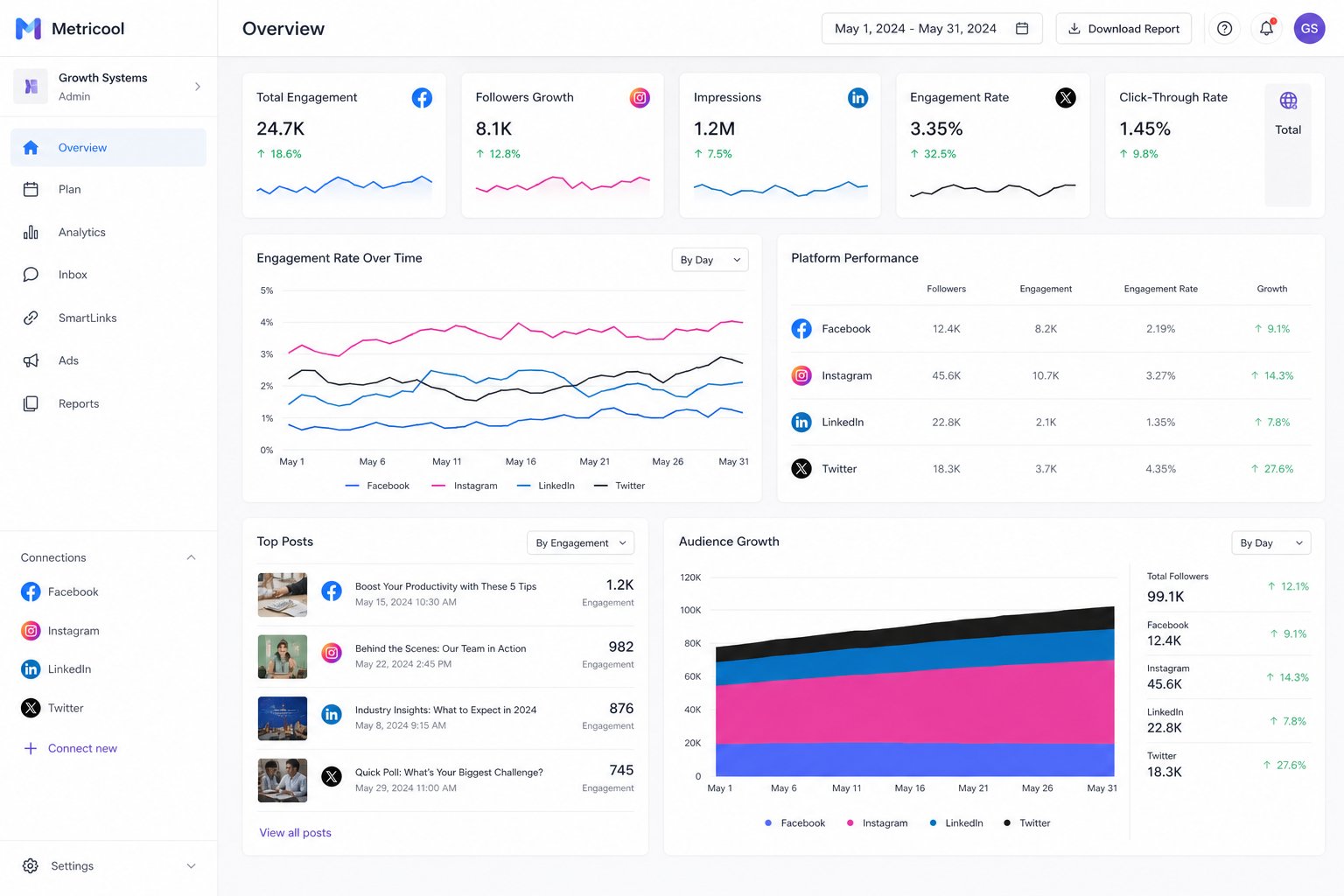
Analytics tracking visual content performance and audience engagement across platforms
Pinterest campaign objectives and available optimization choices may change by account, region, and platform update. We select the objective that most closely matches the real business goal, such as awareness, video views, consideration, traffic, conversions, catalogue sales, shopping, leads, or app activity where available.
Traffic optimization can be useful for content discovery, but it should not replace conversion optimization when sales or leads are the actual objective. A catalogue sales campaign requires reliable product and purchase data. A lead campaign needs a meaningful lead event and qualification process.
We review:
Campaign objective and conversion location.
Optimization event and event volume.
Bidding and delivery settings.
Budget and pacing.
Audience size and overlap.
Keyword and interest relevance.
Creative diversity and fatigue.
Conversion lag and attribution window.
Revenue, margin, and customer value.
Seasonal demand and planning lead time.
Automated delivery is only as strong as the signals supplied. Duplicate events, incorrect values, missing purchases, and low-value micro-conversions can lead the platform toward the wrong outcome.
Budget Planning and Scaling
Pinterest budget planning should account for the size of the audience, planning period, seasonal demand, product margin, average order value, conversion rate, customer lifetime value, creative supply, and operational capacity.
We evaluate:
Total addressable and seasonal audience.
Estimated reach and frequency.
Expected CPM, CTR, and conversion rate.
Acceptable and break-even CAC.
Margin, shipping, refunds, and returns.
Product availability and stock.
Creative production capacity.
Testing budget and scaling budget.
New versus returning customer value.
Preparation time before peak demand.
Scaling may involve new Pin concepts, additional formats, stronger keyword coverage, broader interests, catalogue expansion, seasonal launches, new product groups, better landing pages, or improved conversion-value feedback. It should not mean increasing spend on a fatigued creative, poor product feed, or incorrectly measured campaign.
Frequency, Seasonality, and Creative Fatigue
Pinterest users may encounter the same creative during a planning window or repeated search activity. Frequency should be evaluated alongside audience size, campaign length, engagement, outbound clicks, conversion rate, and cost per result.
Signs of creative fatigue or saturation can include:
Declining outbound click rate.
Rising CPM or cost per result.
Lower saves and close-ups.
Falling conversion rate after stable traffic quality.
Repeated exposure within a small audience.
Declining video completion.
Increased negative feedback.
Seasonal relevance weakening after an event.
We manage fatigue through new visual hooks, different formats, revised titles, new product groupings, refreshed proof, audience expansion, exclusions, seasonal transitions, and updated offers.
Retargeting and Customer Lifecycle Advertising
A mature Pinterest advertising program can separate prospecting, content engagement, product-view retargeting, cart recovery, checkout recovery, customer retention, cross-sell, replenishment, and seasonal reactivation.
Examples include:
Show broad inspiration to new category audiences.
Show a guide or comparison to people who engaged with educational content.
Show product detail and reviews to product viewers.
Show checkout reassurance to cart abandoners.
Exclude purchasers from first-order acquisition campaigns.
Promote complementary products to customers.
Promote replenishment during an expected purchase cycle.
Use seasonal creative for prior customers before a relevant event.
Audience windows, exclusions, frequency, consent, product availability, offer rules, and customer status should be documented. A customer who has already purchased should not continue receiving irrelevant acquisition messaging.
Reporting, Attribution, and Business Measurement
Pinterest reporting can differ from GA4, ecommerce platforms, CRM systems, finance reports, and other advertising platforms. Differences may result from attribution windows, click and view interactions, time zones, consent, event processing, deduplication, and different definitions of a conversion.
We create reporting views for campaign optimization and management decisions. Platform reporting can help analyze delivery, creative, keywords, audiences, catalogues, and conversion signals. Ecommerce, CRM, and finance data can help evaluate revenue, margin, customer acquisition cost, repeat purchase, and lifetime value.
Useful reporting categories include:
Spend and budget pacing.
Impressions, reach, CPM, and frequency.
Saves, close-ups, pin clicks, and outbound clicks.
Video views, watch time, and completion.
Landing-page views and engaged sessions.
Product views, add-to-cart, checkout, and purchase.
Leads, signups, bookings, and registrations.
Conversion rate and cost per result.
Purchase value and ROAS.
New versus returning customers.
Margin, returns, refunds, CAC, and LTV.
Product group, keyword, audience, placement, and creative performance.
Tests completed and recommended next steps.
Illustrative Pinterest Funnel Table
Funnel stage
Example volume
Example rate
Management question
Pin impressions
100,000
—
Are we reaching relevant planners?
Engaged interactions
7,000
7.0%
Does the creative inspire interest?
Outbound clicks
2,800
40.0% of engaged users
Does the Pin create a useful next step?
Product views or leads
560
20.0% of visitors
Is the landing page and offer relevant?
Purchases or qualified actions
112
20.0% of key actions
Is the conversion path working?
Repeat customers
22
19.6% of customers
Is the program building customer value?
Illustrative example only. Actual rates vary by category, product, offer, audience, seasonality, and customer journey.
Privacy, Consent, and Data Governance
Pinterest advertising measurement should be designed with privacy and data governance in mind. Requirements depend on user location, business type, audience, data source, and legal environment. We review consent management, customer-list permissions, privacy notices, event collection, data retention, user access, partner access, and data flows.
Technical controls may include consent-aware tags, secure ecommerce or CRM integrations, data minimization, role-based access, documentation, and regular permission reviews. Enhanced matching and server-side conversion methods should be implemented only with appropriate technical and privacy governance.
More information is not automatically better. We help define the data needed for optimization and reporting while avoiding unnecessary collection or retention.
Automation, Monitoring, and Quality Control
Automation can support account health and performance monitoring. We may use dashboards, alerts, spreadsheets, scripts, tag-management checks, CRM workflows, ecommerce integrations, or catalogue diagnostics to monitor:
Sudden spend changes.
Campaigns with no delivery.
Disapproved Pins or catalogue items.
Broken landing pages and redirects.
Event volume drops.
Duplicate purchase events.
Product price or availability mismatches.
Frequency and fatigue.
Cost-per-result movement.
Seasonal campaign pacing.
Lead delivery or CRM synchronization failures.
Unexpected revenue, return, or order-value changes.
Automated actions should be governed carefully. Seasonal demand may create short-term volatility, and conversion lag may delay the appearance of purchases. We define thresholds, time periods, exclusions, notifications, and human review before automatically changing budgets or campaign status.
Pinterest Advertising Services for Different Business Models
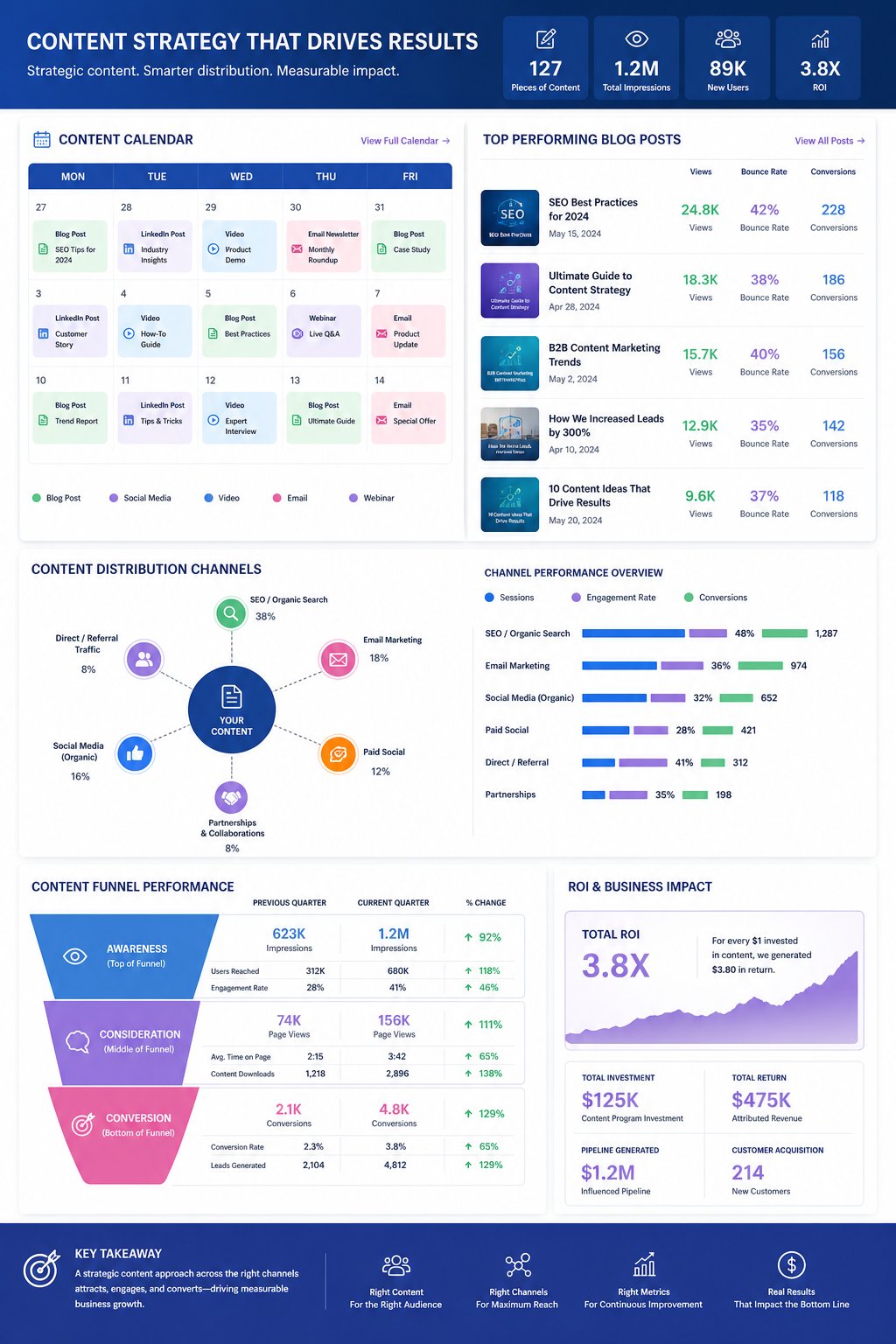
Visual content marketing strategy driving Pinterest engagement and conversions
Ecommerce and Retail
Pinterest is well suited to product discovery, lifestyle inspiration, product comparison, catalogue sales, seasonal planning, shopping campaigns, and repeat-purchase programs. Product data, images, price, availability, shipping, returns, reviews, and checkout quality should be evaluated together.
Home, Design, Fashion, and Lifestyle
Visual categories can use project inspiration, before-and-after creative, shopping collections, creator content, seasonal themes, product guides, and carousel formats. The campaign should connect visual inspiration with a practical next step.
Beauty, Wellness, Fitness, and Personal Services
These brands can use tutorials, routines, education, customer proof, product bundles, appointments, and seasonal offers. Claims, disclosures, privacy, and platform policies should be reviewed carefully.
Travel, Events, and Celebrations
Pinterest users may plan travel, weddings, parties, holidays, and other events long before the date. Campaigns should account for planning windows, booking paths, availability, seasonal content, and retargeting.
Professional and Local Services
Service businesses can use visual guides, project examples, checklists, educational content, case studies, and consultations. A clear geographic service area and easy enquiry path are important.
Education and Courses
Pinterest can support course discovery, guides, registrations, webinars, applications, and content-based demand. Tracking should distinguish content engagement, lead, application, enrolment, and attendance.
Why Choose Unified Management Consulting?
Visual Strategy and Technical Execution Together
We connect creative, keywords, audiences, catalogues, website tracking, ecommerce, CRM, landing pages, and reporting. Pinterest activity is treated as a measurable customer journey rather than a collection of images.
Search-Aware Creative
We combine visual storytelling with customer language and category intent. A Pin should look good, match what the user is planning, and lead to a useful destination.
Transparent Communication
You should understand where budget is spent, which creative and keywords are working, whether product groups are healthy, whether users are converting, and what decision is recommended next.
Customized Campaign Architecture
We design around your product or service, customer journey, audience size, seasonal calendar, margin, creative capacity, catalogue, sales process, and tracking maturity.
Management Consulting Perspective
Advertising cannot resolve every growth problem. Inventory, fulfilment, pricing, delivery, customer service, booking capacity, and retention affect profitability. Our consulting approach examines the management systems surrounding advertising.
Pinterest Advertising Management Pricing
Management fees depend on campaign complexity, ad spend, number of products, catalogue requirements, creative production, seasonal planning, locations, ecommerce or CRM integration, reporting, and consulting support.
Before choosing a provider, clarify whether the service includes:
Business and customer research.
Pinterest Business account and Ads Manager audit.
Campaign and ad group architecture.
Keyword and interest strategy.
Audience and retargeting setup.
Standard image, video, carousel, collection, and shopping creative planning.
Product catalogue and product-group management.
Pinterest Tag and conversion review.
Enhanced match or Conversions API assessment.
Ecommerce and CRM integration.
Landing-page recommendations.
Seasonal campaign calendar.
Ongoing optimization.
Reporting and review meetings.
Policy and disapproval support.
The media budget is generally paid to Pinterest separately from the management fee. Account ownership, catalogue ownership, creative rights, customer data, tracking access, and reporting access should be documented clearly.
How Performance Is Evaluated
No responsible provider can guarantee a fixed number of impressions, saves, leads, purchases, or ROAS. Performance depends on visual quality, offer, product, seasonality, audience, competition, budget, catalogue data, landing page, tracking, fulfilment, and customer economics.
Early work may focus on event accuracy, account health, keyword relevance, creative learning, catalogue quality, audience fit, and mobile conversion. Later evaluation can include qualified leads, purchases, revenue, margin, CAC, ROAS, repeat purchase, and lifetime value.
A high save rate can indicate inspiration but may not create immediate sales. A lower engagement rate may still be successful if the campaign reaches high-value product shoppers. A higher acquisition cost may be acceptable if customers repeat purchase. Metrics must be understood in the context of the business model.
Technical Audit Checklist
Before increasing Pinterest advertising budget, we assess:
Whether the campaign objective matches the business goal.
Whether keywords and interests reflect customer planning intent.
Whether audiences and exclusions are structured correctly.
Whether the Pinterest Tag events fire at the correct action.
Whether browser and server signals are deduplicated.
Whether purchase values, currency, and order IDs are accurate.
Whether product feeds contain correct prices, images, links, and availability.
Whether product groups reflect margin, seasonality, and business priorities.
Whether creative is mobile-friendly, vertical, readable, and relevant.
Whether titles and descriptions support search intent naturally.
Whether landing pages match the Pin and load quickly.
Whether seasonal campaigns launch before the planning window.
Whether UTM parameters survive redirects and checkout journeys.
Whether reporting reconciles with ecommerce, CRM, analytics, and finance data.
Whether the business can fulfil additional demand.
Frequently Asked Questions About Pinterest Advertising Management
What is Pinterest advertising management?
Pinterest advertising management is the strategy, account setup, creative, keyword and audience targeting, catalogue management, tracking, budgeting, optimization, and reporting required to run paid campaigns on Pinterest.
Is Pinterest advertising suitable for small businesses?
Yes, particularly when the business has a visual product, seasonal planning opportunity, clear customer interest, useful content, or a focused service area. Smaller businesses should concentrate on a limited number of products, customer problems, locations, or seasonal themes rather than spreading budget too broadly.
What is the difference between Pinterest Ads and Promoted Pins?
Promoted Pins are a common term for paid Pinterest content. Pinterest advertising can include several formats, objectives, catalogue campaigns, video, carousel, collection, shopping, and other products depending on current platform availability.
Can Pinterest advertising generate ecommerce sales?
Yes, but results depend on product-market fit, creative, catalogue quality, price, availability, landing page, checkout, delivery, reviews, tracking, margin, and repeat-purchase potential. Purchase-value and customer economics should be included in evaluation.
Can Pinterest advertising generate service leads?
Yes. Service businesses can promote guides, project ideas, consultations, appointments, events, downloads, and educational content that lead to website enquiries or bookings. Lead quality and follow-up should be measured beyond form volume.
Do I need the Pinterest Tag?
Many advertisers benefit from the Pinterest Tag for conversion tracking and audience creation. The correct implementation depends on the website, ecommerce platform, consent system, and campaign objective. Events should be tested and mapped to meaningful actions.
Can Pinterest connect to a product catalogue?
Pinterest catalogue and shopping capabilities can support product advertising where available. Product data must be accurate, current, correctly linked, and consistent with website price and availability. Product groups can help align advertising with inventory and margin.
How long does Pinterest advertising take to produce results?
Campaigns may begin delivering after approval, but reliable evaluation requires enough impressions, clicks, saves, conversion events, and time for the customer journey. Seasonal and planning-oriented categories may have longer conversion windows.
How many Pins should be tested?
There is no universal number. The account needs enough variety to test visual hooks, formats, titles, descriptions, offers, product groups, and customer motivations while giving each asset enough delivery to learn. Budget, audience, catalogue size, and creative fatigue influence the appropriate level.
Do you guarantee sales or ROAS?
No. A fixed guarantee would ignore product demand, competition, creative, budget, tracking, catalogue data, landing page, fulfilment, and customer value. We provide a structured audit, strategy, test plan, reporting, and optimization process.
Build a More Profitable Pinterest Advertising System
Pinterest advertising can help brands reach customers while they are discovering ideas, planning purchases, comparing options, and preparing for future events. Strong performance comes from combining useful visual creative, search-aware targeting, accurate product data, reliable conversion tracking, mobile-friendly landing pages, seasonal planning, customer-value reporting, and continuous optimization.
Unified Management Consulting helps businesses bring these elements together. Our Pinterest advertising management services are designed for organizations that want to understand not only what their campaigns are doing, but why they are doing it and how advertising contributes to sales, leads, revenue, and sustainable growth.
Contact Unified Management Consulting for a Pinterest advertising audit, catalogue and product-feed review, Pinterest Tag assessment, seasonal campaign plan, ecommerce tracking review, or customized Pinterest Ads management strategy.
Suggested SEO Metadata
SEO title: Pinterest Advertising Management Services | Unified Management Consulting
Meta description: Grow with Pinterest advertising management services covering Promoted Pins, keyword targeting, shopping campaigns, catalogues, Pinterest Tag, Conversions API, creative, and reporting.