Search Engine Optimization (SEO) Services With Technical Growth Expertise
Build search visibility that attracts the right audience and supports measurable business growth. Unified Management Consulting provides strategic Search Engine Optimization services covering technical SEO, keyword research, content strategy, on-page optimization, local SEO, ecommerce SEO, enterprise SEO, digital PR, analytics, conversion measurement, and management consulting.
📋 SEO Services — Quick Summary
Service What We Do Technical SEO Site audits, Core Web Vitals, crawl optimization, schema markup, and index management Content SEO Keyword research, content strategy, on-page optimization, and content gap analysis Link Building Authority link acquisition, digital PR, broken link building, and outreach campaigns Local SEO Google Business Profile, local citations, review management, and local link building Key Results 150-300% organic traffic growth, 3-5x more qualified leads, top 3 rankings Investment $3,000-$15,000/month based on competition and market size
Search engine optimization is the process of improving a website’s ability to be discovered, understood, crawled, indexed, ranked, and selected by people using search engines. Modern SEO is not limited to inserting keywords into page copy. It involves information architecture, technical accessibility, content quality, search intent, user experience, internal links, structured data, digital reputation, conversion paths, and the relationship between organic visibility and business outcomes.
Unified Management Consulting helps businesses create SEO systems that are technically sound, commercially relevant, and measurable. We connect search research, website architecture, content production, technical implementation, local visibility, analytics, conversion tracking, and management decisions into one unified growth strategy.
SEO can support long-term visibility, but no ethical provider can guarantee a specific ranking, traffic volume, or revenue result. Search results change because of competition, algorithms, technology, user behavior, seasonality, website changes, and market demand. Our focus is to build a strong foundation, prioritize meaningful opportunities, improve quality, and measure progress transparently.
At-a-Glance SEO Growth Framework
| SEO growth stage | What we manage | Key technical signals | Business outcome |
|---|---|---|---|
| Discoverability | Crawl access, indexability, sitemaps, architecture | Crawl errors, index coverage, blocked URLs | More eligible pages |
| Relevance | Search intent, titles, headings, content, entities | Query coverage, impressions, rankings, relevance | Better visibility for target topics |
| Experience | Speed, mobile UX, Core Web Vitals, accessibility | LCP, INP, CLS, engagement, page experience | Stronger user satisfaction |
| Authority | Internal links, digital PR, references, reputation | Referring domains, link quality, brand mentions | More trust and competitive strength |
| Conversion | Landing pages, CTAs, forms, calls, ecommerce | Conversion rate, leads, revenue, assisted actions | More commercial value from traffic |
| Scale | Content systems, templates, automation, governance | Organic growth, non-brand share, CAC, revenue | Sustainable acquisition |
Illustrative Organic Traffic Growth Graph
This graph is an illustrative planning model, not a guarantee. Actual SEO performance depends on technical condition, competition, content quality, authority, demand, implementation speed, and market changes.
textIllustrative qualified organic visibility

100 |                                      ███████████████████████  Scale
 85 |                                ███████████████████           Content expansion
 70 |                          █████████████████                   Authority growth
 55 |                    ███████████████                           Technical fixes
 40 |              ███████████                                     Baseline
 25 |        ██████                                                Audit and planning
 10 |  ███                                                         Starting point
     +-------------------------------------------------------------------
       Month 1       Month 3       Month 6       Month 9       Month 12
SEO results are often cumulative. Technical repairs may improve eligibility first. Content improvements may require indexing and engagement time. Authority development may take longer. Commercial outcomes should be measured across the whole journey rather than judged by one ranking or one month of traffic.
The SEO Growth Journey
textBusiness goals and customer research
                ↓
Search demand, intent, competitors, and opportunity analysis
                ↓
Crawlable, indexable, logically structured website
                ↓
Useful content mapped to topics and customer journey stages
                ↓
Relevant titles, headings, internal links, schema, and UX
                ↓
Authority, references, digital PR, and brand visibility
                ↓
Organic visits, leads, sales, calls, bookings, and revenue
                ↓
Measurement, learning, content refresh, and technical governance
What Are Search Engine Optimization Services?
SEO services include the research, technical analysis, content planning, implementation, measurement, and ongoing improvement required to increase a website’s organic search visibility. Depending on your organization, services may include:
- Technical SEO audits.
- Crawl and indexation analysis.
- Information architecture and website structure.
- Keyword and search-intent research.
- Competitor and SERP analysis.
- On-page SEO.
- Content strategy and topic clusters.
- Content briefs and editorial planning.
- Content creation, optimization, and refreshes.
- Internal-link architecture.
- Canonical and duplicate-content management.
- XML sitemap and robots.txt review.
- JavaScript SEO and rendering analysis.
- Core Web Vitals and page experience improvements.
- Structured data and schema implementation.
- Image, video, and media SEO.
- Ecommerce SEO.
- Local SEO and Google Business Profile support.
- Enterprise SEO and governance.
- International SEO and hreflang.
- Digital PR and ethical link acquisition.
- Search Console and analytics reporting.
- Conversion-rate and revenue measurement.
- SEO migration and launch support.
- SEO automation, monitoring, and quality control.
The right strategy depends on the business model. A local service provider needs a different plan from an international ecommerce company, publisher, SaaS business, healthcare organization, university, or enterprise marketplace. Unified Management Consulting designs SEO work around business priorities, resources, technical constraints, customer value, and market opportunity.
Our SEO Management Process
1. Business and Commercial Discovery
We begin with the business rather than a keyword list. We learn about your products or services, customers, locations, margins, sales cycle, customer lifetime value, operational capacity, competitive position, brand differentiators, and business goals.
We identify whether SEO should support:
- Qualified lead generation.
- Ecommerce revenue.
- Local enquiries and calls.
- Product or category discovery.
- B2B demand generation.
- Brand authority and thought leadership.
- Customer education and support.
- Recruitment or applications.
- International expansion.
- New product or service launches.
- Lower customer acquisition cost.
- Stronger organic visibility alongside paid media.
A page that attracts traffic but does not create a relevant business action may not be a priority. We evaluate opportunities using potential demand, relevance, competition, conversion probability, business value, implementation effort, and risk.
2. Full SEO Audit
A full audit examines the technical, content, authority, local, and measurement elements that influence organic performance. Depending on website size and access, the audit may include crawling, Search Console analysis, analytics review, source-code inspection, template analysis, backlink review, SERP research, log-file analysis, mobile testing, structured-data validation, and competitor comparison.
The audit can identify:
- Important pages blocked from crawling or indexing.
- Accidental noindex directives.
- Canonical tags pointing to incorrect URLs.
- Redirect chains and redirect loops.
- Broken internal links.
- Orphan pages with no internal links.
- Duplicate, thin, outdated, or overlapping content.
- Poor information architecture.
- Slow templates and Core Web Vitals issues.
- JavaScript-rendering problems.
- Missing structured data.
- Weak title and meta-description patterns.
- International targeting and hreflang errors.
- Inconsistent local business information.
- Weak internal-link distribution.
- Unclear search intent and content gaps.
- Low-quality or risky backlink patterns.
- Conversion tracking and reporting gaps.
The deliverable should not be a long list of observations without priority. We categorize recommendations by impact, effort, dependency, risk, and implementation owner.
Technical SEO Services
Technical SEO ensures search engines can access, interpret, process, and index the website efficiently. It also supports users by improving speed, stability, navigation, security, and accessibility.
Crawlability
Crawlability concerns whether search-engine systems can discover and request the URLs that matter. We review:
- Robots.txt rules.
- XML sitemaps.
- Internal links.
- Navigation paths.
- Crawl-depth distribution.
- Status codes.
- Redirects.
- URL parameters.
- Faceted navigation.
- Pagination or infinite scroll.
- JavaScript-generated links.
- Crawl traps and calendar paths.
- Server response behavior.
- Crawl budget considerations for large sites.
Robots.txt is not a reliable method for removing a URL from search results. It controls crawling, while indexation and removal may require noindex directives, authentication, canonical handling, or supported removal processes. We make recommendations based on the desired crawl and index state.
Indexability
A page can be crawlable but not indexable. We examine noindex directives, canonical tags, HTTP headers, duplicate content, soft 404s, low-value pages, content availability, and rendering behavior.
Index coverage should be evaluated by page purpose. Not every URL needs to be indexed. Filter combinations, internal search pages, duplicate parameters, temporary pages, expired listings, and thin variations may create unnecessary index bloat. The goal is not to index every URL; it is to make important, useful pages discoverable and eligible.
XML Sitemaps
XML sitemaps should contain canonical, indexable, useful URLs that return successful status codes. We review sitemap segmentation, last-modified dates, language or image sitemap requirements, product and video sitemap needs, stale URLs, and submission in Search Console.
Sitemaps do not guarantee indexing, but they can help search engines discover important pages and understand site inventory. Large websites benefit from sitemap governance, automated validation, and monitoring for unexpected changes.
URL Architecture
A logical URL structure can help users and systems understand website relationships. We consider directory structure, category and product paths, location paths, language and country folders, trailing slashes, case sensitivity, parameters, pagination, and migration requirements.
URLs should not be changed unnecessarily. When changes are justified, we plan one-to-one redirects, update internal links, revise sitemaps, monitor status codes, and validate traffic and index coverage after launch.
Canonicalization
Canonical tags communicate the preferred version of a page when similar or duplicate URLs exist. They should be consistent with internal links, sitemaps, redirects, protocol, hostname, and page content. Canonical tags are signals, not absolute commands.
We review self-referencing canonicals, parameter variants, product variants, pagination, syndicated content, HTTP versus HTTPS, www versus non-www, and cross-domain canonical use where relevant.
JavaScript SEO
Modern websites may depend heavily on JavaScript for navigation, content, filtering, rendering, and interaction. We examine whether important content, links, metadata, structured data, and product information are available to search systems after rendering.
Technical checks can include:
- Server-side rendering or static rendering.
- Client-side rendering dependencies.
- Hydration errors.
- Rendered HTML versus source HTML.
- JavaScript-generated links.
- Lazy-loaded content.
- API requests and blocked resources.
- Status-code handling in single-page applications.
- Metadata changes after rendering.
- Faceted navigation behavior.
- Rendering performance and errors.
JavaScript SEO often requires coordination among SEO, engineering, product, and infrastructure teams. We translate findings into implementable tickets and acceptance criteria.
Core Web Vitals and Page Experience
Core Web Vitals focus on user experience measurements such as Largest Contentful Paint, Interaction to Next Paint, and Cumulative Layout Shift. We review field data where available, lab diagnostics, templates, devices, network conditions, and the specific elements causing poor performance.
Improvements may include:
- Reducing server response time.
- Improving hosting or caching.
- Optimizing images and responsive formats.
- Preloading critical resources.
- Removing render-blocking resources.
- Reducing JavaScript execution.
- Deferring non-critical scripts.
- Stabilizing image and ad dimensions.
- Improving font loading.
- Reducing third-party impact.
- Improving interaction responsiveness.
Page speed should not be treated as a score-chasing exercise. We prioritize changes that improve real user experience, conversion rate, and technical reliability.
Mobile SEO
We review mobile navigation, responsive layouts, touch targets, content parity, structured data, interstitials, form usability, sticky elements, image behavior, and checkout or booking flows. Mobile-first indexing makes mobile content and rendering especially important for many websites.
Security and Infrastructure
HTTPS, certificate validity, secure resources, server stability, error rates, redirect behavior, and uptime affect trust and technical quality. We investigate intermittent 5xx errors, slow origin responses, CDN configuration, cache headers, and deployment problems when they influence crawl or user experience.
On-Page SEO Services
On-page SEO aligns individual pages with search intent and user needs. It is not keyword stuffing. It is the disciplined process of making the page’s subject, value, structure, evidence, and next step clear.
We review:
- Page title.
- Meta description.
- Main heading.
- Subheadings.
- Introduction and primary answer.
- Topic coverage and terminology.
- Search intent match.
- Internal links.
- Images and alt text.
- Structured data.
- Calls to action.
- Trust and proof.
- Readability and accessibility.
- Conversion path.
Title Tags
Titles should identify the page’s subject, serve the user’s intent, and differentiate the result from competitors. We avoid repetitive templates, unnecessary keyword lists, inaccurate promises, and titles that fail to communicate the value of the page.
Meta Descriptions
Meta descriptions may influence how a result is presented and can support click-through behavior. They should summarize the page accurately and communicate a relevant benefit or next step. Search engines may rewrite them, so they should not be treated as guaranteed snippets.
Headings and Content Structure
A clear heading hierarchy helps users scan long content and can clarify page structure. Headings should represent meaningful sections rather than act as a list of keywords. The page should answer the primary question early and provide depth where users need it.
Images and Media
Image SEO includes descriptive filenames, appropriate formats, dimensions, responsive delivery, compression, lazy loading where appropriate, alt text, captions, context, licensing, and visual quality. Images should support the content rather than slow it down or substitute for essential text.
Keyword Research and Search Intent
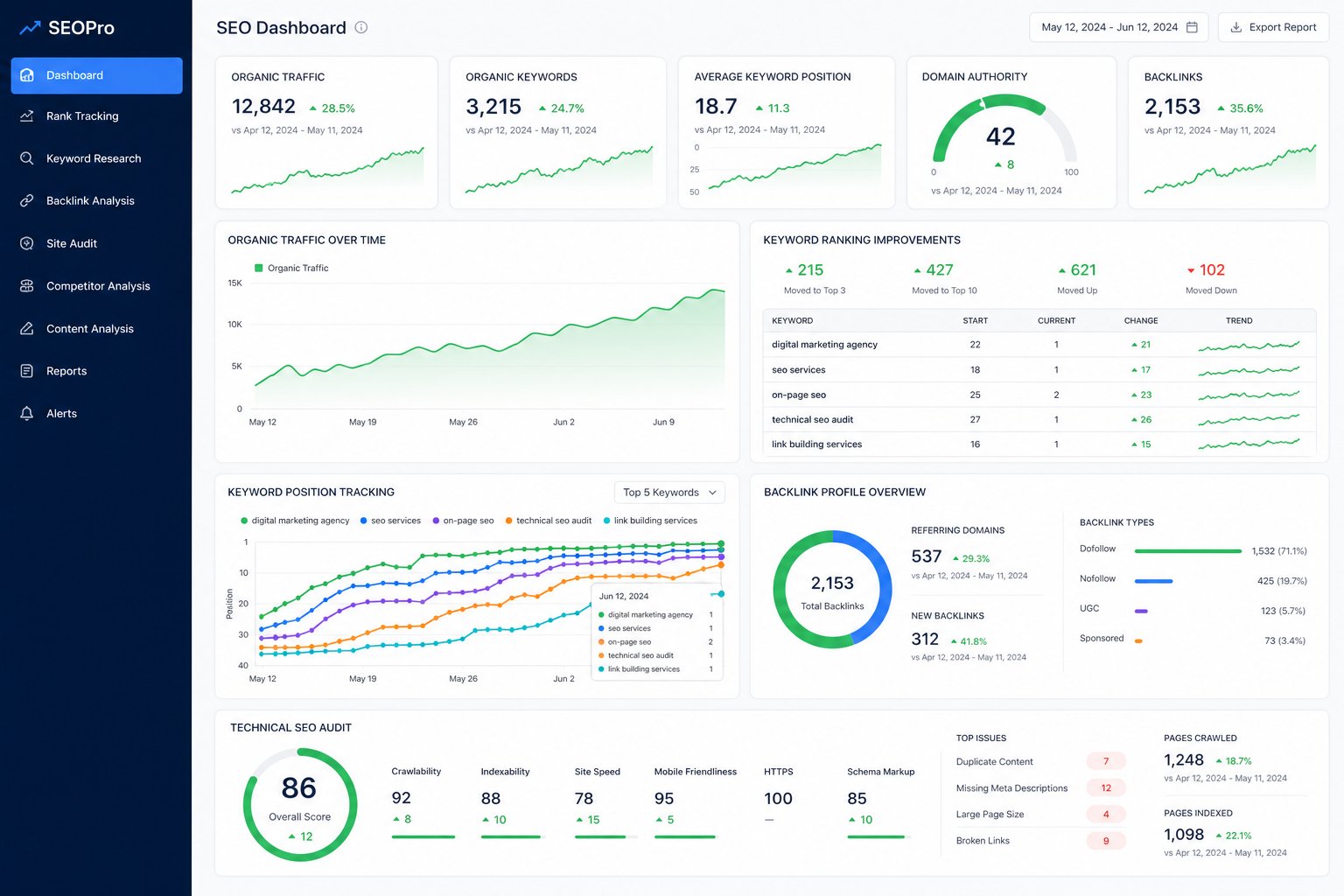
Keyword research identifies what people search for, how they describe a problem, how demand changes, which pages rank, and what the query implies about customer readiness. We use keyword data as one input, not as the entire content strategy.
Search Intent Categories
| Intent | Typical user need | Appropriate content or page |
|---|---|---|
| Informational | Understand a topic or solve a problem | Guide, tutorial, glossary, research article |
| Commercial research | Compare options or providers | Comparison, buyer guide, case study, category page |
| Transactional | Purchase, book, request, or subscribe | Product, service, booking, or checkout page |
| Navigational | Find a known brand or resource | Brand, location, login, or specific resource page |
| Local | Find a nearby provider or location | Local landing page, profile, service-area page |
| Support | Resolve a customer issue | Help article, documentation, support page |
We map keywords to pages to prevent cannibalization and clarify which page should serve each intent. Keyword cannibalization occurs when multiple pages compete for the same topic without clear differentiation. The solution may be consolidation, differentiation, canonicalization, internal-link changes, or a new page.
Topic Clusters and Entities
Search engines interpret relationships among concepts, entities, products, locations, people, organizations, and attributes. We develop topic clusters that cover the central subject, supporting questions, use cases, comparisons, implementation details, risks, and next steps.
Topical coverage does not mean producing large volumes of shallow pages. It means creating useful, differentiated resources that collectively address the customer journey.
Content Strategy and SEO Content Services
SEO content should serve a real audience and a business purpose. We develop content strategies around customer questions, commercial opportunities, expertise, evidence, differentiation, and conversion paths.
Content services may include:
- Content audits.
- Editorial calendars.
- Topic and keyword mapping.
- Content briefs.
- Service and product page copy.
- Long-form guides.
- Comparison content.
- Case studies.
- Research and data content.
- FAQs and support resources.
- Local content.
- Expert interviews.
- Content refreshes.
- Content consolidation.
- Content pruning recommendations.
- Digital PR assets.
Content Brief Framework
A useful brief can include:
- Target audience.
- Primary query and related questions.
- Search intent.
- Page type.
- Recommended title and angle.
- Key entities and concepts.
- Required evidence or sources.
- Competitor content gaps.
- Internal links to include.
- Calls to action.
- Schema opportunities.
- Author and review requirements.
- Conversion objective.
Content Quality and Trust
High-quality content should be accurate, useful, clear, appropriately detailed, and supported by credible expertise. Depending on the subject, we review authorship, editorial review, references, experience, examples, updates, disclosures, and contact information.
Health, finance, legal, safety, and other sensitive topics require higher standards of accuracy, expertise, and review. We help establish content governance appropriate to the subject and organization.
Content Refresh and Consolidation
Old content may lose relevance, contain outdated information, compete with newer pages, or attract traffic that does not match current business priorities. We assess impressions, clicks, rankings, backlinks, conversions, accuracy, overlap, and maintenance cost before recommending refresh, consolidation, redirect, noindex, or removal.
Internal Linking and Information Architecture
Internal links help users navigate and help search engines discover and interpret relationships among pages. We review:
- Navigation and category structure.
- Contextual links.
- Breadcrumbs.
- Hub and spoke relationships.
- Orphan pages.
- Click depth.
- Anchor text.
- Links from authoritative pages.
- Broken and redirected internal links.
- Product and category relationships.
- Local and international paths.
Internal-link recommendations should be natural and useful. We avoid repetitive anchor text and excessive links that reduce usability. Important commercial pages should not depend on one temporary campaign page for discovery.
Structured Data and Schema Markup
Structured data helps communicate information about a page in a machine-readable format. Depending on the page, relevant types may include Organization, LocalBusiness, Product, Offer, Review, Article, BreadcrumbList, Event, JobPosting, Course, Recipe, FAQPage where eligible, and other supported schemas.
We validate:
- Schema type and properties.
- Entity relationships.
- Product IDs, price, currency, availability, and reviews.
- Author and publisher data.
- Event dates and locations.
- Breadcrumb relationships.
- Consistency between visible content and markup.
- Errors, warnings, and deployment changes.
Structured data does not guarantee rich results or higher rankings. It should accurately represent visible page content and support understanding, not manipulate search presentation.
Local SEO Services
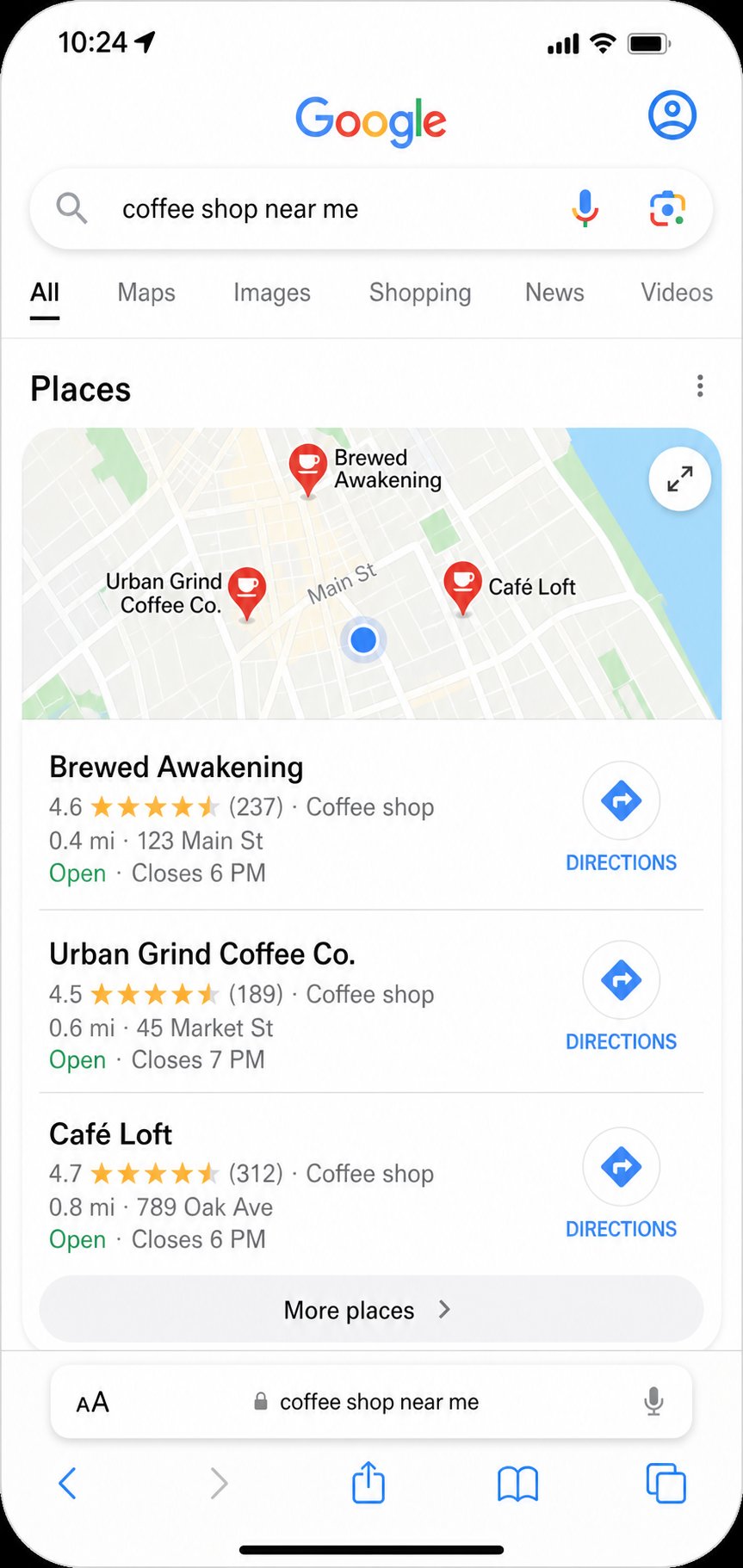
Local SEO helps businesses appear for relevant searches in a geographic area. Services may include Google Business Profile support, local landing pages, citations, review strategy, local schema, location architecture, map visibility analysis, and local content.
We review:
- Business name, address, phone, and website consistency.
- Primary and secondary categories.
- Business hours and service areas.
- Profile completeness and media.
- Reviews and response process.
- Local landing pages.
- Location-specific services.
- LocalBusiness schema.
- Map and pack competitors.
- Duplicate profiles.
- Citation accuracy.
- Local links and community references.
Local SEO should reflect real operations. Creating pages for locations you do not serve, using inaccurate addresses, or publishing thin location pages can damage trust and create quality risks.
Ecommerce SEO Services
Ecommerce SEO requires coordination among product data, category architecture, faceted navigation, inventory, templates, structured data, internal links, content, and conversion experience.
We review:
- Category and collection structure.
- Product titles and descriptions.
- Variant handling.
- Product availability and out-of-stock logic.
- Canonical URLs.
- Faceted navigation and parameters.
- Product schema and Merchant Center data.
- Reviews and user-generated content.
- Internal links and breadcrumbs.
- Pagination and infinite scroll.
- Image SEO.
- Filters and crawl controls.
- Seasonal landing pages.
- Product redirects and discontinued inventory.
- Revenue and margin reporting.
The goal is not to index every filter combination. It is to make valuable category and product experiences discoverable while controlling duplicate and low-value URL generation.
Enterprise SEO and Governance
Enterprise websites often have millions of URLs, multiple teams, complex platforms, international markets, frequent releases, and competing priorities. Enterprise SEO requires operating processes as well as recommendations.
Enterprise services may include:
- Scalable templates and technical specifications.
- Automated crawling and monitoring.
- Log-file analysis.
- SEO release checklists.
- Developer tickets and acceptance criteria.
- Content governance.
- International market workflows.
- Migration planning.
- Product and category taxonomy.
- Stakeholder training.
- Central reporting.
- Change-impact analysis.
- Search-demand forecasting.
Log-File Analysis
Server logs can show how search-engine crawlers access the website. We analyze crawl frequency, response codes, wasted crawling, parameter patterns, bot behavior, blocked resources, discovery of important pages, and changes after releases. Log analysis is especially useful for large websites where standard crawls cannot explain all behavior.
SEO QA and Release Management
SEO issues often arise during website redesigns, platform migrations, template changes, URL updates, JavaScript deployments, and content releases. We create pre-launch and post-launch checks for:
- Redirect mapping.
- Canonical tags.
- Robots directives.
- Sitemaps.
- Metadata.
- Headings.
- Structured data.
- Internal links.
- Status codes.
- Rendering.
- Mobile layouts.
- Analytics and conversion tracking.
- Search Console coverage.
International SEO
International SEO helps search engines understand which content serves which language and location. We review:
- Country and language strategy.
- URL structures.
- Translations and localization.
- Hreflang implementation.
- Self-referencing and reciprocal annotations.
- Canonical tags.
- Geotargeting signals.
- Currency, pricing, and availability.
- Local contact information.
- Duplicate translated content.
- International sitemaps.
- Country-specific keyword research.
Hreflang is not a substitute for properly localized content or country-relevant business information. We validate code, coverage, return tags, language-region values, and page availability.
Authority, Digital PR, and Link Acquisition
Authority development should prioritize relevance, credibility, and real value. We support ethical link and brand-visibility strategies such as:
- Original research and data.
- Expert commentary.
- Digital PR.
- Industry resources.
- Partnerships and associations.
- Case studies.
- Editorial outreach.
- Useful tools and calculators.
- Community and local involvement.
- High-quality guest contributions where appropriate.
We do not recommend automated link schemes, purchased networks, spam comments, irrelevant directories, or manipulative tactics that place long-term visibility at risk. A link is valuable when it is relevant, editorially credible, and capable of sending qualified referral traffic or strengthening reputation.
Backlink analysis may review referring domains, anchor text, link relevance, authority indicators, lost links, new links, toxic patterns, competitor gaps, and digital PR opportunities. Disavow decisions require caution and should not be treated as routine maintenance without evidence of a relevant problem.
Analytics, Search Console, and Conversion Measurement
SEO reporting should connect search visibility to business outcomes. We integrate data from Google Search Console, GA4, CRM systems, ecommerce platforms, call tracking, booking tools, and finance systems where available.
We review:
- Search queries and landing pages.
- Impressions, clicks, CTR, and average position or ranking indicators.
- Brand and non-brand performance.
- Organic conversions and revenue.
- Assisted conversions.
- Leads, calls, bookings, and qualified opportunities.
- New versus returning users.
- Organic landing-page engagement.
- Technical errors and index coverage.
- Device, location, and market performance.
- Content freshness and page-level trends.
Search Console and analytics use different methodologies and will not always match. We document definitions, date ranges, filters, time zones, attribution, and the source of truth for each decision.
Illustrative SEO Funnel Table
| Funnel stage | Example volume | Example rate | Management question |
|---|---|---|---|
| Organic impressions | 500,000 | — | Are target topics gaining visibility? |
| Organic clicks | 25,000 | 5.0% CTR | Are titles and snippets earning visits? |
| Engaged organic sessions | 17,500 | 70.0% of clicks | Does the content match intent? |
| Leads, purchases, or bookings | 875 | 5.0% of sessions | Is the page converting? |
| Qualified opportunities | 263 | 30.0% of conversions | Is the traffic commercially relevant? |
| Customers or revenue events | 79 | 30.0% of opportunities | Is SEO producing business value? |
Illustrative example only. Actual rates vary by industry, page type, brand strength, intent, and conversion model.
SEO and Conversion Rate Optimization
More organic traffic is not automatically better. SEO and conversion optimization should work together to attract visitors who need your offer and help them take the next step.
We review:
- Search intent and offer alignment.
- Page headline and value proposition.
- Trust and proof.
- Forms and contact options.
- Calls to action.
- Pricing and availability.
- Product or service clarity.
- Mobile usability.
- Page speed.
- Booking and checkout flow.
- Analytics and event tracking.
- Lead quality and sales follow-up.
A page ranking for a high-volume term may produce little value if the audience is not a fit. A lower-volume commercial term may produce more qualified opportunities. SEO priorities should account for business value and conversion probability.
AI Search and Search Experience Evolution
Search experiences increasingly include richer result formats, answer interfaces, conversational journeys, local results, product experiences, and AI-generated summaries. Businesses should not rely on one presentation type or one ranking metric.
A resilient search strategy emphasizes:
- Clear, accurate, well-structured information.
- Strong first-party expertise and evidence.
- Consistent organization and entity information.
- Content that answers questions directly and deeply.
- Unique insights rather than generic summaries.
- Technical accessibility and indexability.
- Brand mentions and trustworthy references.
- Multimedia where it helps users.
- Measurement of visibility, clicks, branded demand, and conversions.
Search presentation can change, and not every visibility event will produce a click. We help clients interpret new search behaviors without abandoning the fundamentals of useful content, technical quality, and business measurement.
Automation, Monitoring, and Quality Control
Automation can identify technical changes, broken pages, content gaps, performance anomalies, and tracking problems. We may use crawlers, Search Console alerts, analytics dashboards, log analysis, spreadsheets, scripts, APIs, uptime monitoring, schema validation, and release checklists to monitor:
- Sudden organic traffic drops.
- Ranking or impression changes.
- Index coverage changes.
- New noindex or robots directives.
- Broken links and status-code changes.
- Canonical changes.
- Sitemap anomalies.
- Core Web Vitals changes.
- New duplicate or thin pages.
- Schema errors.
- Lost conversions or revenue.
- Template or deployment changes.
- Backlink and brand-mention trends.
Automation should support human analysis. A traffic drop may result from seasonality, tracking loss, search-demand change, a technical incident, or increased competition. We investigate the cause before recommending a response.
SEO Services for Different Business Models
Local Businesses
Local SEO can help service providers, clinics, retailers, restaurants, professionals, and location-based organizations generate calls, directions, bookings, and enquiries. The strategy should reflect real locations, services, hours, staff, and customer experience.
Ecommerce Brands
Ecommerce SEO supports product discovery, category visibility, shopping journeys, comparison, and organic revenue. Technical architecture, product data, inventory, reviews, filters, and conversion economics must be managed together.
B2B and Professional Services
B2B SEO can support category education, problem research, technical evaluation, case studies, thought leadership, and lead generation. Long sales cycles make CRM and qualified-opportunity reporting especially important.
SaaS and Technology
Software SEO may involve solution pages, use cases, integrations, documentation, comparison content, templates, resources, and product-led conversion paths. Technical accuracy and content maintenance are essential.
Publishers and Media
Publishers need scalable templates, crawl controls, canonical handling, structured data, freshness, author governance, internal links, ad performance, and content quality. High traffic is not sufficient if it does not support loyal audiences or commercial sustainability.
Education, Healthcare, and Sensitive Topics
These sectors require careful review of accuracy, expertise, authorship, references, privacy, accessibility, local information, and user trust. Content governance should match the potential impact of inaccurate information.
Why Choose Unified Management Consulting?
Technical and Commercial SEO Together
We connect crawlability, content, authority, analytics, conversion, sales, ecommerce, and management decisions. SEO is treated as a business acquisition system rather than a ranking report.
Clear Prioritization
We separate critical technical issues from useful but lower-impact enhancements. Recommendations are organized by impact, effort, risk, owner, dependency, and expected outcome.
Transparent Reporting
You should understand what changed, why it changed, what is being implemented, which pages and queries matter, and how organic visibility contributes to leads, customers, revenue, and cost efficiency.
Customized Strategy
We design around your market, customer journey, website technology, content resources, sales process, locations, products, margins, and growth objectives.
Management Consulting Perspective
SEO cannot compensate indefinitely for poor offers, weak customer experience, slow follow-up, unclear operations, or inadequate fulfilment. Our consulting approach examines the management systems surrounding organic acquisition.
SEO Services Pricing
SEO service fees depend on website size, technical complexity, number of markets, content requirements, competition, ecommerce or catalogue scale, enterprise governance, migration needs, reporting, and implementation support.
Before choosing a provider, clarify whether the service includes:
- Business and opportunity discovery.
- Technical SEO audit and crawling.
- Search Console and analytics analysis.
- Keyword and intent research.
- Competitor and SERP analysis.
- Information architecture.
- On-page optimization.
- Content strategy and briefs.
- Content writing, refresh, and consolidation.
- Internal-link recommendations.
- Structured data.
- Core Web Vitals and mobile SEO.
- Local, ecommerce, enterprise, or international SEO.
- Digital PR and ethical authority development.
- Migration and release support.
- Conversion and revenue measurement.
- Monitoring and reporting.
- Training and stakeholder workshops.
SEO consulting fees and implementation costs may be separate. Website development, content production, design, engineering, PR, photography, translation, software, and specialist review should be clearly scoped.
How SEO Performance Is Evaluated
No ethical provider can guarantee a fixed ranking, traffic level, lead volume, or revenue result. Search performance depends on competition, demand, website quality, authority, content, implementation, search systems, user behavior, seasonality, and business execution.
Early work may focus on fixing technical barriers, clarifying priorities, improving templates, resolving measurement gaps, and establishing a content plan. Later performance can be evaluated through qualified organic traffic, non-brand visibility, leads, calls, bookings, purchases, pipeline, revenue, CAC, and customer value.
Ranking improvements are useful indicators, but they should not be the only measurement. A ranking for an irrelevant term has limited commercial value. A smaller improvement in a high-intent service or product term may be more valuable than a dramatic ranking change for a low-conversion query.
Technical Audit Checklist
Before investing in large-scale SEO growth, we assess:
- Whether important pages can be crawled and indexed.
- Whether robots.txt and noindex directives are intentional.
- Whether XML sitemaps contain canonical, indexable URLs.
- Whether canonical tags, redirects, and internal links agree.
- Whether JavaScript rendering exposes important content and links.
- Whether mobile layouts and Core Web Vitals need improvement.
- Whether titles, headings, content, and pages match search intent.
- Whether keyword cannibalization or content overlap exists.
- Whether important pages have adequate internal links.
- Whether structured data is accurate and validated.
- Whether local, ecommerce, international, or enterprise requirements are addressed.
- Whether content demonstrates expertise, accuracy, and trust.
- Whether authority and digital PR opportunities are relevant and ethical.
- Whether analytics, Search Console, CRM, ecommerce, and call tracking are connected.
- Whether conversions represent qualified business outcomes.
- Whether releases, migrations, and content updates have SEO QA.
- Whether the business can implement and maintain recommended changes.
Frequently Asked Questions About SEO Services
What are SEO services?
SEO services are the research, technical improvement, content, authority, measurement, and ongoing management activities used to improve a website’s organic search visibility and business performance.
How long does SEO take to produce results?
Timeframes vary by technical condition, competition, authority, content quality, implementation speed, website size, and search demand. Technical improvements may be visible sooner, while content and authority development often require more time. SEO should be planned as a cumulative process rather than a short-term ranking guarantee.
Can you guarantee first-page rankings?
No responsible SEO provider can guarantee a specific ranking. Search results are influenced by competition, algorithms, location, personalization, device, intent, and website changes. We provide a transparent strategy, implementation priorities, measurement framework, and reporting.
Is SEO better than paid advertising?
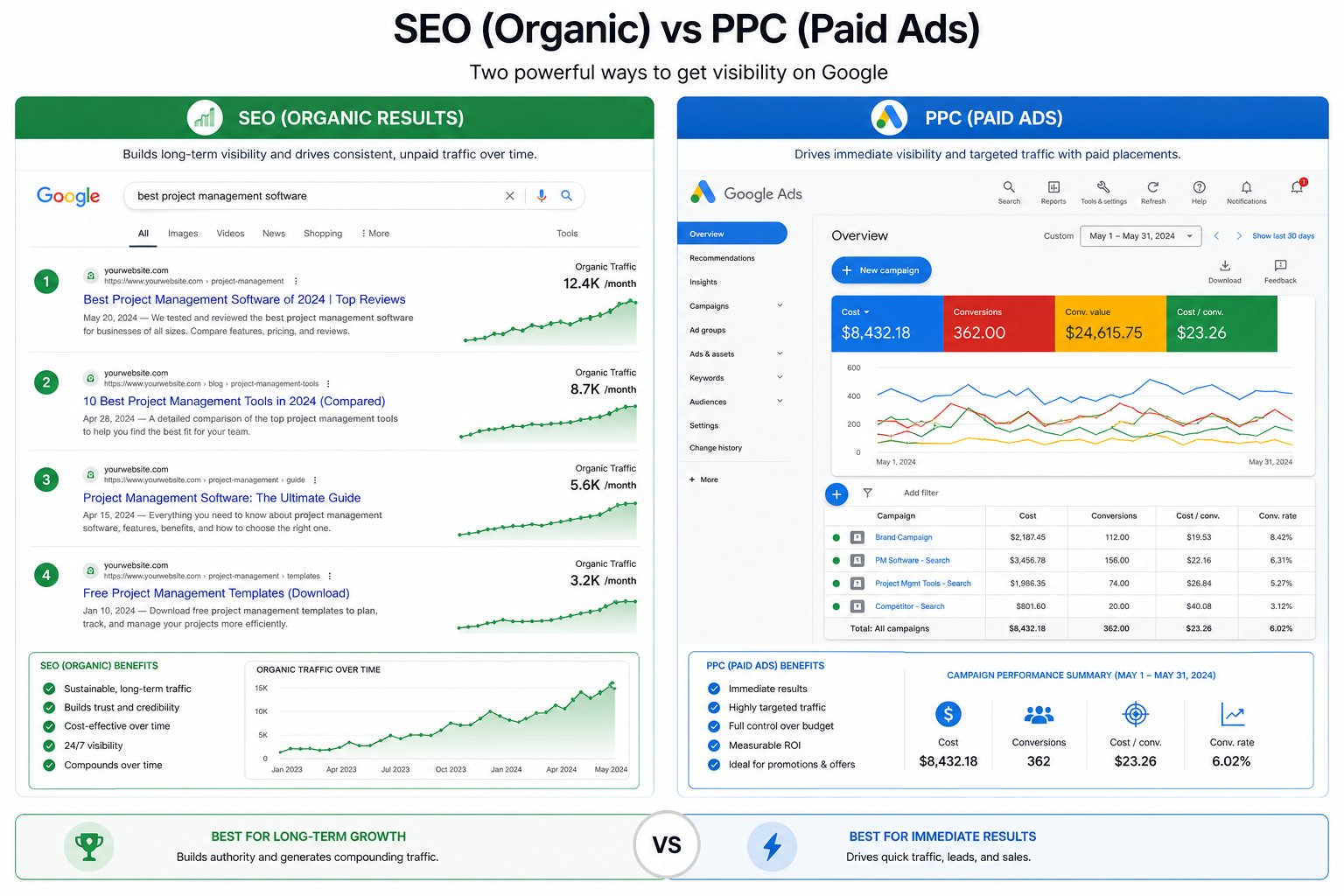
SEO and paid advertising serve different purposes and can complement one another. Paid media can provide immediate visibility and testing data. SEO can build durable organic visibility and reduce dependence on paid clicks over time. The best mix depends on goals, budget, market, timing, and customer journey.
Do you provide content writing?
SEO content support can include strategy, briefs, page copy, long-form articles, case studies, product and service pages, refreshes, and consolidation recommendations. Content quality, expertise, review, and business relevance are prioritized over producing pages solely to increase volume.
Can you manage technical SEO for large websites?
Yes. Enterprise and large-site SEO may include crawling, log analysis, templates, JavaScript rendering, faceted navigation, product and location architecture, migrations, release QA, international structures, automation, governance, and cross-team coordination.
Can you help with local SEO?
Yes. Local SEO can include Google Business Profile support, location pages, local content, citations, reviews, local schema, map visibility, service-area strategy, and local conversion measurement.
Can SEO track leads and revenue?
Yes. Search Console and analytics can be connected with CRM, ecommerce, call tracking, booking tools, and finance data where available. This allows reporting beyond clicks and rankings, including qualified leads, opportunities, purchases, revenue, margin, and customer value.
Do backlinks still matter?
Relevant, credible references and links can support authority and discovery, but they are not the only part of SEO. We focus on useful content, digital PR, relationships, expertise, brand visibility, and ethical authority development rather than automated or manipulative link schemes.
Does AI-generated content replace SEO strategy?
Tools can assist research, drafting, classification, and workflow, but they do not replace expertise, original insight, quality review, technical implementation, or customer understanding. Content should be accurate, useful, differentiated, and appropriate for its subject.
Build a More Sustainable Organic Growth System
Search engine optimization can help businesses become easier to discover, more useful to customers, more credible in their category, and more efficient at generating qualified demand. Strong SEO comes from combining technical accessibility, search-intent research, valuable content, clear architecture, internal links, structured data, good user experience, relevant authority, accurate measurement, and consistent governance.
Unified Management Consulting helps businesses bring these elements together. Our SEO services are designed for organizations that want to understand not only how their website is performing in search, but why it is performing that way and how organic visibility contributes to measurable growth.
Contact Unified Management Consulting for a technical SEO audit, content and keyword strategy, local or ecommerce SEO review, migration assessment, Search Console analysis, or customized organic growth plan.
Suggested SEO Metadata
SEO title: Search Engine Optimization (SEO) Services | Unified Management Consulting
Meta description: Grow organic visibility with technical SEO, content strategy, local SEO, ecommerce SEO, enterprise SEO, structured data, Core Web Vitals, analytics, and conversion measurement.
Suggested URL slug: /search-engine-optimization-services/
Primary keyword: Search engine optimization services
Secondary keywords: SEO services, technical SEO services, local SEO services, ecommerce SEO services, enterprise SEO services, SEO consultant, SEO agency, content SEO, on-page SEO, off-page SEO, organic search marketing
Suggested Calls to Action
- Request a technical SEO audit
- Review your organic growth opportunities
- Improve your website’s crawlability and indexation
- Build an SEO content strategy
- Connect SEO with leads and revenue
- Schedule a search engine optimization consultation