
Turn social attention into measurable customer growth. Unified Management Consulting combines Facebook advertising management, Meta Ads technical implementation, creative strategy, conversion tracking, audience architecture, and management consulting to help businesses generate demand, leads, purchases, and profitable customer relationships.
Facebook advertising is now part of Meta’s wider advertising ecosystem, including Facebook, Instagram, Messenger, Audience Network, Reels, Stories, and other placements. A successful program requires much more than boosting a post. It requires a clear customer strategy, strong creative testing, reliable data, privacy-aware tracking, disciplined budget control, and a sales or ecommerce process capable of converting demand.
📋 Facebook Ads — Quick Summary
| Service | What We Do |
|---|---|
| Campaign Strategy | Funnel architecture, audience research, budget planning, and creative strategy |
| Audience Targeting | Custom audiences, lookalikes, interest targeting, and retargeting setup |
| Creative Production | Ad design, video production, carousel creation, and A/B testing |
| Optimization | Bid strategy, placement optimization, frequency management, and scaling |
| Key Results | 3-5x ROAS, 50% lower CPA, 2-3x higher CTR than industry average |
| Investment | $2,000-$8,000/month management + ad spend |
Unified Management Consulting helps businesses build a complete paid social system. We connect campaign objectives with customer economics, creative production, landing-page experience, CRM data, sales follow-up, ecommerce revenue, and management reporting. The result is Facebook advertising that supports business growth rather than producing disconnected impressions and likes.
At-a-Glance Facebook Advertising Performance Framework
| Growth stage | What we manage | Key technical signals | Business outcome |
|---|---|---|---|
| Attention | Creative, placements, audience reach, hooks | Reach, impressions, frequency, CPM, video hold rate | Relevant market awareness |
| Engagement | Social proof, content, message and offer | Thumb-stop rate, CTR, landing-page views, saves, shares | Higher-quality interest |
| Conversion | Forms, website events, checkout, calls | Leads, purchases, CPA, CVR, purchase value | Customer actions |
| Qualification | Lead forms, CRM stages, sales response | MQLs, SQLs, booked calls, opportunity rate | Better pipeline quality |
| Retention | Customer audiences, upsell, repeat purchase | Repeat purchase, LTV, frequency, audience exclusions | More customer value |
| Scale | Budget, bidding, creative diversity, testing | ROAS, CAC, MER, marginal CPA, contribution margin | Sustainable growth |
Illustrative Cost-Per-Qualified-Lead Graph
This graph is an illustrative planning model, not a guarantee of performance. Actual results depend on market, offer, audience, creative, budget, tracking, and sales execution.
textIllustrative cost per qualified lead

100 | ████████████████████████████████████████  Baseline audit
 90 | ██████████████████████████████████        Creative and audience cleanup
 80 | ███████████████████████████████           Pixel and event repair
 70 | ███████████████████████████               Landing-page improvement
 60 | ███████████████████████                   Lead-quality optimization
 50 | ███████████████████                       Retargeting refinement
 40 | ███████████████                           Controlled budget scaling
     +-------------------------------------------------------------------
       Month 1       Month 2       Month 3       Month 4       Month 5
The Facebook Advertising Customer Journey
textMarket insight and customer research
              ↓
Creative hook, offer, format, and audience hypothesis
              ↓
Meta impression across Facebook, Instagram, Reels, Stories, or Messenger
              ↓
Engagement, video view, landing-page visit, message, or lead form
              ↓
Tracked conversion: lead, call, booking, registration, or purchase
              ↓
CRM qualification, sales follow-up, or ecommerce fulfilment
              ↓
Offline conversion, revenue, margin, repeat purchase, and lifetime value
              ↓
Audience exclusions, creative learning, budget optimization, and scale
What Are Facebook Advertising Management Services?
Facebook advertising management services cover the strategy, creation, technical configuration, launch, monitoring, testing, and optimization of paid campaigns within Meta’s advertising ecosystem. Depending on your goals, management may include:
- Facebook feed advertising.
- Instagram feed advertising.
- Instagram Stories and Reels advertising.
- Facebook Stories, video, carousel, collection, and instant-experience ads.
- Messenger advertising and click-to-message campaigns.
- Lead-generation forms and higher-intent form flows.
- Website conversion and ecommerce purchase campaigns.
- Catalogue sales and dynamic product advertising.
- Retargeting and customer-list campaigns.
- Video-view and awareness campaigns.
- App-install and app-event campaigns.
- Local customer acquisition.
- Recruitment, event, education, and registration campaigns.
- Advantage+ shopping, audience, placements, and campaign solutions where appropriate.
Professional management also involves Meta Business Portfolio administration, account access, pixel or dataset configuration, Conversions API planning, event prioritization, domain verification, creative testing, audience exclusions, attribution analysis, budget pacing, reporting, and compliance checks.
Why Facebook Advertising Requires More Than Boosting Posts
Boosting a post may increase distribution, but it generally does not replace a complete advertising strategy. A professional campaign begins with a business objective and a defined conversion event. It then connects audience research, creative hypotheses, landing-page experience, tracking, bidding, budget, and sales follow-up.
Facebook and Instagram users are often not searching for a solution at the exact moment an advertisement appears. Unlike high-intent search, social advertising frequently creates or develops demand. The creative must stop the scroll, communicate the problem quickly, establish relevance, and provide a clear reason to act.
This makes creative quality and learning velocity central to performance. A campaign can have a technically correct pixel and still fail because the message is weak, the offer is unclear, the first three seconds of the video are slow, the landing page does not match the ad, or the sales team responds too late.
Unified Management Consulting considers the complete system. We look at who should see the campaign, what they should see, what action they should take, how the action is measured, and what happens after the action occurs.
Our Facebook Advertising Management Process
1. Business, Customer, and Offer Discovery
We begin with your business model, target customers, offer, margin, sales cycle, locations, competition, customer objections, buying triggers, operational capacity, and commercial goals. We identify whether the objective is awareness, demand generation, lead acquisition, appointment booking, product sales, app growth, event registration, or customer retention.
We also examine the offer itself. An advertisement cannot compensate indefinitely for an offer that is poorly differentiated or difficult to understand. A strong paid social offer may include a consultation, product bundle, introductory service, limited promotion, educational resource, assessment, trial, demonstration, or direct purchase opportunity.
The best offer depends on customer readiness. A cold audience may need education and trust before a direct sales message. A warm visitor may need proof, urgency, pricing, shipping details, or an easier checkout path.
2. Meta Ads Account and Business Portfolio Audit
For existing advertisers, we review the Business Portfolio, ad accounts, pages, Instagram assets, datasets, pixels, catalogues, domains, event sources, users, agencies, billing, and permissions. We examine whether ownership and access are correctly organized and whether former contractors still retain unnecessary access.
The campaign audit can cover:
- Campaign objectives and conversion locations.
- Campaign, ad set, and ad naming conventions.
- Audience overlap and exclusions.
- Budget structure and spend distribution.
- Advantage campaign settings.
- Placement performance.
- Creative fatigue and frequency.
- Learning status and significant edits.
- Event configuration and prioritization.
- Attribution settings and reporting windows.
- Lead quality and CRM feedback.
- Catalogue errors and product availability.
- Policy disapprovals and account restrictions.
The audit produces a prioritized action plan. We distinguish urgent measurement or policy issues from longer-term opportunities such as creative scale, audience expansion, landing-page testing, or value-based optimization.
3. Campaign Architecture
Meta campaigns are generally organized into campaigns, ad sets, and ads. The campaign level typically defines the broad objective and budget approach. The ad set level controls elements such as audience, placement, schedule, optimization event, and budget when using ad-set budgets. The ad level contains the creative, copy, headline, destination, format, and call to action.
We structure campaigns around meaningful strategic differences, such as:
- Prospecting versus remarketing.
- Lead generation versus website conversion.
- New customers versus existing customers.
- Product categories or margin groups.
- Geographic markets.
- Language or offer differences.
- Sales funnel stage.
- Creative concept or format.
- Testing versus scaling.
Over-segmentation is a common problem. Creating too many ad sets divides budget and conversion data, slows delivery, increases overlap, and makes it harder for the system to learn. In other cases, insufficient segmentation hides differences in customer value or prevents a business from controlling a strategically important market.
We choose a structure that provides necessary control without fragmenting the account beyond what the budget and data can support.
4. Audience Strategy
Meta audience strategy can include broad prospecting, custom audiences, lookalike audiences, customer lists, website visitors, engagement audiences, video viewers, app users, catalogue audiences, and retargeting segments. Audience controls and availability can vary by objective, region, privacy setting, and platform update.
Broad Prospecting
Broad audiences allow Meta’s delivery system to use its optimization signals to find likely converters. Broad targeting can work particularly well when the account has sufficient conversion data, strong creative diversity, accurate event tracking, and a clear offer. It should not mean careless targeting. Geographic, age, language, regulatory, and operational constraints still matter.
Custom Audiences
Custom audiences can be built from website activity, customer files, app activity, engagement, lead forms, video views, or other eligible sources. Each audience should have a defined purpose. For example, a product viewer audience may require a different message from an existing customer audience.
Lookalike Audiences
Lookalike audiences can help find users with characteristics similar to a source audience. The quality of the source is critical. A lookalike based on all website visitors may be less valuable than one based on qualified customers, high-value purchasers, or completed appointments. We test source quality, size, geography, exclusions, and incremental performance.
Retargeting and Exclusions
Retargeting should reflect the user’s previous behavior. We may create different windows for recent visitors, product viewers, cart abandoners, lead-form openers, video viewers, and past customers. Exclusions prevent existing customers from receiving acquisition messages and help avoid spending on people who have already completed the intended action.
Creative Strategy and Ad Production

Creative is the primary targeting mechanism in many modern Meta campaigns. Because delivery systems use predicted response and conversion signals, a wider set of strong creative concepts can help identify different customer motivations.
Creative Testing Matrix
| Creative variable | Examples to test | Primary question |
|---|---|---|
| Hook | Problem, result, question, myth, demonstration | Does the opening stop the scroll? |
| Format | Short video, UGC-style video, static image, carousel, collection | Which format communicates value best? |
| Angle | Price, speed, expertise, convenience, proof, transformation | What motivation produces qualified action? |
| Audience context | Beginner, experienced buyer, local customer, decision-maker | Who identifies with the message? |
| Offer | Consultation, discount, bundle, free assessment, trial | Which offer reduces friction? |
| Proof | Testimonial, case study, review, statistic, demonstration | What creates credibility? |
| CTA | Learn more, book now, shop now, send message, get quote | Which next step matches readiness? |
Video Advertising Technical Guidance
The first seconds of a video are critical. We recommend testing a visible or audible hook early, designing for sound-off viewing, using captions, keeping brand identification clear but not intrusive, and adapting creative to vertical placements such as Reels and Stories.
A video should not simply be a television commercial placed into a mobile feed. Mobile-first creative often uses faster pacing, close framing, native-looking visuals, subtitles, direct demonstrations, creator-style presentation, strong contrast, and a clear call to action.
We assess thumb-stop rate, three-second views, hold rate, average watch time, percentage watched, outbound clicks, landing-page views, and downstream conversion quality. A video with cheap views but no qualified action is not automatically a winner.
Static, Carousel, Collection, and Catalogue Ads
Static ads can communicate a product, offer, result, or problem quickly. Carousels can show multiple products, steps, benefits, features, or proof points. Collection and instant-experience formats can create a more immersive mobile journey. Catalogue ads can use product data to dynamically show relevant products, but they depend on clean product information and accurate event matching.
We test creative without changing too many variables at once. A useful test may compare two hooks while keeping the offer and destination similar, or compare two offers using a consistent audience and format. Tests should have a decision rule and a defined learning period.
Meta Pixel, Dataset, and Event Tracking
Accurate event data is essential for campaign optimization and reporting. Depending on the website and setup, tracking may involve the Meta Pixel, datasets, Conversions API, Google Tag Manager, direct code, ecommerce plugins, CRM integrations, or server-side systems.
Common events can include:
- PageView.
- ViewContent.
- Search.
- AddToCart.
- InitiateCheckout.
- AddPaymentInfo.
- Purchase.
- Lead.
- CompleteRegistration.
- Schedule or appointment events.
- Contact or phone actions.
- Custom qualified-lead events.
Events must be fired at the correct moment. For example, a Lead event should not fire merely because a form page loaded. A Purchase event should not fire on a payment failure or refresh in a way that duplicates the transaction.
Event Parameters and Values
Ecommerce events should pass value, currency, content IDs, content type, item information, and transaction identifiers where supported. Lead events may need lead type, service category, location, estimated value, or source information. Parameters should be consistent between browser and server events so the platform can match them and avoid duplication.
Event Match Quality and Deduplication
When both browser and server events are used, deduplication is important. A shared event identifier can help Meta understand that two signals represent the same action. We review event names, event IDs, timestamps, user-data handling, parameter consistency, and test-event results.
Event Match Quality is influenced by the quality and availability of customer information and technical signals. Better matching can improve measurement, but data must be collected and processed in accordance with applicable privacy requirements.
Conversions API
Conversions API sends conversion signals from a server, CRM, ecommerce platform, or other controlled source to Meta. It can help reduce dependence on browser-only signals and support more resilient measurement. It is not a magic replacement for the Pixel, a consent framework, or an accurate event model.
Implementation may require developer work, server credentials, event mapping, customer-data normalization, hashing or platform-supported processing, deduplication, testing, monitoring, and access controls. We assess whether the business would benefit from direct server integration, a partner integration, a gateway, or CRM-based event delivery.
Domain Verification and Aggregated Event Measurement
Domain verification helps establish control of a web domain used in advertising. Privacy changes have also made event prioritization and measurement configuration important for eligible web events. We review domain settings, prioritized events, event quality, consent behavior, and changes that may affect reporting or optimization.
Lead Generation and CRM Integration
Lead generation campaigns can use website forms, instant forms, Messenger, Instagram Direct, calls, booking tools, or a combination of conversion paths. Instant forms can reduce friction, but lower friction can also produce less committed leads. We help businesses select the right form type, qualification questions, review screen, privacy link, thank-you action, and follow-up process.
A lead is not automatically a qualified opportunity. We recommend tracking stages such as:
textLead submitted
      ↓
Contact attempted
      ↓
Contact reached
      ↓
Qualified marketing lead
      ↓
Sales-qualified opportunity
      ↓
Appointment or proposal
      ↓
Customer acquired
      ↓
Revenue and margin recorded
Where supported by the technical environment, CRM data can be connected back to advertising activity. This helps evaluate cost per qualified lead, cost per opportunity, lead-to-sale rate, revenue by campaign, and customer acquisition cost.
Lead Quality Table
| Metric | What it tells management | What it does not tell management |
|---|---|---|
| Cost per lead | How much the platform spent per captured lead | Whether the lead is relevant or reachable |
| Contact rate | Whether the sales team can reach submitted leads | Whether the person will buy |
| Qualified-lead rate | Whether targeting and offer attract the right audience | Whether sales will close the opportunity |
| Cost per opportunity | Acquisition efficiency at a deeper funnel stage | Final profitability without revenue and margin |
| Customer acquisition cost | Cost of acquiring a customer | Customer lifetime value by itself |
| Revenue or gross profit | Commercial return from acquired customers | The incremental effect of every ad touchpoint |
Ecommerce, Catalogue, and Product Advertising
For ecommerce advertisers, Meta catalogue quality is central to performance. Product feeds should contain accurate titles, descriptions, images, prices, availability, links, brands, variants, product identifiers, shipping information, and category data.
We review catalogue diagnostics, rejected items, data freshness, missing fields, mismatched prices, out-of-stock products, image quality, product sets, custom labels, and dynamic product-event matching. Product sets can separate bestsellers, high-margin products, seasonal collections, clearance stock, new arrivals, or strategic categories.
Purchase tracking should pass transaction value, currency, content IDs, content type, product information, and an order ID. We check for duplicate purchase events, failed payments, refunds, cancelled orders, and checkout-domain problems. For businesses with different product margins, revenue alone may not be enough; reporting may need contribution margin or profit-adjusted values.
Campaign Objectives and Optimization Events
The campaign objective should reflect the business outcome, but the selected optimization event must also be achievable with sufficient volume and reliable data. A purchase optimization event may be appropriate for a mature ecommerce account. A newer business may need to begin with a lower-funnel event while building data, then move toward purchase optimization as volume improves.
Lead campaigns require similar discipline. Optimizing for form opens can produce volume but may not produce completed forms. Optimizing for all leads can create low-quality demand. Where possible, use qualified-lead or conversion-value feedback to help the platform distinguish commercial outcomes.
We review whether the selected event is:
- Fired consistently.
- Unique to the intended action.
- Aligned with the campaign objective.
- Available at sufficient volume.
- Assigned the correct value.
- Protected from duplicate firing.
- Connected to the appropriate reporting source.
- Suitable for the business’s sales cycle.
Budgeting and Meta Bidding
Budget management may involve campaign budget optimization or ad-set-level budgets, depending on the account structure and need for control. Campaign-level budgets allow the system to distribute spend among ad sets, while ad-set budgets can provide more deliberate allocation when testing audiences, locations, or offers.
We evaluate budget decisions using:
- Cost per result and cost per qualified result.
- Conversion value and return on ad spend.
- Marginal CPA or marginal customer acquisition cost.
- Frequency and audience size.
- Learning status and delivery stability.
- Creative fatigue.
- Seasonality and promotion dates.
- Sales and fulfilment capacity.
- Gross margin and customer lifetime value.
Increasing budget too aggressively can destabilize delivery. Making frequent large edits can restart learning or prevent the system from adapting. Scaling may involve gradual budget changes, creative expansion, new audience opportunities, campaign duplication only when justified, or value-based optimization.
A profitable campaign is not necessarily one with the lowest cost per result. If a higher-cost segment produces much higher customer value, it may deserve more investment.
Placements, Frequency, and Creative Fatigue
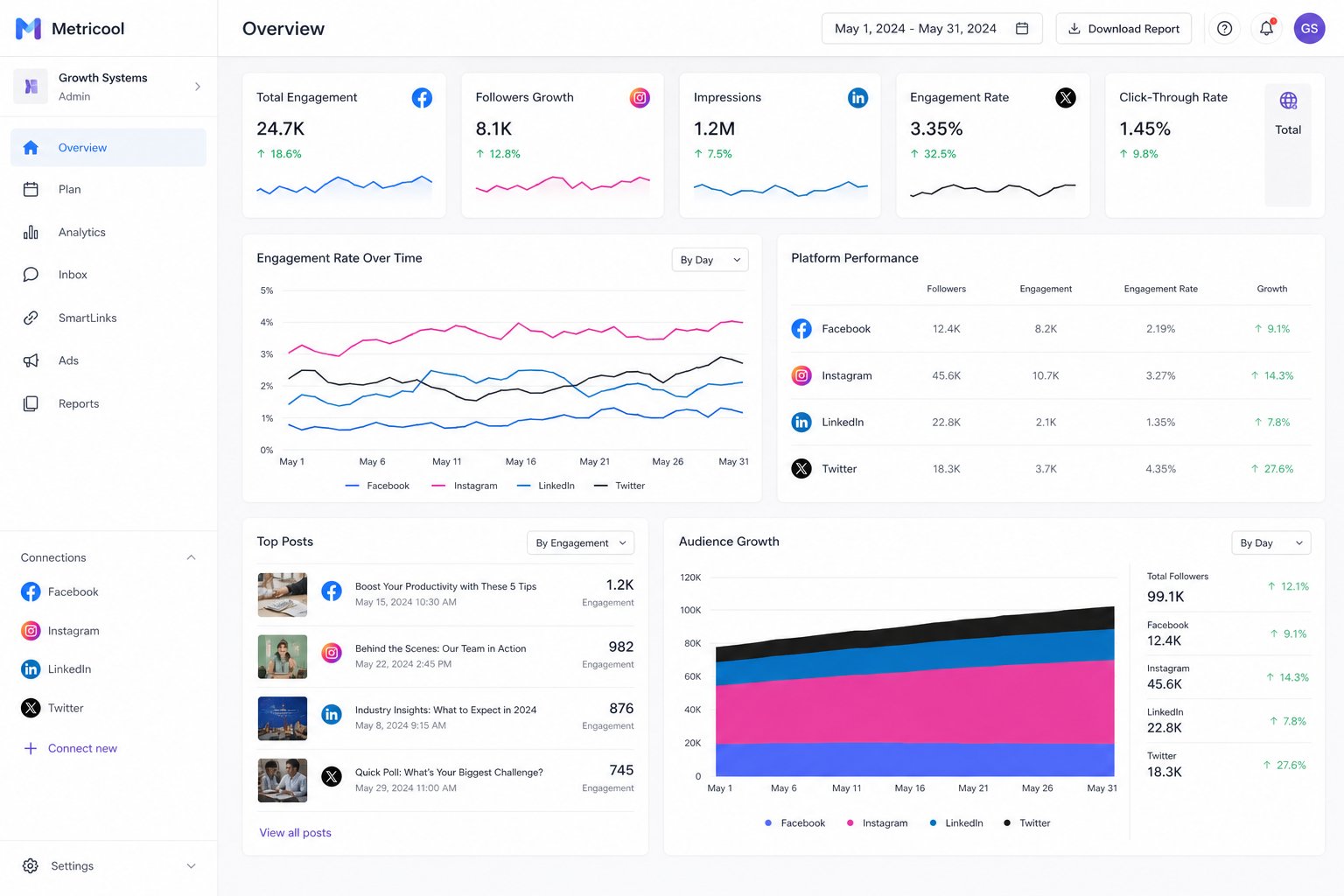
Meta can distribute ads across Facebook Feed, Instagram Feed, Stories, Reels, Marketplace, Search results, Messenger, Audience Network, and other placements depending on campaign settings and eligibility. Advantage+ placements may provide delivery efficiency, but we still review placement-level results and user experience.
Placement performance should be evaluated by downstream outcome, not only CPM. A low-cost placement may produce cheap clicks but weak landing-page views or poor lead quality. A higher-cost placement may produce customers at an acceptable acquisition cost.
Frequency indicates how often people in an audience see an ad over a period. Rising frequency can indicate saturation, especially in small retargeting audiences. Creative rotation, audience exclusions, reach expansion, frequency management, and offer variation can reduce fatigue.
Signs of creative fatigue may include:
- Declining thumb-stop or click-through rate.
- Increasing CPM or cost per result.
- Rising negative feedback.
- Repeated impressions to the same users.
- Lower conversion rate after stable landing-page performance.
- Comments indicating message repetition or confusion.
Retargeting and Customer Lifecycle Campaigns
A mature Facebook advertising program separates cold prospecting, warm engagement, conversion retargeting, existing-customer retention, and reactivation where appropriate. Different audiences need different messages.
Examples include:
- Video viewers who need a stronger offer or proof.
- Website visitors who need reassurance and a clear next step.
- Product viewers who need product details or availability information.
- Cart abandoners who need checkout support or a relevant incentive.
- Past customers who may benefit from replenishment, upgrades, or cross-sell.
- Existing leads who need education or appointment reminders.
Audience exclusions are essential. Exclude purchasers from acquisition campaigns when the objective is new-customer growth. Exclude recent leads from duplicate lead-generation ads when they are already in a sales process. Respect consent, privacy, and applicable platform policies when using customer lists and remarketing audiences.
Reporting and Attribution
Meta reporting can differ from Google Analytics, CRM reporting, ecommerce systems, and finance records. Differences may result from attribution windows, time zones, view-through interactions, click-through interactions, consent status, event processing, deduplication, and reporting definitions.
We establish a reporting framework that separates platform optimization data from management-level business data. Meta may be used to optimize delivery based on its measured signals, while the CRM or finance system may be used to evaluate qualified revenue and profitability.
Useful reporting categories include:
- Spend and pacing.
- Reach, impressions, CPM, and frequency.
- Link clicks and landing-page views.
- Thumb-stop rate and video retention.
- Leads, purchases, bookings, and messages.
- Cost per result and conversion rate.
- Qualified-lead rate and opportunity rate.
- Revenue, gross profit, ROAS, and CAC.
- New versus returning customers.
- Creative and placement performance.
- Tests completed and next decisions.
A report should explain what changed, why it changed, what is being tested, what is working, and what management decision is recommended. A list of metrics without interpretation is not a strategy.
Privacy, Consent, and Data Governance
Facebook advertising measurement must be designed with privacy in mind. Requirements vary by country, industry, audience, and data type. We review consent management, customer-list permissions, privacy notices, event collection, data retention, user access, and vendor relationships.
Technical controls may include consent-aware tags, restricted data processing where relevant, server-side event governance, hashed customer information, access permissions, and documentation of data flows. Better measurement should not be achieved by ignoring privacy obligations.
We also recommend minimizing unnecessary access. Business Portfolio users, partners, developers, and agencies should receive the level of access required for their role. Ownership of the ad account, Page, Instagram account, dataset, catalogue, domain, and billing relationship should be clear.
Landing Pages and Conversion Rate Optimization
Facebook and Instagram traffic often arrives on mobile devices. Landing pages should load quickly, communicate the offer immediately, match the creative, and make the next action easy. We review:
- Mobile page speed and server response.
- First-screen message and visual hierarchy.
- Ad-to-page message match.
- Form length and field requirements.
- Click-to-call and mobile contact options.
- Testimonials, reviews, proof, and trust signals.
- Pricing, availability, shipping, or service-area clarity.
- Accessibility and readable text.
- Redirects and tracking-parameter preservation.
- Thank-you pages and downstream events.
Conversion-rate optimization should be based on evidence. We may recommend testing the offer, hook, form, headline, proof, page layout, or call to action. The objective is to identify the highest-impact friction point rather than change the entire website without a clear hypothesis.
Automation, Monitoring, and Quality Control
Automation can help monitor account health and identify unusual conditions. We may use alerts, spreadsheets, dashboards, scripts, or integrations to monitor:
- Sudden spend increases.
- Zero-spend or zero-impression campaigns.
- Disapproved ads or restricted assets.
- Broken landing-page URLs.
- Event volume drops.
- Duplicate purchase events.
- Catalogue errors.
- Unusual frequency increases.
- Cost-per-result changes.
- Budget exhaustion.
- Lead delivery or CRM synchronization issues.
Automated actions should be governed carefully. A rule that pauses an ad after a short-term cost increase may interrupt a useful test or ignore conversion lag. We define thresholds, exclusions, monitoring intervals, and human review procedures before applying automated changes.
Facebook Advertising Services for Different Business Models
B2B Lead Generation
B2B campaigns may target decision-makers, business owners, professionals, or interest-based and broad audiences. The customer journey may require educational content, case studies, webinars, consultations, or lead qualification before a sales conversation. CRM imports and lifecycle reporting are especially valuable because the final sale may occur weeks or months after the initial lead.
Local Services
Local businesses can use Facebook advertising to build awareness, generate calls, promote offers, fill appointments, and retarget people who visited a service page. Geographic controls, creative local relevance, operating hours, call quality, and response speed influence success.
Ecommerce
Ecommerce brands can use catalogue advertising, dynamic product retargeting, prospecting, creator-style video, collections, product sets, and value-based optimization. Product data, purchase tracking, margin, stock, delivery, and repeat-purchase economics must be considered together.
Professional Services
Professional firms often need trust before a customer makes contact. Ads can feature expertise, outcomes, case studies, process explanations, credentials, client stories, or educational resources. The conversion path may be a consultation request rather than an immediate purchase.
Events, Courses, and Education
Facebook and Instagram can support event registration, course enquiries, application starts, webinar attendance, and remarketing to engaged users. Tracking should distinguish registration from attendance, application from acceptance, and enquiry from enrolment.
Why Choose Unified Management Consulting?
Strategy and Technical Execution Together
We combine commercial planning with hands-on advertising management. Creative, audience, data, bidding, landing pages, sales, and reporting are treated as connected parts of the same customer-acquisition system.
Transparent Communication
You should know how your budget is being used, what the platform is learning, which creative concepts are being tested, whether leads are qualified, and what decisions are recommended. We explain technical subjects in practical business language.
Customized Account Design
We do not force every business into one audience, campaign, or budget template. We design around the offer, customer journey, sales cycle, geographic market, operational capacity, and data available.
Focus on Qualified Results
Low-cost leads and high engagement can be useful indicators, but they are not the final goal. We focus on qualified opportunities, purchases, revenue, margin, customer acquisition cost, repeat business, and sustainable growth.
Management Consulting Perspective
More advertising is not always the right answer. If a business has weak follow-up, unclear pricing, limited fulfilment, or a poor customer experience, additional traffic may increase cost without increasing profit. Our consulting approach looks at the management decisions surrounding paid social.
Facebook Advertising Management Pricing
Management fees depend on the number of campaigns, creative requirements, ad spend, geographic scope, tracking complexity, catalogue needs, CRM integrations, reporting requirements, and consulting support. A small local lead campaign needs a different service model from a multi-country ecommerce program using catalogues, dynamic product ads, server-side measurement, and value-based optimization.
Before engagement, clarify whether the service includes:
- Strategy and account audit.
- Campaign setup and architecture.
- Ad copy and creative direction.
- Video and static creative testing.
- Audience development.
- Pixel, dataset, and Conversions API review.
- Lead forms and CRM integration.
- Catalogue and product-feed management.
- Landing-page recommendations.
- Ongoing optimization.
- Reporting and review meetings.
- Policy and disapproval support.
The advertising budget is normally paid to Meta separately from the management fee. Account ownership, data access, creative ownership, and reporting access should be documented clearly.
How Performance Is Evaluated
No responsible provider can guarantee a fixed number of leads, sales, or ROAS. Results depend on the market, offer, creative, audience size, competition, landing page, tracking, budget, seasonality, sales process, fulfilment, and customer economics.
Early work may focus on tracking accuracy, account health, creative learning, audience relevance, and conversion quality. As data accumulates, we can evaluate cost per qualified lead, lead-to-sale rate, purchase value, CAC, ROAS, margin, and lifetime value.
A campaign with a higher cost per lead may be more successful if its leads are significantly more likely to become customers. A campaign with lower ROAS may be strategically valuable if it generates new customers with strong lifetime value. Metrics must be interpreted against the business model.
Technical Audit Checklist
Before increasing budget, we assess:
- Whether the selected campaign objective matches the business goal.
- Whether the optimization event is accurate and sufficiently frequent.
- Whether Pixel and Conversions API events are deduplicated.
- Whether event values and currency are correct.
- Whether leads are recorded in the CRM and followed up promptly.
- Whether audience exclusions prevent unnecessary overlap.
- Whether creative is diverse enough to reduce fatigue.
- Whether landing pages are fast, mobile-friendly, and message-matched.
- Whether catalogue products have accurate prices and availability.
- Whether placements are producing meaningful downstream outcomes.
- Whether reporting is reconciled with CRM, ecommerce, and finance data.
- Whether the business has operational capacity for more demand.
Frequently Asked Questions About Facebook Advertising Management
What is the difference between Facebook Ads and Meta Ads?
Facebook Ads are part of Meta’s advertising system. Campaigns may deliver across Facebook, Instagram, Messenger, Reels, Stories, Audience Network, and other eligible placements. The term Facebook advertising remains common, while Meta Ads describes the broader platform.
Is Facebook advertising suitable for small businesses?
Yes, when the campaign has a focused offer, realistic geographic targeting, strong creative, accurate tracking, and an efficient follow-up process. A smaller business may start with one priority customer segment and a limited number of creative concepts rather than spreading budget across too many campaigns.
Do I need a large audience for Facebook advertising?
Not always. A large enough audience can help delivery and learning, but the appropriate size depends on geography, product demand, budget, conversion volume, and sales cycle. Small retargeting audiences require frequency management, while broad prospecting audiences may allow more efficient discovery.
Should I use a Pixel or Conversions API?
Many businesses benefit from a browser-based Pixel or dataset implementation combined with Conversions API where technically and legally appropriate. The correct setup depends on the website, CRM, ecommerce platform, consent framework, and resources available. Both browser and server events must be mapped and deduplicated correctly.
How many ads should be in a campaign?
There is no universal number. The campaign needs enough creative diversity to test different hooks, formats, offers, and customer motivations, while still giving each asset enough opportunity to receive meaningful delivery. Budget, audience size, conversion volume, and fatigue determine the appropriate range.
How quickly can Facebook ads produce results?
Ads can begin delivering after review and approval, but meaningful evaluation requires enough data. Early performance can be affected by learning, audience size, creative novelty, conversion lag, and tracking quality. We use early data to identify obvious issues and opportunities without making premature conclusions.
Can you manage Instagram advertising too?
Yes. Instagram Feed, Stories, Reels, and other eligible placements can be included in a Meta advertising strategy. Creative should be adapted for mobile-first formats rather than simply copied from desktop or traditional media.
Can you track offline sales?
Where the CRM or sales system captures the required identifiers and lifecycle information, offline conversion data may be connected to advertising reporting. This helps evaluate qualified leads, opportunities, customer acquisition, revenue, and other outcomes beyond the initial online form.
Do you guarantee ROAS?
No. A guarantee would ignore market competition, offer quality, creative performance, budget, tracking, customer behavior, fulfilment, and sales execution. We provide transparent planning, testing, reporting, and optimization based on the data available.
Build a More Profitable Facebook Advertising System
Facebook and Instagram advertising can create awareness, develop demand, generate leads, drive purchases, and increase customer lifetime value. The strongest results come from combining relevant creative, disciplined audience strategy, reliable event measurement, privacy-aware technical implementation, persuasive landing pages, responsive sales processes, and continuous optimization.
Unified Management Consulting helps businesses bring these elements together. Our Facebook advertising management services are designed for organizations that want to understand not only what their campaigns are doing, but why they are doing it and how it connects to revenue and growth.
Contact Unified Management Consulting for a Facebook advertising audit, Meta Pixel and Conversions API review, creative testing plan, CRM integration assessment, or customized management strategy.
Suggested SEO Metadata
SEO title: Facebook Advertising Management Services | Unified Management Consulting
Meta description: Grow with strategic Facebook and Meta advertising management services covering creative testing, audience targeting, Pixel, Conversions API, CRM tracking, catalogues, and reporting.
Suggested URL slug: /facebook-advertising-management-services/
Primary keyword: Facebook advertising management services
Secondary keywords: Facebook Ads management, Meta Ads management, Facebook advertising agency, Instagram advertising management, paid social media management, Facebook Ads consultant, Meta Pixel setup, Conversions API, Facebook lead generation, Facebook ecommerce advertising
Suggested Calls to Action
- Request a Facebook Ads account audit
- Review your Meta Pixel and Conversions API setup
- Improve Facebook lead quality
- Build a creative testing plan
- Connect Meta Ads to your CRM
- Schedule a Facebook advertising strategy consultation