Editorial note: This article complements the broader comparison SEO vs PPC: Which Strategy Is Best for Your Business? by focusing specifically on local-market economics, buyer behaviour, and channel choices for businesses in Lucknow.
Every business owner in Lucknow eventually faces this question: should I invest in SEO or Google Ads? Both channels drive traffic from Google, both can generate leads and sales, but they work in fundamentally different ways. Choosing the right one, or more accurately, the right combination of both, can be the difference between marketing that delivers ROI and marketing that burns through your budget.
At Unified Management Consulting (UMC), we manage both SEO and Google Ads campaigns for businesses across Lucknow. We have seen what works, what does not, and when each channel delivers the best results. This guide breaks down everything you need to know to make the right decision for your business.
Understanding SEO and Google Ads: The Basics
What Is SEO?
Search Engine Optimisation is the process of improving your website so that Google ranks it higher in organic (free) search results. When someone searches for “best restaurant in Lucknow” or “CA near me”, the results that appear below the ads are organic results. SEO helps your website appear in those positions without paying for each click.
SEO involves multiple disciplines:
Technical SEO: Making your website fast, mobile-friendly, crawlable, and properly structured for search engines
On-page SEO: Optimising titles, meta descriptions, headings, content, and internal links on each page
Content creation: Publishing high-quality articles, guides, and resources that rank for target keywords
Link building: Earning backlinks from authoritative websites that signal trust to Google
Local SEO: Optimising your Google Business Profile and local citations for location-based searches
What Are Google Ads?
Google Ads (formerly Google AdWords) is Google’s paid advertising platform.
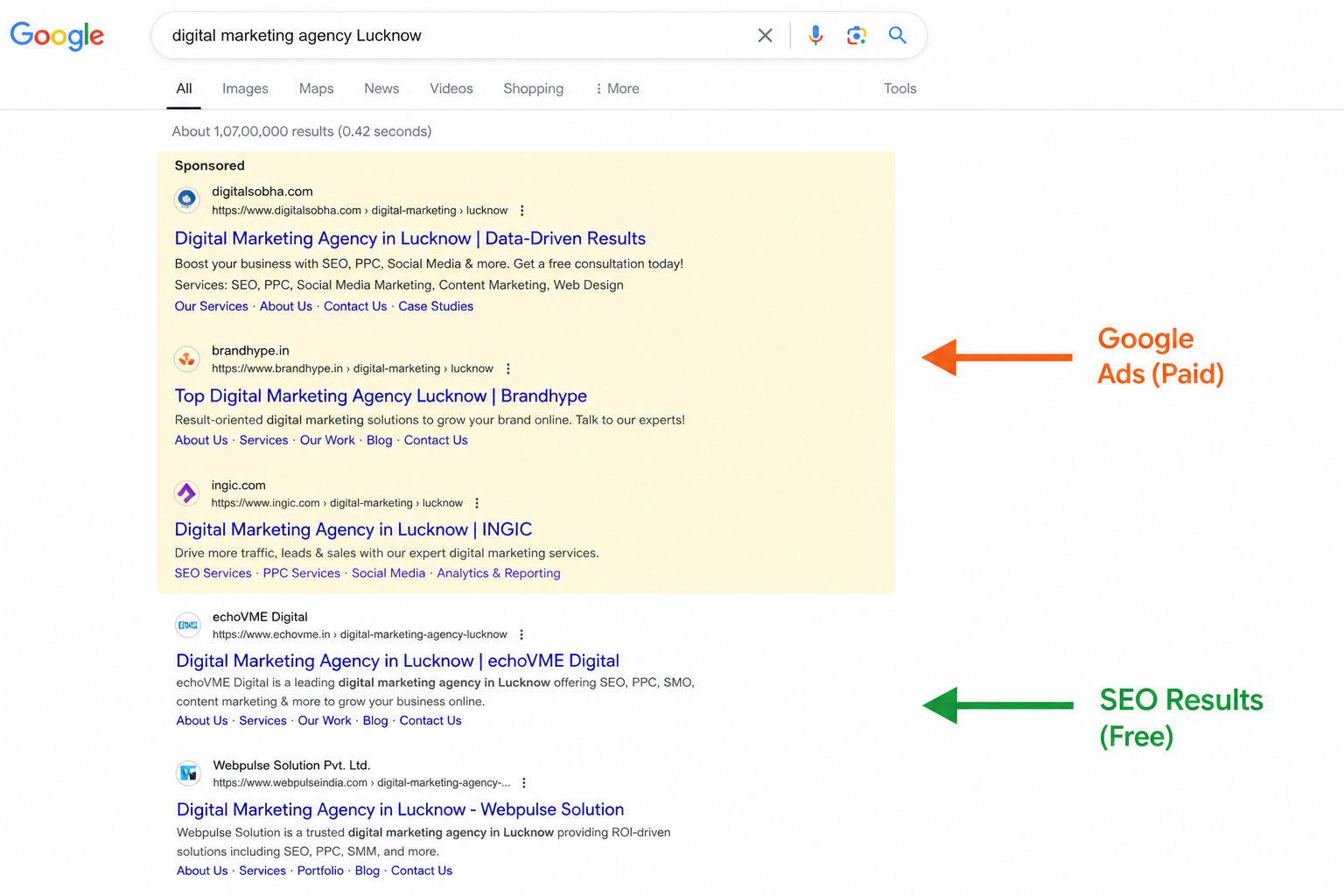
Google search results page: paid ads (marked “Sponsored”) appear at the top, while organic SEO results appear below — both drive traffic but work very differently.
Your ads appear at the top of search results, marked as “Sponsored” or “Ad”, when people search for keywords you bid on. You pay each time someone clicks your ad (pay-per-click or PPC).
Google Ads includes several campaign types:
Search Ads: Text ads that appear at the top of Google search results for specific keywords
Display Ads: Visual banner ads shown across millions of websites in the Google Display Network
Shopping Ads: Product listings with images and prices for e-commerce businesses
Performance Max: AI-powered campaigns that serve ads across all Google surfaces automatically
YouTube Ads: Video advertisements shown before or during YouTube videos
SEO vs Google Ads: Head-to-Head Comparison
Factor
SEO
Google Ads
Cost
Free clicks (investment in optimisation)
Pay per click (Rs.5-500+ per click)
Speed to results
3-6 months for meaningful results
Immediate (leads within hours)
Long-term value
Compounds over time, sustainable
Stops immediately when budget stops
Click-through rate
Higher CTR for organic results (60-70%)
Lower CTR (10-15% for ads)
Trust and credibility
Higher trust (organic = earned)
Lower trust (marked as “Ad”)
Targeting precision
Keyword and content-based
Extremely precise (keywords, demographics, time, device, location)
Control
Limited (Google decides rankings)
Full control (budget, targeting, ad copy, landing pages)
Scalability
Gradual scaling over months
Instant scaling by increasing budget
Best for
Long-term sustainable growth
Immediate results, promotions, testing
ROI timeline
Higher ROI after 6-12 months
Positive ROI possible from week one
When SEO Is the Better Choice
1. You Are Building for Long-Term Growth
If your business is established and you are investing in growth over the next 2-5 years, SEO delivers compounding returns. The content you create today can continue generating traffic and leads for years without additional investment. One well-ranked article can generate thousands of visits per month, indefinitely. This is the sustainable digital marketing approach that builds real business assets.
2. Your Industry Has High Click Costs
In competitive industries like real estate, legal services, and healthcare, Google Ads click costs can be extremely high, sometimes Rs.200-500 per click. In these cases, SEO often delivers a better cost-per-lead over time because organic clicks are free once you achieve rankings.
3. You Want to Build Brand Authority
Organic search results carry more trust than paid ads. When your website consistently appears at the top of Google for relevant searches, it signals authority and credibility to potential customers. This brand authority extends beyond search, influencing how people perceive your business across all channels.
4. Your Customers Research Extensively Before Buying
For high-consideration purchases like choosing a website development company, hiring a business consultant, or selecting a school, customers do extensive research. SEO positions your content in front of these researchers at every stage of their journey, building trust before they ever contact you.
5. Local Businesses Serving a Specific Area
For businesses that serve customers in specific areas of Lucknow, local SEO is essential. Ranking in the Google Map Pack for “restaurant near me” or “gym in Gomti Nagar” drives consistent, high-intent foot traffic without ongoing ad spend. Learn more about how restaurants, gyms, and salons benefit from local SEO.
When Google Ads Is the Better Choice
1. You Need Results Immediately
If you are launching a new business, promoting a time-sensitive offer, or need leads this week rather than this quarter, Google Ads delivers instantly. Campaigns can be live within hours and generating enquiries the same day. This makes Google Ads ideal for project launches, seasonal promotions, and new service announcements.
2. You Are Testing a New Market or Offer
Google Ads is the fastest way to validate whether there is demand for a new product, service, or market. Before investing months in SEO for unproven keywords, you can run Google Ads campaigns to test search volume, conversion rates, and customer response. The data you gather informs your SEO strategy and overall digital marketing strategy.
3. You Have a Specific, Time-Bound Campaign
Promoting a limited-time offer, event, or seasonal campaign? Google Ads gives you precise control over when ads run, who sees them, and how much you spend. Schools running admission campaigns, hotels promoting festive packages, and retailers running sale events all benefit from the time-bound precision of Google Ads.
4. Your Competitors Dominate Organic Results
In some competitive markets, established players dominate the top organic positions and it would take years to outrank them. Google Ads allows you to appear above those organic results immediately, capturing traffic while your SEO builds over time. This is particularly relevant for real estate and healthcare in Lucknow.
5. You Want Precise Targeting and Remarketing
Google Ads offers targeting capabilities that SEO cannot match: demographic targeting, income level targeting, life event targeting, in-market audience targeting, and sophisticated remarketing. You can show different ads to different audiences, retarget website visitors who did not convert, and create highly personalised campaigns. Meta Ads offer similar precision for social media targeting.
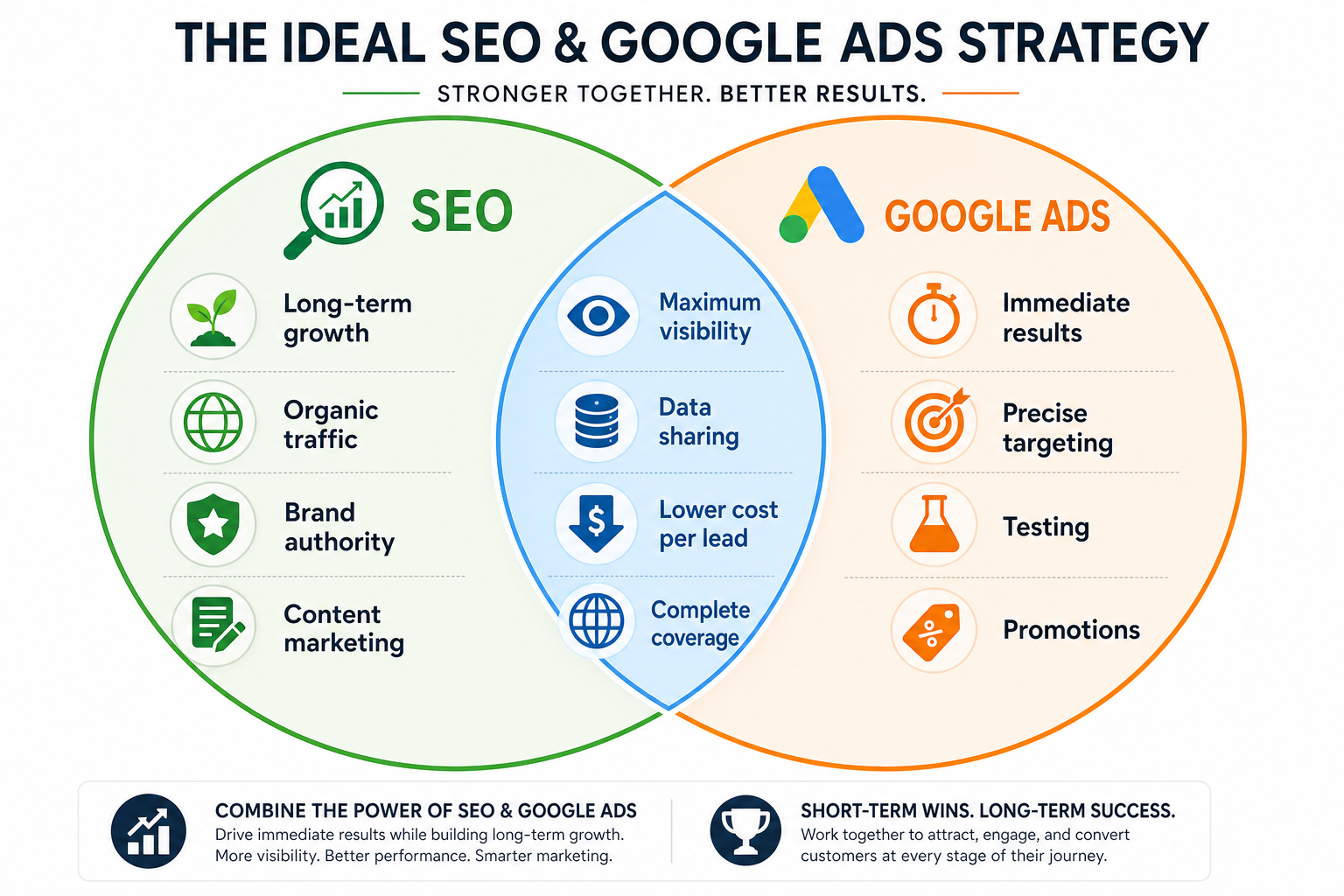
The ideal strategy combines SEO (long-term organic growth) and Google Ads (immediate paid results) — the overlap creates maximum visibility, data sharing, and lower overall cost per acquisition.
The Ideal Strategy: SEO + Google Ads Together
For most businesses in Lucknow, the answer is not SEO or Google Ads. It is both, working together strategically. Here is how the best-performing businesses combine them:
Phase 1: Launch with Google Ads (Month 1-3)
Start generating leads immediately with Google Ads while your SEO foundation is being built. Use ads to test keywords, understand conversion rates, and gather data on which messages resonate with your audience. This revenue funds your SEO investment.
Phase 2: Build SEO Foundation (Month 1-6)
While ads generate revenue, invest in technical SEO, content creation, and local SEO. Publish comprehensive content targeting your most valuable keywords. Optimise your website structure, speed, and mobile experience.
Phase 3: SEO Starts Delivering (Month 4-12)
As organic rankings improve and organic traffic grows, gradually shift budget from Google Ads to content creation and link building. You do not stop ads entirely, but you can reduce spend on keywords where you now rank organically.
Phase 4: Optimised Combination (Month 12+)
Use Google Ads strategically for keywords where you do not rank organically, for promotional campaigns, for remarketing, and for testing new opportunities. SEO handles your core keywords and delivers sustainable, compounding traffic. Together, they dominate the search results page with both paid and organic listings.
Cost Comparison: SEO vs Google Ads Over 12 Months
Scenario
Monthly Investment
12-Month Cost
Leads Generated
Cost Per Lead
Google Ads Only
Rs.50,000
Rs.6,00,000
600-1,200
Rs.500-1,000
SEO Only
Rs.40,000
Rs.4,80,000
200-800 (backloaded)
Rs.600-2,400 (decreasing)
SEO + Google Ads
Rs.70,000
Rs.8,40,000
1,000-2,000
Rs.420-840
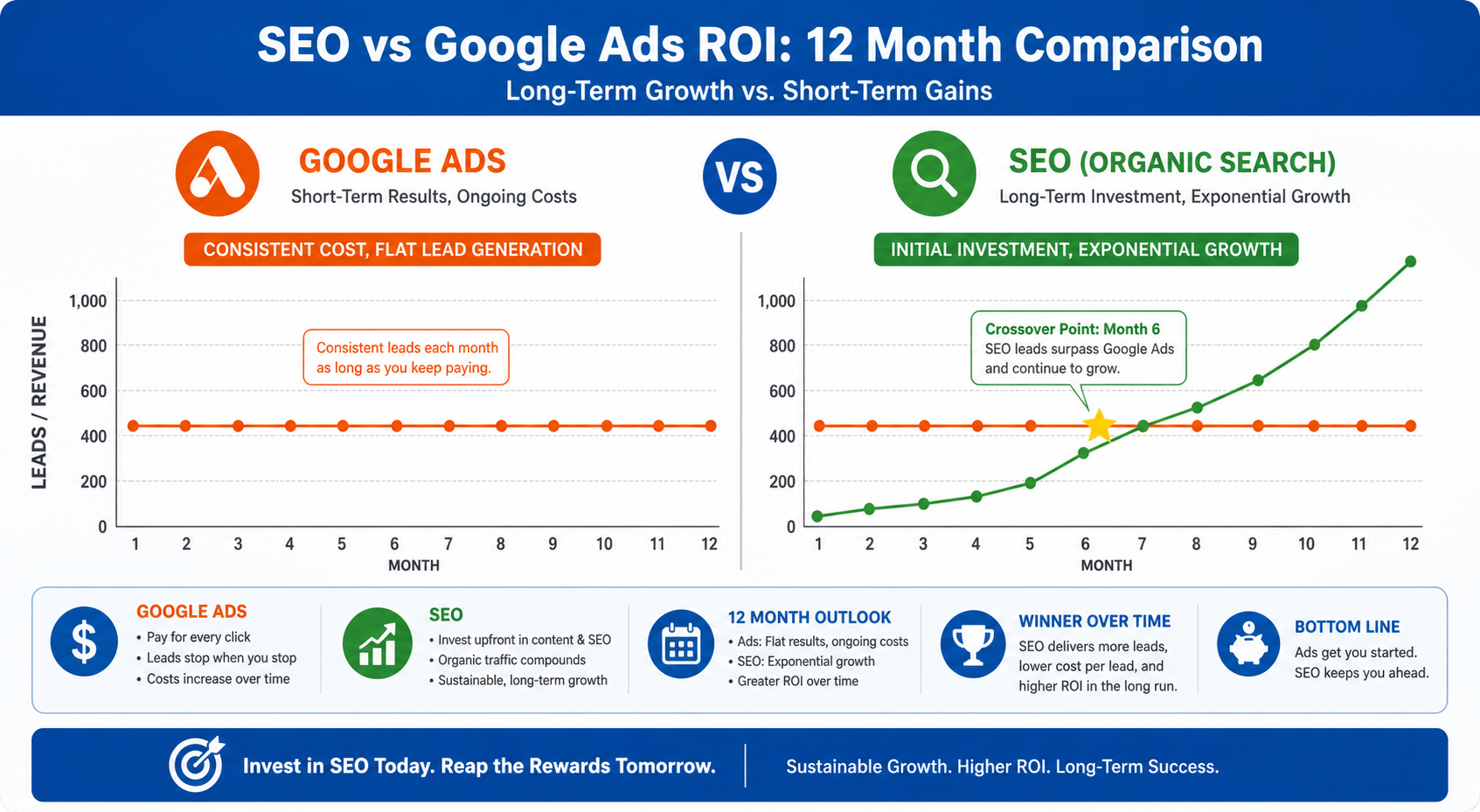
ROI comparison over 12 months: Google Ads (orange) delivers consistent but flat results while SEO (green) compounds over time, eventually delivering higher ROI at lower cost per lead.
The combined approach typically delivers the lowest cost per lead because SEO reduces your dependence on paid clicks over time while ads fill gaps and capture immediate demand.
Industry-Specific Recommendations for Lucknow Businesses
Businesses that invest only in SEO miss immediate revenue opportunities. Businesses that invest only in Google Ads miss the compounding, sustainable growth that SEO delivers. The most successful businesses use both strategically.
Mistake 2: Expecting Instant SEO Results
SEO is a long-term investment. Businesses that expect first-page rankings in 30 days and abandon their SEO strategy prematurely never see the compounding returns that make SEO so powerful. Commit to at least 6-12 months before evaluating SEO performance.
Mistake 3: Running Google Ads Without Proper Tracking
Without conversion tracking, you cannot measure which clicks turn into customers. Every Google Ads campaign must have proper conversion tracking, from form submissions to phone calls to purchases. Without this data, you are spending money blindly.
Both SEO and Google Ads send traffic to your website. If your website is slow, poorly designed, or broken, neither channel will deliver results. Invest in a professional website and ongoing maintenance to maximise returns from both channels.
Mistake 5: Not Aligning SEO and Ads Strategy
When SEO and Google Ads are managed separately without coordination, you miss opportunities for synergy. Share keyword data between channels, use ads to test SEO targets, and use SEO rankings to reduce ad spend on keywords you already rank for organically.
Frequently Asked Questions
Which is cheaper in the long run: SEO or Google Ads?
SEO is significantly cheaper in the long run. While Google Ads requires ongoing spend for every click, SEO traffic is free once you achieve rankings. After 12-18 months of consistent SEO investment, your cost per lead from organic traffic is typically 50-70% lower than from Google Ads. However, SEO requires patience and consistent investment during the initial months when results are still building.
Can I do SEO and Google Ads at the same time?
Yes, and you should. Running both simultaneously is the optimal strategy for most businesses. Google Ads generates immediate leads and revenue while SEO builds long-term sustainable traffic. The data from Google Ads campaigns also informs your SEO strategy, showing which keywords convert best and which ad messages resonate most with your audience.
How long does SEO take to show results?
Most businesses see initial ranking improvements within 3-4 months and meaningful traffic growth within 6-12 months. Local SEO can show results faster, often within 4-8 weeks. Highly competitive keywords may take 12-18 months. The timeline depends on your website’s current authority, competition level, content quality, and consistency of SEO efforts.
Should I hire an agency or do it myself?
For meaningful results, a professional digital marketing agency delivers significantly better ROI than DIY efforts. Agencies bring expertise, tools worth lakhs per year, established processes, and experience across multiple industries. The cost of an agency is typically recovered within 2-3 months through improved results and avoided mistakes.
What budget do I need for SEO and Google Ads in Lucknow?
For small businesses, start with Rs.25,000-50,000/month total across both channels. Mid-size businesses benefit from Rs.50,000-1,50,000/month. Larger businesses should invest Rs.1,50,000+/month. The exact split between SEO and Google Ads depends on your industry, competition, and whether you need immediate results or are building for long-term growth.
How do I measure which channel is performing better?
Track cost per lead, cost per customer, and return on ad spend for each channel separately. Use Google Analytics with proper UTM parameters, conversion tracking in Google Ads, and rank tracking for SEO. Compare not just lead volume but lead quality and conversion rates. A channel that generates fewer but higher-quality leads may deliver better ROI than one generating high volume of poor-quality leads.
Need Help Deciding Between SEO and Google Ads?
Get a free marketing strategy consultation where we analyse your business, competition, and goals to recommend the right channel mix for maximum ROI. Contact UMC today and let us build your customised growth strategy.
A practical insight article on AI infrastructure capacity, capital intensity, neocloud growth, and the operational pressure created by AI compute demand.




4 comments