Editorial note: This article supports the authority side of UMC’s AI-search cluster by explaining why citation readiness has become a distinct strategic concern beyond classic link building alone.
Why Citations Matter More Than Backlinks for AI Visibility
How the shift from link-based authority to citation-based discovery is rewriting the rules of search — and what smart brands are doing about it.
Reading time: 18 minutes | Published: July 2026
The Moment Everything Changed
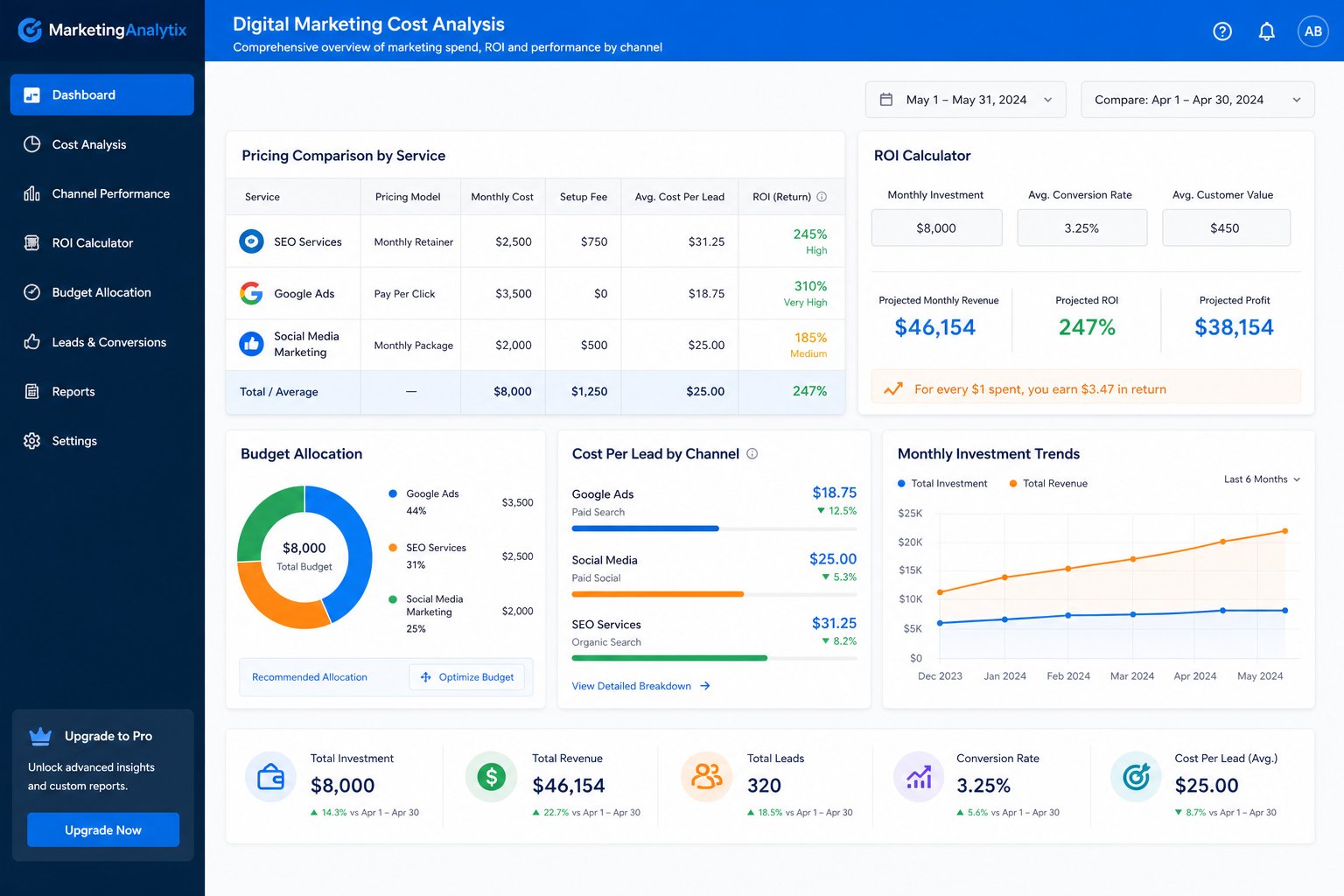
Why citations matter more than backlinks for AI visibility
For twenty years, the formula was simple: build backlinks, climb rankings, earn traffic. It was the iron law of SEO. You earned links from authoritative sites, Google’s algorithm interpreted those links as votes of confidence, and your pages rose in the search results. The sites with the most high-quality backlinks won.
That world is dying.
Not overnight — but fast enough that most marketing teams are already behind. In 2026, nearly half of all Google queries return an AI-generated summary before the traditional blue links appear 9. ChatGPT processes over 3 billion prompts monthly. Perplexity has become the default research tool for a growing segment of B2B buyers. Google AI Overviews now appear on 48% of all searches, up from 34.5% just three months prior 9.
And here’s the uncomfortable truth that most SEO teams are still grappling with: the signals that drive visibility in these AI systems are fundamentally different from the signals that drive traditional search rankings.
Backlinks still matter — but they matter differently now. They’re no longer the primary currency of visibility. A new currency has emerged, and it’s called citations: the mentions, references, and attributions that AI systems include when they generate answers.
This isn’t a subtle shift. According to an Ahrefs study of 75,000 brands, brand mentions correlate with AI visibility three times more strongly than backlinks do — a correlation coefficient of 0.664 versus just 0.218 5. YouTube mentions, which aren’t even traditional backlinks, show an even stronger correlation of 0.737 9.
Let that sink in. The metric that drove SEO strategy for two decades — backlinks — is now one of the weaker predictors of whether your brand will appear in AI-generated answers.
This article is about understanding why this happened, what it means for your visibility strategy, and exactly how to adapt. Because the brands that figure this out first aren’t just protecting their traffic — they’re building an advantage that compounds over time.
Part 1: Understanding the Two-Track Authority System
What Backlinks Actually Do in 2026
Let’s be clear about what backlinks still accomplish, because dismissing them entirely would be a mistake.
Backlinks remain Google’s most reliable signal for ranking competitive queries in traditional organic search. They pass PageRank between pages, signal topical relevance when anchor text and surrounding content align with your topic, build domain authority that lifts all pages on your site, and create referral traffic pathways independent of search 4.
If you want to appear in the blue-link results below the AI Overview — and those results still account for the majority of search clicks across most query categories — backlinks are still essential.
But here’s what backlinks don’t do anymore:
- They don’t guarantee AI citation. A page can have thousands of backlinks and zero AI citations 10.
- They don’t substitute for content quality in entity scoring. AI systems evaluate your content on clarity, structure, and extractability — not link equity.
- They don’t protect rankings if the linked-to content is thin or unhelpful. Google’s 2024 Helpful Content updates and the March 2025 core update together collapsed rankings for pages that had accumulated links through manipulative or low-context placements 4.
The practical definition of a high-quality backlink in 2026 has also evolved. It’s a link placed in content that is topically adjacent to your own, on a domain with real audience and editorial standards, using anchor text that describes what your page is actually about 4.
What AI Citations Are, and How They Work
An AI citation occurs when a language model or AI search feature references your content as a source inside a generated response. Google AI Overviews, Perplexity, ChatGPT with search enabled, and Claude all operate this way — but the mechanics differ significantly by platform.
Google AI Overviews pull heavily, though not exclusively, from pages already ranking on the first page of organic results. Multiple industry analyses have placed first-page citation rates in the 50 to 75 percent range, depending on the query type 4. But — and this is critical — that overlap has been shrinking. As of early 2026, only 38% of AI Overview citations come from pages in Google’s organic top 10, down from 76% in mid-2025 6. The remaining 62% come from beyond the first page of traditional results 2.
Perplexity runs its own web retrieval and weights source credibility, freshness, and answer-match quality. It performs real-time retrieval on every query from an index of over 200+ billion URLs, which means well-optimized new content can appear in citations within hours or days — not months 3. Perplexity cites an average of 21.87 sources per response, the highest of any platform 3.
ChatGPT’s search integration retrieves and cites live web sources, but its default mode draws from training data where Wikipedia dominates (47.9% of top citations) and Reddit accounts for 12% 3. When browsing is active, ChatGPT Search shows an 87% correlation with Bing’s top 10 results — but when browsing is off, it draws entirely on pre-training data, making citation behavior fundamentally different even within the same product 3.
Claude’s web search prioritizes authoritative, well-structured sources with clear attribution. It favors content structured with clear definitions and bullet points — pages with this formatting are up to 30% more likely to be selected 3.
The Two Tracks Running in Parallel
Search authority in 2026 runs on two separate but overlapping tracks 4:
Track One: Traditional PageRank. Backlinks pass authority between pages, domain rating accumulates, and rankings follow. This track decides where you appear in the blue-link results.
Track Two: AI Citation Authority. LLMs and AI search features decide which sources to pull into generated answers based on signals that don’t always map to link counts. This track decides whether you appear at all in the AI-generated answers that now intercept a significant share of informational queries.
The mistake most SEOs make in 2026 is treating these as the same problem. They require overlapping but distinct strategies. And the divergence between the two tracks is accelerating.
Part 2: The Data That Changed Everything
The Ahrefs Study: 75,000 Brands Tell a New Story
The most comprehensive analysis of AI citation behavior to date comes from Ahrefs, which studied 75,000 brands to identify which signals actually predict AI search visibility 9. The findings reordered the priority list that a decade of SEO built around links.
Here are the correlation coefficients with AI visibility, ranked from strongest to weakest:
| Signal | Correlation with AI Visibility |
|---|---|
| YouTube mentions | 0.737 |
| Branded web mentions | 0.664 |
| Branded anchor text | 0.527 |
| Brand search volume | 0.392 |
| Domain Rating (DR) | 0.326 |
| Total backlinks | 0.218 |
The ordering is unambiguous: YouTube mentions predict AI visibility at 0.737, while backlinks — the metric that drove SEO strategy for two decades — sit at 0.218. The gap is not marginal. Brand presence across the web matters roughly 3x more than link counts for AI citation selection 9.
An important caveat from the researchers: correlation is not causation. The data shows that brands with high AI visibility also have high cross-platform presence — not that opening a YouTube channel automatically triggers AI citations. The underlying driver is brand authority as a composite signal that AI training data absorbs 9.
The 80/100 Rule: Most LLM-Cited Pages Don’t Rank
Perhaps the most startling finding comes from the divergence between traditional rankings and AI visibility. 80% of LLM citations don’t rank in Google’s top 100 for the original query 10. Even more striking: 28.3% of ChatGPT’s most-cited pages have zero organic search visibility 10.
This means a page can have no traditional search presence whatsoever and still be a primary source for AI-generated answers. The two systems use genuinely different evaluation logic.
Moz’s 2026 study reinforced this: 88% of Google AI Mode citations are not in the organic SERP 9. Ranking #1 in traditional search gives you only a 33.07% chance of AI citation 9.
The 11% Overlap: Platform-Specific Authority
Here’s where the “one-size-fits-all” approach to SEO completely breaks down. Averi AI’s analysis of 680 million citations found that only 11% of domains appear in both ChatGPT and Perplexity results 5. Even within Google’s own ecosystem, AI Overviews and AI Mode share just 13.7% source overlap 5.
This means authority is platform-specific, not universal. Being cited by ChatGPT doesn’t mean you’ll be cited by Perplexity. Being visible in Google AI Overviews doesn’t guarantee visibility in Google AI Mode. Each platform uses a different retrieval architecture, searches different indexes, and scores sources using different signals 3.
The platform divergence is structural, not random:
- ChatGPT favors Wikipedia (47.9% of top citations), encyclopedic sources, and branded domains 3
- Perplexity favors Reddit (46.7% of top citations), community-validated content, and real-time sources 3
- Google AI Overviews favor YouTube (23.3% of citations) and multi-modal content 3
- Claude favors blogs (43.8% of citations) and expertise-dense content 3
The Conversion Quality Gap
AI citations don’t just drive visibility — they drive better traffic. The data on conversion quality is striking:
- AI-referred visitors convert at 14.2% versus 2.8% for traditional organic traffic 5
- Visitors from AI Overview-affected pages convert at 23x the rate of standard search visitors 9
- Brands mentioned in AI responses experience 91% higher paid CTR — the halo effect extends beyond organic 6
The reason is straightforward: visitors arriving through an AI answer have already encountered a recommendation before they click. They’re further along in their decision-making process, more qualified, and more motivated. Google qualifies intent upstream, sending fewer but dramatically more motivated visitors 9.
Part 3: Why AI Systems Cite What They Cite
The Four Signals of AI Citation Authority
AI citation authority is built on four distinct signals that differ fundamentally from traditional ranking factors 4:
1. Content Structure
Paragraphs that answer a specific question in isolation are extracted more reliably than paragraphs that depend on context from surrounding sections. The “BLUF” principle — Bottom Line Up Front — dominates: 90% of top citations lead with the answer in the first 100 words 10. Pages with 19+ data points earn 2-3x more citations 9.
2. Entity Recognition
Named entities — brands, people, products, studies — anchor AI comprehension. Vague claims get skipped. Specific, attributed claims get cited. AI systems treat your brand as an entity, a node in a semantic network with associated topics, attributes, and credibility signals 4.
3. Source Authority
AI systems apply informal credibility filters. A claim on a recognized industry publication carries more extraction weight than the same claim on a new domain with no citation history. But — and this is the key shift — source authority in the AI context is built through consistent mentions and references across the web, not just through links.
4. Training Data Exposure
For LLMs without live retrieval, your content’s presence in pre-training and fine-tuning datasets matters. This is the least controllable signal, but it correlates with having content indexed on high-authority domains over time. Earned media drives 82-89% of AI citations 9.
The Trust Chain: How the Signals Connect
The relationship between backlinks, rankings, and citations isn’t that backlinks have become irrelevant — it’s that their role has changed. They now function as one link in a longer chain 5:
Backlinks → Authority → Rankings → Citation Eligibility → Brand Mentions → Reinforcement
Backlinks build authority that feeds rankings. Rankings determine citation eligibility (you need to be findable). But brand mentions — whether linked or unlinked — reinforce the entity signals that AI systems use to decide which sources to trust and cite.
This is why brand mentions (linked or unlinked) matter more than citations alone. AI understands brands through language, context, frequency, and entity recognition — not through link graphs 3. Brands that are talked about clearly and often are far more likely to appear in AI-generated answers.
The Fan-Out Effect: Why Ranking #1 Isn’t Enough
Google AI Overviews use a technique called “query fan-out” — breaking the original query into multiple related sub-queries across related topics and data sources simultaneously 4. A search for “business casual wedding attire” might fan out into sub-queries covering what women should wear, what men should wear, appropriate shoes, and whether a tie is required — all retrieved in parallel before a single response is generated.
This has a profound implication: the page that gets cited isn’t always the one targeting the original keyword. A related subtopic page or supporting blog post may be surfaced because it directly answers one of those sub-queries 4. This is why content clustering has become a core strategy for AI search visibility: building authority across all subtopics of a subject increases the surface area for citations, not just ranking for one primary term.
Part 4: The Platform-by-Platform Citation Landscape
ChatGPT: The Consensus Builder
ChatGPT demonstrates a clear preference for sources that represent broad agreement across the web. Wikipedia serves as its most cited source at 7.8% of total citations, while Reddit accounts for 12% 3. For B2B SaaS queries specifically, ChatGPT cites competitor websites 11.1 points more frequently than Google does, showing increased preference for going directly to branded domains when the query implies product research 3.
Key insight for ChatGPT optimization: Pages with First Contentful Paint (FCP) under 0.4 seconds average 6.7 citations, while slower pages (over 1.13 seconds) drop to just 2.1 citations. Fast-loading pages are 3x more likely to be cited by ChatGPT 3.
Domains with active profiles on G2, Capterra, and Trustpilot have 3x higher ChatGPT citation rates. Domains with significant Reddit and Quora presence have 4x higher rates 9.
Perplexity: The Real-Time Researcher
Perplexity operates fundamentally differently from ChatGPT because it performs real-time retrieval on every query. This makes it both the fastest platform to reflect new content and the most influenced by community discussions. Reddit accounts for 46.7% of Perplexity’s top citations, nearly 2x more than Wikipedia 3.
Perplexity runs a six-stage RAG pipeline: query intent parsing, hybrid web retrieval (BM25 + dense embeddings), three layers of reranking including an L3 XGBoost quality gate, and LLM synthesis with inline citation. Of 5–10 retrieved pages, typically only 3–4 earn citations in the final answer 8.
Key insight for Perplexity optimization: Lead with the answer in your first paragraph. Use definitive statements rather than hedged language. Include specific data points and metrics. Structure content for easy scanning with clear headers and bullet points. Content older than 60–90 days loses ground significantly unless it continues receiving new citations or updates 3.
Google AI Overviews: The Hybrid
Google AI Overviews represent a hybrid approach that leans heavily on traditional search rankings while adding a layer of semantic synthesis. 54% of AI Overview citations overlap with the top-20 organic search results, and 97% cite at least one page from the top-20 results 3. But the overlap has grown from 32% at launch to 54% over 16 months, indicating Google is learning to trust its AI’s judgment more than pure ranking signals.
Key insight for Google AI Overviews optimization: Multi-modal content is critical. 78% of featured sources include text, images, videos, and structured data (r=0.92 correlation) 3. A page with a clear FAQ schema, embedded video, annotated screenshots, and structured data markup dramatically outperforms text-only content.
Claude: The Analyst
Claude evaluates sources by prioritizing expertise, factual density, and structural clarity. Content structured with clear definitions and bullet points is up to 30% more likely to be selected 3. Unlike ChatGPT’s consensus approach, Claude favors single authoritative sources that provide comprehensive coverage of a topic.
Key insight for Claude optimization: Build a private knowledge graph of your product’s capabilities. Restructure content into extractable fact blocks that Claude can quote directly. Answer the user’s question in the first 200 words, then provide supporting detail in clearly delineated sections below 3.
Part 5: The Revenue Case for AI Citations
The Traffic Paradox
Here’s the paradox at the heart of AI citations: they often produce zero-click brand exposure, where your name appears in an answer without a link 4. That has brand value. It has entity-building value. It does not always send traffic.
But when AI citations do send traffic, that traffic is dramatically more valuable. Let’s look at the numbers:
- AI-referred visitors convert at 14.2% versus 2.8% for traditional organic traffic 5
- Visitors from AI Overview-affected pages convert at 23x the rate of standard search visitors 9
- Being cited in an AI Overview generates a +35% CTR boost compared to pre-AI Overview performance 6
- Brands mentioned in AI responses experience 91% higher paid CTR 6
The counterweight to traffic loss is real: getting cited inside an AI Overview earns 35% more clicks than holding a traditional ranking alone 5. Being the source Google cites provides significant visibility advantage.
The Cost of Not Being Cited
The downside of AI absence is severe and measurable. Chegg saw a 49% decline in non-subscriber traffic when AI Overviews began covering their questions 5. Organic click-through rates have dropped 15-89% on queries where AI Overviews appear 9.
For pages that sit below an AI Overview without being cited, that traffic loss is unrecovered. AI Overviews have cut organic CTR by 61% on affected queries 5. Conductor’s analysis found 25.11% of searches triggered an AI Overview in Q1 2026, up from 13.14% in March 2025 — nearly double in twelve months 5.
The Compounding Effect
Citation presence amplifies the traffic you already have. A site cited in 100,000 AI Overview responses per month gains authority signals that translate to direct search, type-in traffic, and brand recall — metrics that traditional rank-tracking does not capture but that matter significantly for long-term organic growth 9.
Sites present on four or more platforms are 2.8x more likely to appear in ChatGPT responses 8. Broad, consistent visibility matters as much as any single link.
Part 6: A Practical Framework for AI Citation Optimization
Step 1: Earn Links That Rank You on Page One
For all the talk about citations replacing backlinks, the foundation is still essential. High-quality backlinks from niche-relevant guest posting, editorial link insertions in existing high-traffic content, and organic brand mentions that convert to links over time remain the fastest reliable path to page-one positioning 4.
Remember: around 38% of AI Overview citations still come from top-10 ranked pages. Backlinks feed AI citation likelihood by helping pages rank strongly enough to enter the source pool AI platforms draw from 5.
Step 2: Structure Content for Extraction
This is the single highest-leverage change most content teams can make to improve AI citation rates 4:
- Lead with the answer. The first 100 words of any section are the highest-value real estate for AI Overview citation. Lead with the direct answer, not with context-setting or restating the question 5.
- Use 40-60 word lead paragraphs. This is the optimal extraction length across ChatGPT, Perplexity, and Google AI Overviews 6.
- Use hierarchical headings. Pages with clear heading structures see a 40% citation improvement across platforms 6.
- Include specific statistics with sources. Adding statistics improves AI visibility by 30-40%. Pages with 19+ data points earn 2-3x more citations 9.
- Add comparison tables. These receive priority treatment across all platforms, with a +47% citation rate in Google AI Overviews 6.
- Use FAQ schema. Pages with FAQ schema markup see a 47% Top-3 citation rate versus 28% without 10.
Step 3: Build Entity Breadth
Place your brand and named authors in front of AI training pipelines through consistent publication on authoritative domains 4:
- Consistent brand mentions across topically relevant publications, whether linked or not
- Named authorship, since bylined content by recognized individuals carries more entity weight than anonymous posts
- Cross-platform presence, including Wikipedia entries, Wikidata listings, podcast appearances, conference talks, and press mentions
- Structured data markup on your own site to make entity relationships legible to both crawlers and AI systems
- NAP consistency across every directory, profile, and press release — inconsistent business information splits your brand signal and weakens entity recognition 6
Step 4: Optimize for Each Platform
Since only 11% of domains appear in both ChatGPT and Perplexity results, a one-size-fits-all approach leaves most of the opportunity on the table 5:
For ChatGPT: Maintain active profiles on G2, Capterra, and Trustpilot. Build presence on Reddit and Quora. Ensure fast page load times (FCP under 0.4s). Create “Best X” roundup content that provides comparative context.
For Perplexity: Participate authentically in relevant subreddits and niche forums. Publish fresh, well-optimized content that can appear in citations within hours. Use definitive statements and lead with answers. Include specific data points and metrics.
For Google AI Overviews: Create multi-modal content (text + images + video + structured data). Implement FAQ, HowTo, and Article schema markup. Build topical clusters that cover all subtopics of a subject. Keep content fresh — AI-cited pages average 25.7% fresher than organic top-10 results 6.
For Claude: Structure content with clear definitions and bullet points. Build comprehensive, authoritative resources that cover topics in depth. Answer questions in the first 200 words, then provide supporting detail in clearly delineated sections.
Step 5: Track What Matters
Traditional Search Console rankings do not capture AI citation data, so you need a different measurement approach 6:
New metrics to track:
- Citation Frequency: How often your brand is mentioned across AI platforms
- Share of Voice: Your citations versus competitors in AI answers
- Attribution Quality: Whether citations include your brand name, URL, or content reference
- Cross-Platform Coverage: Presence across ChatGPT + Perplexity + Google AI Overviews + Claude
- AI-Referred Sessions: Traffic arriving from AI-generated answers
Tools and methods:
- Manually query AI platforms with your target keywords to check citation presence
- Monitor branded mentions across the web using tools like Google Alerts
- Use SEO platforms that offer AI visibility tracking (Semrush, Kantar, Ahrefs)
- Look for “impressions without clicks” in Search Console, which may indicate AI Overview presence
Part 7: The Budget Question
How to Reallocate Your SEO Investment
According to Forrester, allocating around 15% of the content budget toward AI search visibility is a reasonable starting point for most organizations 5. Where the rest goes depends on where your authority currently sits.
The practical answer to “AI citations vs backlinks” isn’t a choice — it’s a sequenced strategy 4:
- Backlinks keep you discoverable and trusted in traditional search
- Citation-ready structure determines whether AI engines actually quote you
- Brand mentions reinforce both by building entity authority
Treating them as one connected program produces better results than optimizing either alone 8. The trust chain runs in one direction: backlinks build authority that feeds rankings, rankings determine citation eligibility, and brand mentions reinforce both 5.
The Earned Media Multiplier
Earned media deserves special attention because it’s the single most efficient way to build both tracks simultaneously. When your brand is mentioned in a reputable publication, you potentially gain:
- A backlink (if the mention is linked)
- A brand mention (which correlates 3x more strongly with AI visibility)
- Entity recognition signals for AI training data
- Referral traffic from the publication’s audience
- Increased brand search volume (which itself correlates with AI citation at 0.392)
Earned media drives 82-89% of AI citations 9. And the impact can be fast: Stacker and Scrunch documented substantial citation increases within 30 days of earned media distribution across 87 stories and 8 AI platforms 9.
Part 8: The Future of Citation-Based Visibility
Where This Is Heading
The trajectory is clear: AI search is not a trend, it’s a structural shift in how people discover information. Consider the trajectory:
- AI Overviews appeared on 25.11% of searches in Q1 2026, up from 13.14% in March 2025 5
- Ahrefs data shows AI Overviews appearing on 48% of queries as of March 2026, up from 34.5% in December 2025 9
- 73% of B2B buyers now use AI tools in their research process 6
- Google reports AI Overviews are driving over a 10% increase in Search usage for the query types that show them 5
As AI search matures, we can expect several developments:
Bidirectional verification: Platforms may implement source-level feedback loops where publishers can mark which citations are accurate or inaccurate, and platforms adjust future citation patterns accordingly 7.
Vertical-specific optimization: Medical, legal, and financial verticals will develop platform-specific best practices as AI systems become more sophisticated at evaluating expertise in specialized domains 7.
Entity-first indexing: AI systems will increasingly treat brands as primary entities, with all content, mentions, and references feeding into a unified authority score that determines citation likelihood across platforms.
The Small Business Opportunity
One of the most meaningful shifts in the 2026 search landscape is that AI models care about relevance to the specific query and the specific user, not just overall domain size 6. A small business that builds consistent local brand signals, earns community reviews, and keeps its listings verified can out-rank a national competitor in its local market without needing a million-dollar link-building budget.
This levels the playing field in a way that traditional SEO never could. When AI systems evaluate sources based on content clarity, entity recognition, and topical relevance rather than link equity, a well-structured page on a mid-tier domain can outperform a vague, keyword-stuffed page on a high-authority domain 10.
Conclusion: The Citation-First Mindset
The brands that will dominate visibility in the next three years are not necessarily the ones with the most backlinks. They’re the ones that are consistently mentioned, clearly described, and structurally optimized for AI extraction across the platforms where their audiences actually search.
This doesn’t mean backlinks are dead. It means their role has changed from being the primary driver of visibility to being one component of a broader authority system. Backlinks still build the foundational authority that helps pages rank. But rankings are now just the entry ticket — citations are what determine whether you’re actually seen.
The trust chain runs: backlinks → authority → rankings → citation eligibility → brand mentions → reinforcement. Teams investing across all three signals — links, structure, and mentions — are better positioned than those optimizing for one in isolation 5.
The question for every marketing leader in 2026 is no longer “How do we rank #1?” It’s “When AI systems answer questions in our category, does our brand show up?”
If you don’t have an answer to that question yet, the time to start building one is now. Because your competitors — the ones already showing up in ChatGPT, Perplexity, and Google AI Overviews — aren’t waiting.
Key Takeaways
- Brand mentions correlate 3x more strongly with AI visibility than backlinks (0.664 vs 0.218) 5
- Only 38% of AI Overview citations come from top-10 organic results — the majority come from beyond page one 6
- 80% of LLM citations don’t rank in Google’s top 100 for the original query 10
- Only 11% of domains appear in both ChatGPT and Perplexity results — authority is platform-specific 5
- AI-referred visitors convert at 14.2% versus 2.8% for traditional organic traffic 5
- Being cited in an AI Overview generates a +35% CTR boost 6
- Each platform has distinct citation preferences — Wikipedia for ChatGPT, Reddit for Perplexity, YouTube for Google AI Overviews, blogs for Claude 3
- Content structure matters more than link equity for AI citation — lead with answers, use clear headings, include specific data 4
- Earned media drives 82-89% of AI citations and can show results within 30 days 9
- Forrester recommends allocating 15% of content budget toward AI search visibility as a starting point 5
Ready to audit your brand’s AI citation presence? Start by querying ChatGPT, Perplexity, and Google AI Overviews with your target keywords. If your brand isn’t showing up, the gap isn’t your backlink profile — it’s your entity authority, content structure, and cross-platform presence. The brands that fix this first win the next decade of search visibility.
Related AI authority resources
- How B2B Brands Get Cited in AI Search — a practical model for improving citation probability.
- How to Rank in AI Search Results — the broader best-practices guide.
- Best AI Search Analytics Tools for Marketing Teams — tools for monitoring visibility and citation patterns.
- How to Rank Higher on Google: What Actually Matters — the broader SEO companion for traditional search visibility.