SEO vs PPC: The Ultimate Digital Marketing Debate
One of the most common questions business owners ask is: should I invest in SEO or PPC? The truth is, both strategies have unique strengths, and the best approach depends on your business goals, timeline, budget, and competitive landscape.
In 2026, the line between SEO and PPC continues to blur with AI-powered features like Google AI Overviews, Performance Max campaigns, and advanced organic ranking signals. Understanding how each strategy works—and when to use them—is critical for maximizing your digital marketing ROI.
Understanding SEO (Search Engine Optimization)
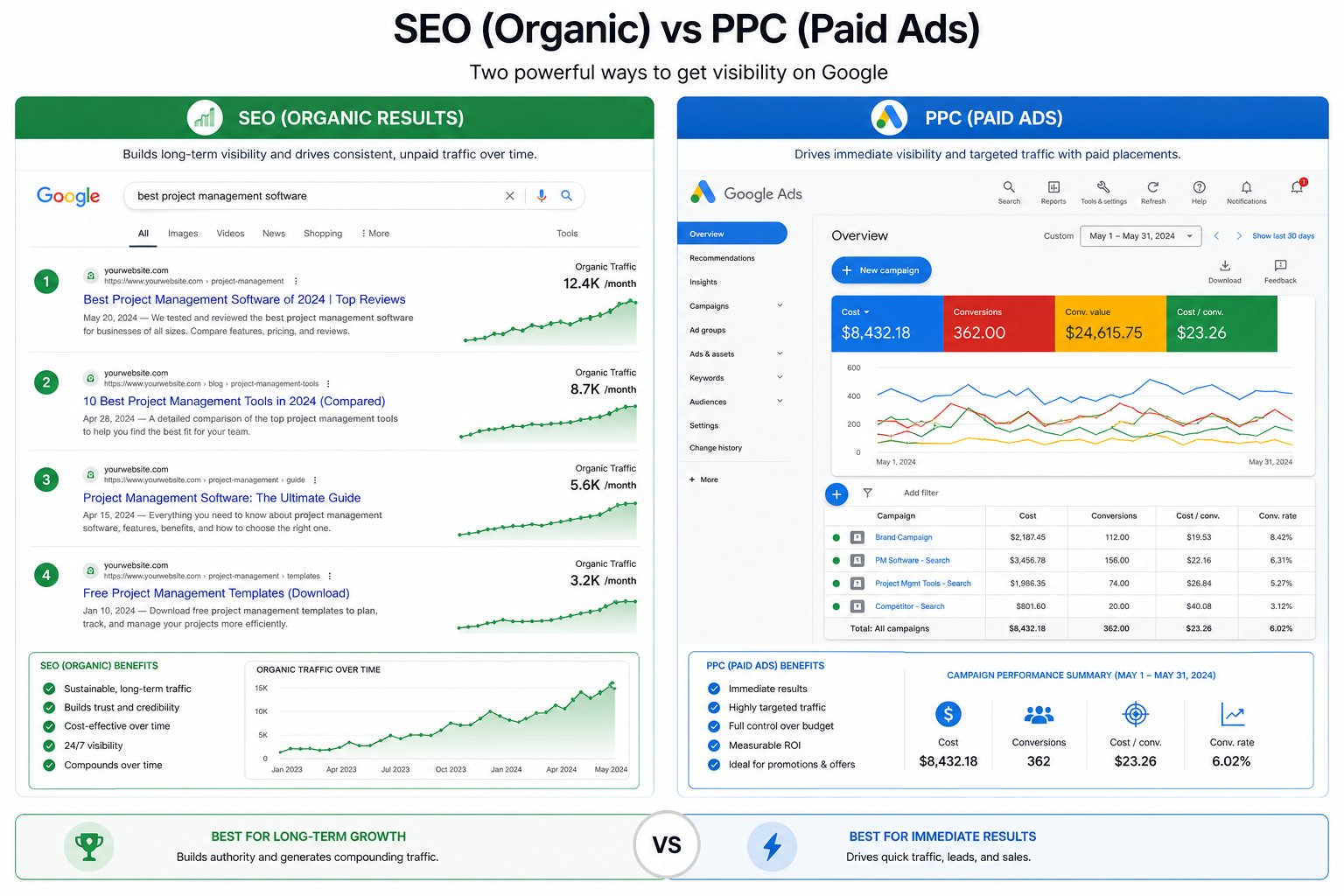
SEO is the practice of optimizing your website and content to rank organically in search engine results. Unlike paid advertising, organic rankings are earned through quality content, technical optimization, and authority building.
How SEO Works in 2026
- Technical SEO: Site speed, mobile optimization, Core Web Vitals, structured data, and crawlability
- On-Page SEO: Keyword optimization, content quality, internal linking, and user experience
- Off-Page SEO: Backlinks, brand mentions, social signals, and domain authority
- AI Search Optimization: Optimizing for AI Overviews, generative search engines, and voice search
Pros of SEO
- Sustainable Long-Term Results: Once you rank, you get consistent traffic without paying per click
- Higher Trust and Credibility: 70-80% of users ignore paid ads and click organic results
- Cost-Effective Over Time: While SEO requires upfront investment, the cost per acquisition decreases over time
- Brand Authority: Ranking at the top organically positions your brand as an industry leader
- Compound Returns: Content created today can drive traffic for years
Cons of SEO
- Takes Time: Significant results typically take 4-12 months
- Requires Ongoing Effort: Algorithm changes and competitor activity require constant adaptation
- Not Guaranteed: Rankings can fluctuate based on algorithm updates
- Complex and Technical: Requires specialized knowledge and expertise
Understanding PPC (Pay-Per-Click Advertising)
PPC advertising allows you to pay for placement in search engine results and other platforms. You bid on keywords and pay each time someone clicks your ad. Google Ads, Microsoft Advertising, and social media platforms are the primary PPC channels.
How PPC Works in 2026
- Search Ads: Text ads that appear at the top of Google search results
- Display Ads: Visual banner ads across the Google Display Network
- Shopping Ads: Product listings with images, prices, and reviews
- Performance Max: AI-driven campaigns that optimize across all Google channels automatically
- Social Media Ads: Targeted advertising on Facebook, Instagram, LinkedIn, and TikTok
Pros of PPC
- Immediate Results: Start driving traffic within hours of launching a campaign
- Precise Targeting: Target by keyword, location, demographics, interests, and behavior
- Measurable ROI: Track every click, conversion, and dollar spent with precision
- Scalable: Increase or decrease spending based on performance
- Brand Visibility: Appear at the top of results even against established competitors
Cons of PPC
- Ongoing Costs: Traffic stops when you stop paying
- Increasing Competition: CPCs continue to rise across most industries
- Ad Fatigue: Audiences may become desensitized to your ads over time
- Complexity: Managing effective campaigns requires expertise and constant optimization
SEO vs PPC: Head-to-Head Comparison
| Factor | SEO | PPC |
|---|---|---|
| Speed to Results | 4-12 months | Immediate (hours to days) |
| Cost Per Click | Free (after investment) | $1-$50+ depending on industry |
| Long-Term Value | Excellent (compounds over time) | None (stops when budget stops) |
| Trust Factor | Higher (organic results trusted more) | Lower (labeled as ads) |
| Targeting Precision | Moderate (keyword-based) | Excellent (multi-dimensional) |
| Scalability | Gradual | Instant |
| Best For | Long-term growth and authority | Quick wins and testing |
When to Choose SEO
- You have a long-term business strategy and can invest 6+ months before seeing major returns
- Your industry has high CPC costs that make PPC unsustainable long-term
- You want to build brand authority and thought leadership
- You’re in a niche with low competition for target keywords
- You have the resources to create high-quality content consistently
When to Choose PPC
- You need immediate results for a product launch, promotion, or seasonal campaign
- You’re entering a highly competitive market where SEO will take years
- You want to test keywords and messaging before committing to SEO
- You have a specific budget and need predictable spending
- You’re targeting time-sensitive opportunities or events
The Best Strategy: Combining SEO and PPC
The most successful businesses don’t choose between SEO and PPC—they use both strategically. Here’s how to combine them effectively:
1. Use PPC Data to Inform SEO Strategy
Run PPC campaigns to test keywords, ad copy, and landing pages. Use conversion data to identify which keywords and messaging work best, then prioritize those for your SEO efforts.
2. Dominate the SERPs
When you rank organically AND run paid ads for the same keywords, you increase your visibility, click-through rates, and overall traffic. Studies show this dual presence increases CTR by 20-30%.
3. Retarget Organic Visitors
Use PPC retargeting to re-engage visitors who found you through organic search but didn’t convert. This creates a powerful conversion funnel that leverages your SEO investment.
4. Fill the Gaps
While SEO builds over time, use PPC to maintain visibility for high-value keywords where you haven’t yet achieved organic rankings.
Real-World ROI Comparison
A typical business investings $5,000/month in digital marketing might see:
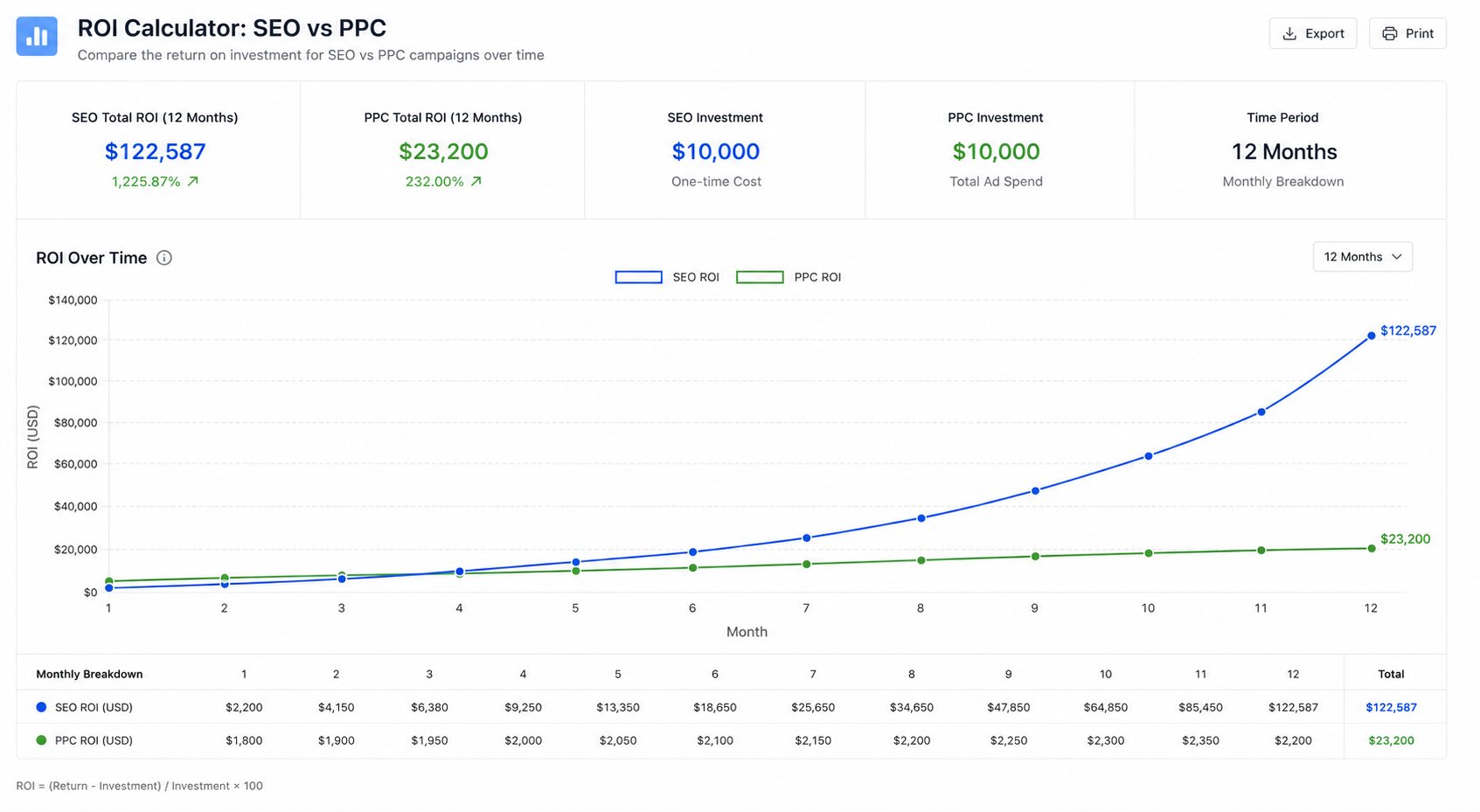
- SEO Only ($5,000/month): Months 1-3: minimal traffic increase. Months 4-6: 30-50% traffic growth. Months 7-12: 100-300% traffic growth with declining cost per acquisition.
- PPC Only ($5,000/month): Immediate traffic from day one. Consistent leads at predictable cost. But zero residual value when spending stops.
- Combined ($3,000 SEO + $2,000 PPC): Immediate leads from PPC while SEO builds. Over 12 months, decreasing PPC spend as organic traffic grows. Best overall ROI.
Get Expert Help with SEO and PPC
Whether you need SEO, PPC, or a combined strategy, Unified Management Consulting delivers data-driven results for businesses across the United States. Our team of certified specialists can help you maximize your digital marketing investment.
Explore our digital marketing services to learn how we can help your business grow through strategic SEO and PPC campaigns.
Frequently Asked Questions
Is SEO worth it in 2026?
Yes, SEO remains one of the highest-ROI marketing channels. With AI search growing, SEO is evolving but still critical for sustainable business growth.
How much should I spend on PPC?
Most businesses should allocate 5-15% of revenue to PPC, adjusting based on industry CPCs and conversion rates. Start small, measure results, and scale what works.
Can I do SEO myself?
Basic SEO is achievable in-house, but competitive markets typically require professional expertise to rank for high-value keywords against established competitors.
Which gives better ROI: SEO or PPC?
Over 12+ months, SEO typically delivers higher ROI. For shorter timeframes (under 6 months), PPC usually wins. The best approach combines both.