Email Marketing: Still the Highest ROI Channel in 2026
Despite the rise of social media, chatbots, and AI-powered marketing, email remains the most profitable digital marketing channel. The average ROI for email marketing is $42 for every $1 spent—a return that no other channel can match consistently.
But email marketing in 2026 looks very different from even two years ago. AI-powered personalization, privacy changes, and evolving consumer expectations have transformed what works. This guide covers 10 proven strategies that drive real revenue from email marketing.
Strategy 1: Build a Quality Email List (The Right Way)
Your email list is only as good as its quality. A list of 1,000 engaged subscribers is more valuable than 100,000 people who never open your emails.
Ethical List Building Tactics
- Lead Magnets: Offer valuable resources (guides, templates, tools, webinars) in exchange for email addresses
- Content Upgrades: Offer bonus content related to specific blog posts
- Exit-Intent Popups: Capture leaving visitors with compelling offers
- Quiz Funnels: Interactive quizzes that deliver personalized results via email
- Referral Programs: Incentivize subscribers to share with friends
- Checkout Collection: Collect emails during purchases with clear opt-in language
What NOT to Do
- Never buy email lists—they’re full of spam traps and inactive addresses
- Don’t add people without explicit consent (violates CAN-SPAM and GDPR)
- Avoid deceptive opt-in tactics that lead to spam complaints
Strategy 2: Segment Your Audience
Segmented email campaigns generate 58% of all email revenue. Stop sending the same email to everyone—personalize based on:
- Demographics: Age, location, job title, company size
- Behavior: Purchase history, website activity, email engagement
- Lifecycle Stage: New subscriber, active customer, lapsed customer, VIP
- Preferences: Content interests, email frequency, product categories
- Engagement Level: Active openers, occasional readers, dormant subscribers
Strategy 3: Master Email Automation
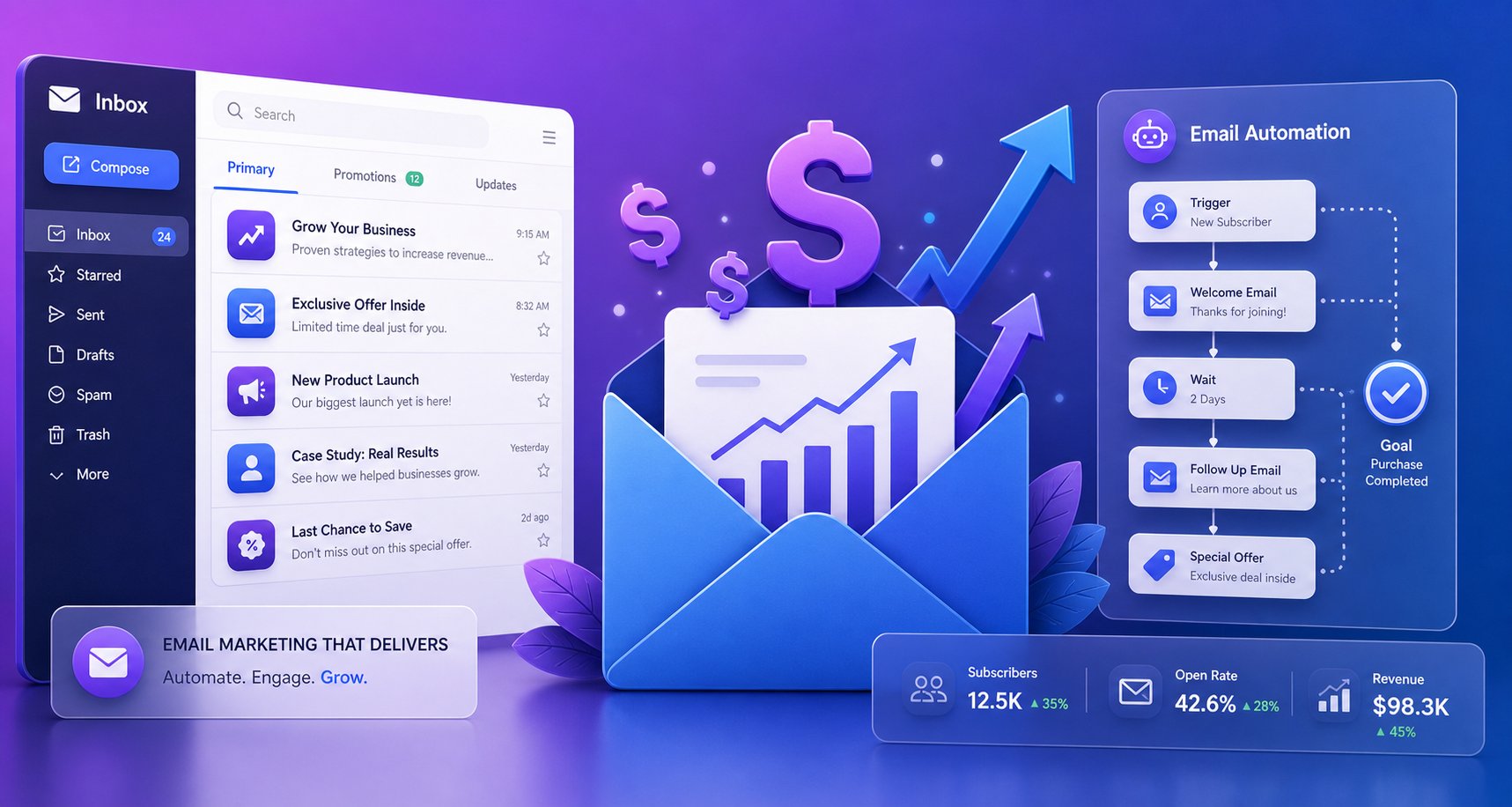
Automated emails generate 320% more revenue than non-automated emails. Set up these essential automated sequences:
Welcome Sequence (5-7 emails over 2 weeks)
- Email 1: Welcome + deliver promised lead magnet
- Email 2: Introduce your brand story and values
- Email 3: Share your most valuable content
- Email 4: Social proof (testimonials, case studies)
- Email 5: Soft sell—introduce your products/services
- Email 6: Address common objections
- Email 7: Special offer for new subscribers
Abandoned Cart Sequence (3 emails)
- Email 1 (1 hour): Reminder with cart contents
- Email 2 (24 hours): Social proof + urgency
- Email 3 (48 hours): Discount or free shipping offer
Re-engagement Sequence (3-4 emails)
- Email 1: “We miss you” with personalized recommendations
- Email 2: Exclusive offer or new features announcement
- Email 3: Last chance—unsubscribe or stay with special incentive
Strategy 4: Write Subject Lines That Get Opens
Your subject line determines whether your email gets opened or ignored. Average open rates are 20-25%, but great subject lines can achieve 40%+.
Subject Line Formulas That Work
- Curiosity: “The #1 mistake costing you leads (and how to fix it)”
- Urgency: “Last chance: 50% off ends tonight”
- Personalization: “John, here’s your personalized marketing report”
- Numbers: “7 strategies that increased our revenue by 240%”
- Questions: “Are you making these SEO mistakes?”
- Benefit-driven: “Get 3x more leads without spending more on ads”
Best Practices
- Keep subject lines under 50 characters for mobile
- A/B test subject lines with every campaign
- Avoid spam trigger words: “free,” “guaranteed,” “$$$”
- Use preview text to complement your subject line
- Include emojis sparingly (can increase opens by 25%)
Strategy 5: Design Emails That Convert
Email Design Best Practices for 2026
- Mobile-First: 60%+ of emails are opened on mobile—design accordingly
- Single Column: Clean, scannable layout that works on all devices
- Clear CTA: One primary call-to-action per email, prominently displayed
- Visual Hierarchy: Use headings, images, and whitespace to guide the eye
- Brand Consistency: Match your email design to your website
- Dark Mode: Test how your emails look in dark mode (42% of users prefer it)
Strategy 6: Leverage AI for Personalization
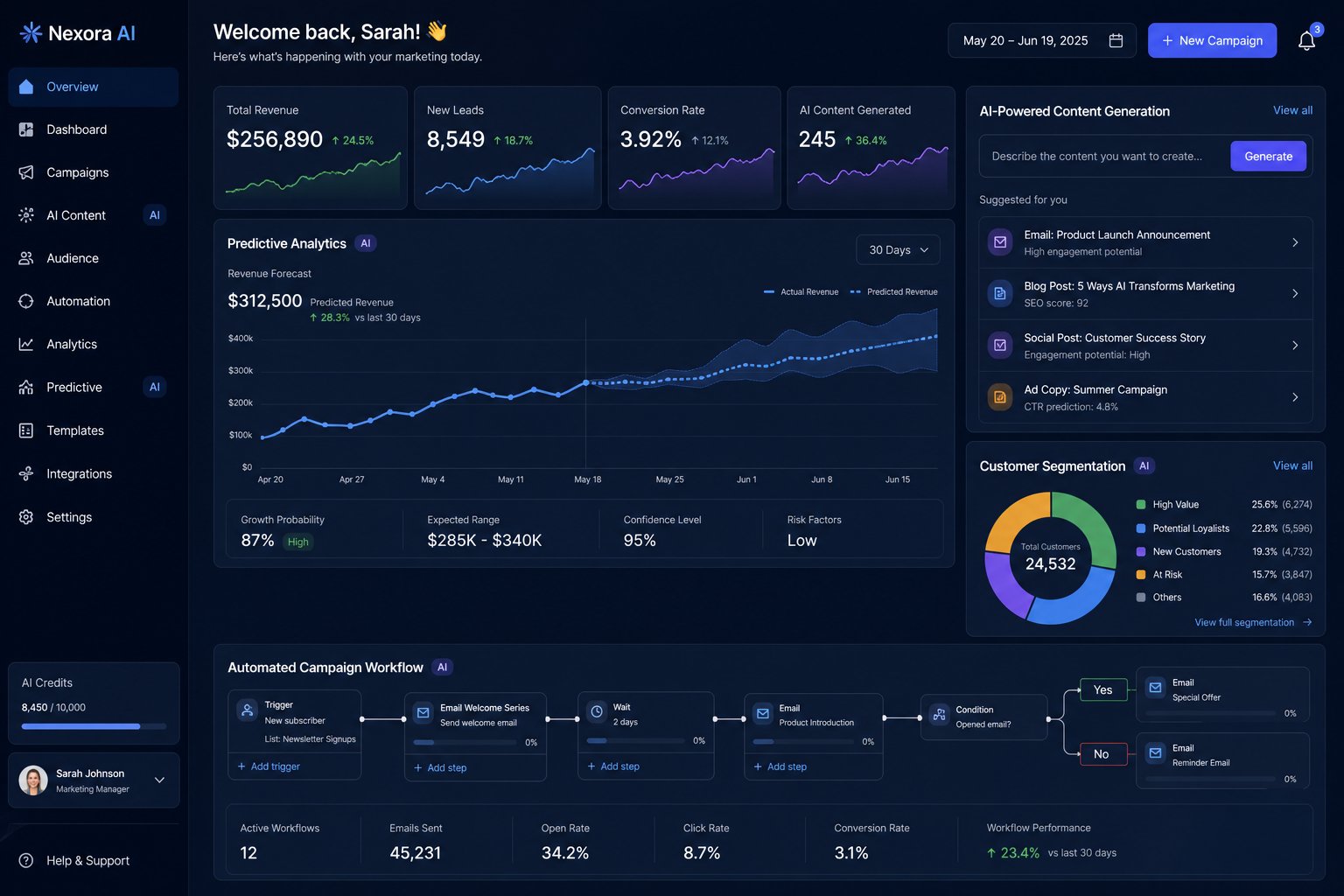
AI-powered personalization goes far beyond “Hi [First Name]”:
- Send Time Optimization: AI determines the best time to email each subscriber
- Content Recommendations: Dynamically insert product/content suggestions based on behavior
- Subject Line Optimization: AI generates and tests subject lines for each segment
- Predictive Analytics: Identify subscribers most likely to buy, churn, or engage
- Dynamic Content Blocks: Show different content to different subscribers in the same email
Strategy 7: Optimize for Deliverability
The best email is useless if it lands in spam. Protect your deliverability:
- Authenticate Your Domain: Set up SPF, DKIM, and DMARC records
- Warm Up New IPs: Gradually increase sending volume for new email accounts
- Monitor Reputation: Track sender score and blacklist status regularly
- Clean Your List: Remove bounced, inactive, and disengaged subscribers quarterly
- Avoid Spam Triggers: Don’t use excessive images, all-caps, or spam words
- Include Unsubscribe Link: Make it easy to opt out (required by law)
Strategy 8: Use Behavioral Triggers
Triggered emails based on user behavior have 8x higher open rates than bulk campaigns:
- Page View Triggers: Email related content after someone views a specific page
- Purchase Triggers: Follow up with complementary products or usage tips
- Milestone Triggers: Celebrate anniversaries, birthdays, and loyalty milestones
- Inactivity Triggers: Re-engage subscribers who haven’t opened in 30+ days
- Price Drop Alerts: Notify subscribers when products they viewed go on sale
Strategy 9: Test Everything
A/B testing is the key to continuous improvement. Test these elements:
- Subject lines (the most impactful test)
- Send times and days of the week
- CTA button color, text, and placement
- Email length (short vs. long-form)
- Image-heavy vs. text-heavy designs
- Personalization depth
- Offer types (discount vs. free shipping vs. bonus content)
Strategy 10: Measure What Matters
Essential Email Marketing Metrics
| Metric | What It Measures | Good Benchmark |
|---|---|---|
| Open Rate | Subject line effectiveness | 20-30% |
| Click Rate | Content relevance and CTA | 2-5% |
| Conversion Rate | Overall effectiveness | 1-5% |
| Revenue Per Email | Monetary value | $0.10-$1.00+ |
| Unsubscribe Rate | List health | Under 0.5% |
| List Growth Rate | Acquisition effectiveness | 2-5% monthly |
Best Email Marketing Tools for 2026
- HubSpot: All-in-one CRM with powerful email automation
- ActiveCampaign: Advanced automation and behavioral triggers
- Mailchimp: User-friendly option for beginners
- Klaviyo: E-commerce focused with deep integrations
- ConvertKit: Creator-focused with excellent automation
- Brevo (Sendinblue): Affordable with SMS and chat features
Get Expert Email Marketing Help
Email marketing done right drives predictable revenue growth. Unified Management Consulting designs and manages email marketing campaigns that generate leads, nurture prospects, and drive sales for businesses across the United States.
Learn more about our digital marketing services and how email marketing can boost your bottom line.
Frequently Asked Questions
How often should I send marketing emails?
1-3 times per week is optimal for most businesses. The key is consistency and value—every email should provide something useful to the reader.
What’s the best day to send marketing emails?
Tuesday, Wednesday, and Thursday generally perform best. However, AI send-time optimization can determine the ideal time for each individual subscriber.
How do I improve my email open rates?
Write compelling subject lines, segment your list, clean inactive subscribers, optimize send times, and maintain good deliverability practices.
Is email marketing still effective in 2026?
Absolutely. Email marketing delivers the highest ROI of any digital channel ($42:$1 average) and remains the most direct way to reach your audience.