Editorial note: This article serves as the strategic comparison page within UMC’s AI-search cluster, helping teams decide how AI visibility work should fit alongside established SEO programs.
AI Visibility vs Traditional SEO: How to Balance Both
The definitive playbook for understanding where to invest, when to prioritize, and how to build a search strategy that works across Google, ChatGPT, Perplexity, and every answer engine that matters.
Reading time: 22 minutes
The Question Every Marketer Is Asking
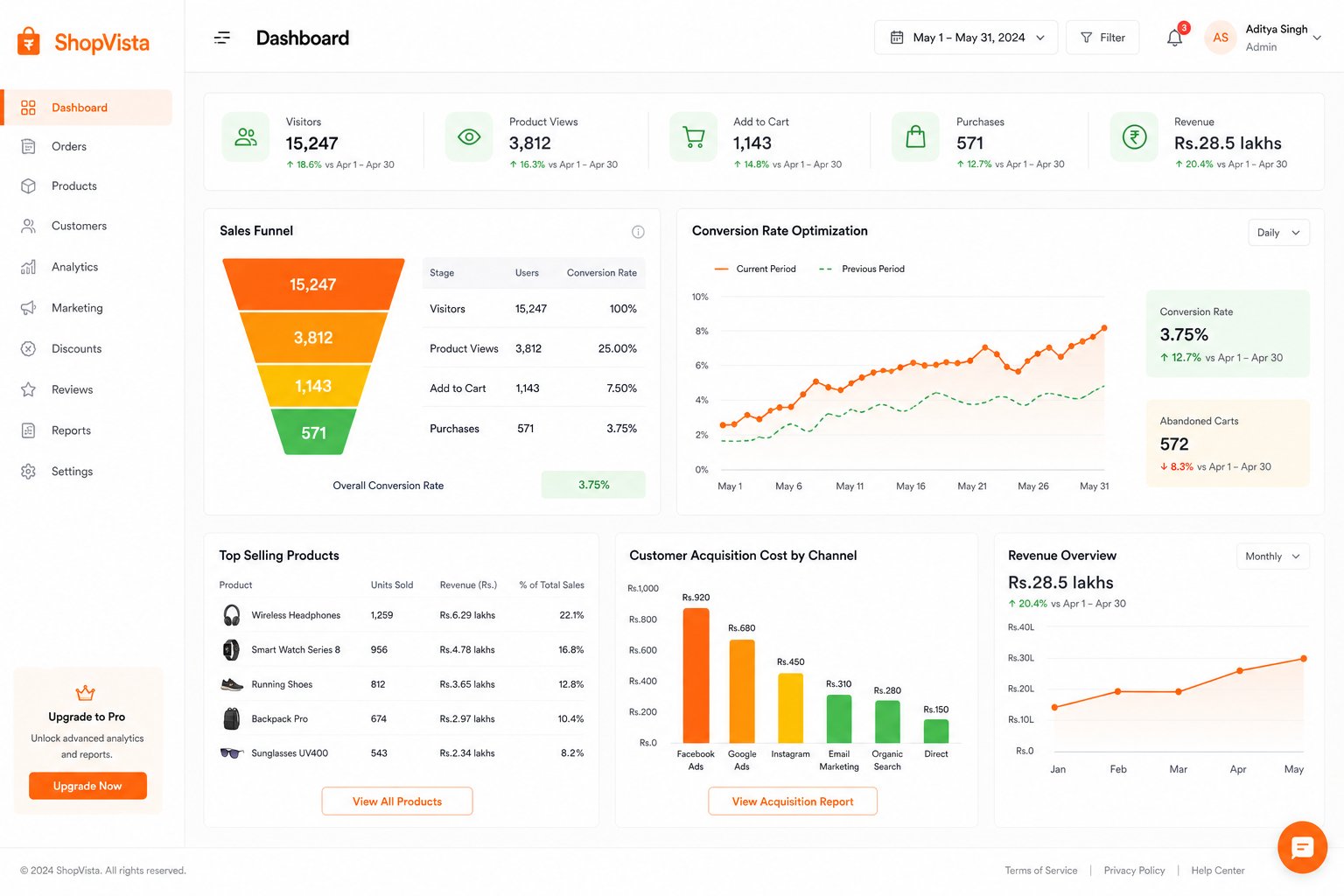
The search landscape has fractured. Google still processes over 8 billion queries a day. ChatGPT serves 2.5 billion queries weekly. Perplexity, Gemini, Claude, and Copilot are growing at 100-370% year-over-year. And your buyers are scattered across all of them.
This creates an urgent strategic question: Should you invest in AI visibility or traditional SEO?
The answer isn’t either/or. It’s both — but the ratio depends on your business type, your audience’s behavior, and your current SEO maturity. Get this wrong, and you’ll either waste resources optimizing for channels your buyers don’t use, or you’ll miss the fastest-growing discovery channel since mobile.
This guide gives you the data, frameworks, and decision trees to make the right call for your specific situation. Not theory. Not hype. The actual numbers and strategies that are working right now.
Part 1: The Landscape — Where We Actually Are in 2026
The Market Share Reality
Let’s start with the numbers that matter:
| Platform | Market Share | Weekly Users | Query Volume |
|---|---|---|---|
| Google Search | 77.9% of digital queries | 5 billion users | ~8 billion/day |
| ChatGPT | 17.1% of digital queries | 800M-1B weekly | 2.5 billion/week |
| Gemini | Growing rapidly | 750M monthly | Via Google AI Overviews |
| Perplexity | ~15% of AI search | 45M monthly | 15M daily |
| Bing/Copilot | ~5% | Significant | Via Microsoft ecosystem |
The key insight: Google still dominates raw volume. But ChatGPT alone captures 17.1% of all digital search queries — and that share is growing while Google’s slowly erodes 3.
The Growth Trajectory
The direction of travel is clear:
- AI search traffic has grown 300-357% year-over-year 1
- Gartner predicts traditional search volume will drop 25% by end of 2026 6
- By 2028, AI search traffic may surpass traditional organic search 4
- 37% of consumers now start their searches with AI rather than Google 5
The Conversion Quality Gap
Here’s where it gets interesting for marketers:
- AI referral traffic converts at 14.2% vs. 2.8% for Google organic — that’s 5x higher 1
- ChatGPT-referred retail traffic converts at 11.4% vs. 5.3% for Google organic 10
- AI-referred visitors view 12 pageviews per visit vs. 9 from Google 6
- AI visitors spend 15 minutes on site vs. 8 minutes from Google referrals 6
The takeaway: AI traffic is smaller in volume but dramatically higher in quality. A single AI-referred visitor is worth 5x a traditional organic visitor.
The Zero-Click Problem
The biggest threat to traditional SEO:
- 60% of all Google searches now end without a click 7
- Google AI Overviews appear in 47-55% of all queries 2
- When AI Overviews appear, CTR drops by 61% (from 1.76% to 0.61%) 1
- Google AI Mode has a 93% zero-click rate 8
But here’s the paradox: brands cited in AI Overviews receive 35% more organic clicks than those not cited 1. Being visible in AI answers actually amplifies your traditional SEO.
Part 2: What Traditional SEO Still Does Best
The Case for SEO in 2026
Despite the AI disruption, traditional SEO remains essential for several reasons:
1. Volume Still Dominates
Google sends 345x more traffic than all major AI search engines combined 7. For most businesses, organic search remains the largest single traffic source.
2. Commercial Intent Queries
When buyers are ready to purchase, they still search Google. Transactional queries (“buy running shoes,” “best CRM pricing,” “plumber near me”) overwhelmingly happen on traditional search engines. AI is used for research; Google is used for buying.
3. Local Search
Google Maps, local pack, and “near me” searches still dominate local discovery. AI engines are improving at local, but Google Business Profile remains the primary channel for local businesses.
4. Navigational Traffic
Branded searches (“Arena.io,” “HubSpot login,” “Salesforce pricing”) still flow through traditional search. You can’t afford to lose this traffic.
5. The Foundation for AI Visibility
Here’s what most marketers miss: strong SEO is a prerequisite for AI visibility. Google’s official guidance states that optimizing for AI Overviews “is still SEO” 9. The same technical foundations — crawlability, site speed, content quality, E-E-A-T — power both traditional and AI search.
What Traditional SEO Optimizes For
| Signal | Traditional SEO | AI Visibility |
|---|---|---|
| Primary goal | Rankings and clicks | Citations and mentions |
| Key metrics | Rankings, traffic, CTR | Citation frequency, share of voice |
| Content format | Long-form, keyword-optimized | Answer-first, extractable chunks |
| Authority signals | Backlinks, domain authority | Brand mentions, entity authority |
| Technical focus | Core Web Vitals, crawlability | Schema, freshness, entity clarity |
| Success measurement | Google Search Console | AI citation tracking tools |
Part 3: What AI Visibility Offers (That SEO Doesn’t)
The Three Disciplines: SEO, AEO, and GEO
In 2026, search optimization has evolved into three distinct but interconnected disciplines 2:
SEO (Search Engine Optimization):
- Goal: Rank in traditional search results and drive clicks
- Platforms: Google, Bing, DuckDuckGo
- Focus: Keywords, backlinks, technical health, content relevance
- Metric: Rankings, organic traffic, CTR
AEO (Answer Engine Optimization):
- Goal: Become the cited answer to specific questions
- Platforms: Featured snippets, voice assistants, People Also Ask, Google AI Overviews
- Focus: Answer-first structure, FAQ schema, concise definitions, entity clarity
- Metric: Snippet wins, direct-answer impressions
GEO (Generative Engine Optimization):
- Goal: Get cited and recommended by AI platforms
- Platforms: ChatGPT, Perplexity, Claude, Gemini, Copilot
- Focus: Entity authority, citation density, information gain, cross-platform brand mentions
- Metric: Citation frequency, AI share of voice, mention rate
The Unique Value of AI Visibility
1. Implicit Endorsement at the Moment of Trust
When ChatGPT recommends your brand, it delivers something traditional SEO cannot: implicit endorsement at the exact moment a user forms trust 7. The user has already mentally filtered and compared. Your brand arrives pre-validated.
2. Zero-Click Brand Exposure
Even when users don’t click through, being cited in an AI answer builds brand awareness and authority. This is visibility you can’t buy with traditional SEO.
3. Higher-Intent Traffic
AI-referred visitors arrive pre-educated. They’ve already learned about your product, compared it to alternatives, and been told why it might fit. This is why conversion rates are 4-16x higher.
4. Competitive Moat
Fewer than 12% of marketing teams have a documented AI search strategy 10. Brands that build citation authority now create a compounding advantage that’s increasingly difficult to displace.
5. The Compounding Effect
AI engines favor sources that are already cited. Brands that earn both mentions and citations have a 40% higher likelihood of reappearing across answers 8. Visibility begets visibility.
What AI Visibility Optimizes For
Content Structure:
- Answer-first formatting (direct answer in first 40-80 words)
- Question-based H2 headings that mirror user queries
- Semantic chunking (standalone sections that make sense extracted)
- Specific statistics with named sources (citable claims)
- FAQ sections with FAQPage schema
Authority Signals:
- Brand mentions across Wikipedia, Reddit, G2, industry publications
- Entity clarity (consistent brand description across all platforms)
- Original research and proprietary data (information gain)
- Expert quotes with credentials
- Cross-platform presence (the “consensus signal”)
Technical Requirements:
- Allow AI crawlers (OAI-SearchBot, GPTBot, PerplexityBot)
- Implement comprehensive schema markup
- Ensure server-side rendering (69% of AI crawlers can’t execute JavaScript)
- Maintain content freshness (3.2x more citations for <30-day content)
Part 4: The Overlap — Where SEO and AI Visibility Converge
The 50% Overlap Problem
Here’s the critical insight: only about 50% of Google #1 rankings overlap with AI search citations 2. This means:
- Half the pages ranking first on Google are invisible to AI search engines
- Ranking #1 on Google does not guarantee AI citation
- You need separate optimization strategies for each channel
But the overlap is strong enough that traditional SEO foundations are necessary for AI visibility. Google’s own guidance confirms: optimizing for AI Overviews is still SEO 9.
The Shared Foundation
Both SEO and AI visibility reward:
- E-E-A-T signals — Experience, Expertise, Authoritativeness, Trustworthiness 8
- Technical health — Crawlability, site speed, mobile experience
- Content quality — Comprehensive, accurate, well-structured content
- Domain authority — Established, trusted domains win in both channels
- Content freshness — Recently updated content performs better everywhere
The Layered Architecture
Think of search optimization as a three-layer stack 9:
Layer 1: SEO (Foundation)
- Technical health, crawlability, indexation
- Keyword research and targeting
- Backlink acquisition and domain authority
- Content quality and comprehensiveness
Layer 2: AEO (Answer Visibility)
- Answer-first content structure
- FAQ and HowTo schema markup
- Featured snippet optimization
- Voice search readiness
Layer 3: GEO (AI Citation)
- Entity authority and brand mentions
- Cross-platform consensus signals
- Original research and information gain
- Multi-engine citation tracking
Remove any layer, and the entire strategy weakens. SEO without AI visibility misses the fastest-growing channel. AI visibility without SEO lacks the foundation that makes content discoverable and trustworthy.
Part 5: The Decision Framework — Where to Invest First
If You’re Early in SEO Maturity (New Site, Low Domain Authority, Inconsistent Publishing)
Priority: 80% Traditional SEO / 20% AI Visibility
Why: AI engines can’t cite content that doesn’t rank or isn’t discoverable. Build the foundation first.
Focus on:
- Technical SEO (crawlability, site speed, mobile experience)
- Content quality and consistency (publish regularly)
- Basic keyword targeting and topical coverage
- E-E-A-T signals (author bios, credentials, transparency)
- Domain authority building (quality backlinks)
AI visibility basics to implement now:
- Add FAQPage and Article schema to key pages
- Write answer-first introductions (direct answer in first paragraph)
- Claim/optimize Google Business Profile and Bing Places
- Ensure content is crawlable by AI bots (no JavaScript-dependent content)
If You Have Solid SEO Foundations (Ranking for Target Keywords, Consistent Traffic)
Priority: 50% Traditional SEO / 50% AI Visibility
Why: Your content is already discoverable. Now you need to make it citable. This is where the highest ROI lives.
Focus on:
- Restructuring existing content for AI extraction (answer capsules, question-based H2s)
- Building third-party authority (Wikipedia, Reddit, review platforms, digital PR)
- Implementing comprehensive schema markup
- Optimizing for platform-specific preferences (Bing for ChatGPT, Google for AI Overviews)
- Creating original research and proprietary data
Highest-impact actions:
- Audit your top 20 pages for AI citation potential
- Add 40-80 word direct answers to the top of each section
- Convert H2s to question format where appropriate
- Build presence on platforms AI engines trust (Wikipedia, G2, LinkedIn)
- Start tracking citations across ChatGPT, Perplexity, and Google AI Overviews
If Your Buyers Heavily Use AI (B2B SaaS, Technology, Professional Services, Healthcare)
Priority: 30% Traditional SEO / 70% AI Visibility
Why: 94% of B2B buyers use generative AI during the purchase process. If your buyers are in AI, you need to be in AI.
Focus on:
- Deep AI citation tracking across all platforms
- Building consensus signals across platforms AI engines trust
- Publishing original research and proprietary data
- Optimizing for the specific AI platform your buyers use most
- Creating comparison content and alternative pages
Platform-specific tactics:
- ChatGPT: Optimize for Bing indexing, build Wikipedia presence, create authoritative comparison content
- Perplexity: Build Reddit presence, publish fresh content regularly, include peer-reviewed citations
- Google AI Overviews: Maintain strong traditional SEO, implement FAQ/HowTo schema, add multi-modal content
- Claude: Create deeply technical content, cite primary sources, acknowledge trade-offs
If You’re a Local Business (Restaurant, Clinic, Home Services, Retail)
Priority: 90% Traditional SEO / 10% AI Visibility
Why: Local search is still dominated by traditional Google search. Google Maps, local pack, and “near me” searches remain the primary discovery channels.
Focus on:
- Google Business Profile optimization
- Local pack rankings
- Reviews and NAP consistency
- Local keyword targeting
AI visibility basics:
- Claim and optimize Bing Places (for Copilot visibility)
- Ensure consistent NAP across all platforms
- Add FAQ schema to answer common customer questions
- Monitor AI citations for local queries
Part 6: Implementation Strategy — The 90-Day Plan
Days 1-30: Audit and Foundation
Week 1: Baseline Assessment
- Audit current Google rankings and traffic (traditional SEO baseline)
- Test 20-30 target queries in ChatGPT, Perplexity, and Google AI Overviews
- Record which sources are cited and whether your brand appears
- Calculate baseline AI share of voice vs. competitors
Week 2: Technical Foundation
- Verify robots.txt allows AI crawlers (OAI-SearchBot, GPTBot, PerplexityBot)
- Submit sitemap to Bing Webmaster Tools (for ChatGPT visibility)
- Enable IndexNow for rapid Bing indexing
- Audit JavaScript rendering (ensure content is in initial HTML)
Week 3: Content Structure
- Identify top 10 pages with highest AI citation potential
- Add answer capsules (40-80 word direct answers) to each section
- Convert H2s to question format where appropriate
- Add FAQPage and Article schema to key pages
Week 4: Authority Building
- Claim/optimize Wikipedia entry if eligible
- Ensure consistent NAP across all platforms
- Claim/optimize G2, Capterra, Trustpilot profiles
- Update LinkedIn company page with consistent description
Days 31-60: Content and Optimization
Week 5-6: Query Fan-Out Content
- Map query fan-out for top 5 core topics
- Create 5-10 subtopic pages addressing fan-out queries
- Build internal linking structure connecting cluster pages
- Publish 2-3 listicle-format ranking pages (highest AI citation format)
Week 7-8: Schema and Technical
- Implement comprehensive schema (Article + FAQPage + Organization + HowTo)
- Add multi-modal content (images, video) to high-priority pages
- Optimize page speed (target FCP under 0.4 seconds)
- Add visible “Last updated” dates to all key pages
Days 61-90: Authority and Measurement
Week 9-10: Third-Party Validation
- Execute digital PR campaign targeting 5 publications
- Contribute authentic value to relevant subreddits
- Publish 1 original research piece with proprietary data
- Secure expert quotes and bylines on authoritative sites
Week 11-12: Measurement and Iteration
- Re-test all target queries and measure citation improvement
- Analyze AI referral traffic and conversion rates
- Compare share of voice vs. baseline
- Identify which tactics drove the most improvement
- Plan next 90 days based on what worked
Part 7: Measuring Success Across Both Channels
The Integrated Measurement Stack
You need to track both traditional SEO and AI visibility simultaneously:
Traditional SEO Metrics:
- Keyword rankings (Google, Bing)
- Organic traffic and click-through rate
- Domain authority and backlink profile
- Core Web Vitals and technical health
- Conversions from organic traffic
AI Visibility Metrics:
- Citation frequency: How often AI platforms cite your brand for target queries
- Share of voice: Your citation rate vs. competitors across the same prompts
- Mention rate: How often your brand appears (cited or not) in AI answers
- Sentiment score: Whether AI mentions are positive, neutral, or negative
- AI referral traffic: Visitors arriving from chatgpt.com, perplexity.ai, etc.
- AI-referred conversions: Conversion rate from AI-referred sessions
The Key Performance Indicators
| Metric | Traditional SEO | AI Visibility |
|---|---|---|
| Primary KPI | Rankings, organic traffic | Citation frequency, share of voice |
| Secondary KPI | CTR, conversion rate | AI referral traffic, sentiment |
| Authority metric | Domain rating, backlinks | Brand mentions, entity authority |
| Content metric | Traffic per page | Citations per page |
| Technical metric | Core Web Vitals | Schema coverage, freshness |
Tools for the Integrated Approach
Traditional SEO:
- Google Search Console
- Ahrefs, Semrush, or Moz
- Google Analytics 4
- PageSpeed Insights
AI Visibility:
- Profound (citation tracking across 10+ engines)
- Ahrefs Brand Radar
- Otterly.ai
- Semrush AI Visibility Toolkit
- Manual prompt testing (free, but time-consuming)
Part 8: The Future — Where This Is All Heading
The 2028 Horizon
Multiple analyses converge on 2028 as the inflection point:
- AI search traffic may surpass traditional organic search by 2028 4
- By 2028, 90% of B2B buying will be AI agent intermediated 3
- Over $15 trillion of B2B spend will flow through AI agent exchanges 3
The Implication
The brands that build AI visibility now — while traditional SEO still funds the operation — will be positioned to dominate when AI search overtakes traditional search. The brands that wait will be playing catch-up in a channel where early movers have already built compounding citation authority.
The Unified Strategy
The winning approach in 2026 and beyond:
- Maintain strong SEO foundations — Technical health, content quality, domain authority
- Layer AEO on top — Answer-first structure, schema markup, featured snippet optimization
- Invest in GEO for growth — Entity authority, third-party validation, original research
- Measure both channels — Track traditional rankings and AI citations simultaneously
- Iterate based on data — Double down on what’s working, cut what isn’t
Key Takeaways
- Don’t choose — integrate. AI visibility and traditional SEO are complementary layers, not competing strategies. SEO is the foundation; AI visibility is the growth channel.
- The overlap is only 50%. Half of Google’s top-ranked pages are invisible to AI. You need separate optimization for each channel.
- AI traffic converts 5x better. A single AI-referred visitor is worth 5x a traditional organic visitor. This justifies investment even at lower volumes.
- Sequence based on maturity. New sites: 80% SEO / 20% AI. Established sites: 50/50. AI-heavy buyer segments: 30% SEO / 70% AI.
- Build authority across platforms. Brand mentions on Wikipedia, Reddit, G2, and industry publications matter more than backlinks for AI visibility.
- Create information gain. Publish original research, proprietary data, and unique insights. AI engines cite sources that provide value not found elsewhere.
- Track both channels. Measure traditional rankings and AI citations simultaneously. What you don’t measure, you can’t improve.
- Act now. The gap between proactive brands and laggards is widening. Companies optimizing for AI now benefit from a lasting competitive advantage.
The brands that win in 2026 and beyond won’t be the ones that chose between AI visibility and traditional SEO. They’ll be the ones who mastered both — building a strong SEO foundation while layering AI citation authority on top. Start with the audit, build the foundation, and iterate based on real data from both channels.
Further Reading:
Related AI search strategy resources
- What Is AI Search Optimization? Why Marketers Should Care — the introductory concept page.
- How to Rank in AI Search Results — a practical implementation companion.
- What Are AI Overviews and How to Rank in AI Overviews on Google — platform-specific implications for SEO teams.
- How to Rank Higher on Google: What Actually Matters — the broader evergreen SEO companion.