The AI Revolution in Digital Marketing
Artificial intelligence is no longer a futuristic concept—it’s the backbone of modern digital marketing. In 2026, businesses that leverage AI effectively are seeing 40% higher conversion rates, 35% lower customer acquisition costs, and significantly improved customer satisfaction scores.
From predictive analytics to hyper-personalized content delivery, AI is reshaping every aspect of how businesses connect with their audiences. This comprehensive guide explores the most impactful AI applications in digital marketing and how your business can implement them for measurable growth.
How AI Is Changing the Marketing Landscape
1. AI-Powered Content Creation and Optimization
AI tools like advanced language models can now generate high-quality blog posts, ad copy, email sequences, and social media content at scale. But the real power lies in AI’s ability to optimize content for specific audiences, search engines, and conversion goals simultaneously.
- Content Generation: AI can produce first drafts, outlines, and variations of marketing copy in minutes
- SEO Optimization: AI analyzes top-ranking content and suggests improvements for keyword density, readability, and structure
- A/B Testing at Scale: AI automatically generates and tests multiple versions of headlines, CTAs, and messaging
- Content Personalization: Dynamic content that adapts based on user behavior, location, and preferences
2. Predictive Analytics and Customer Insights
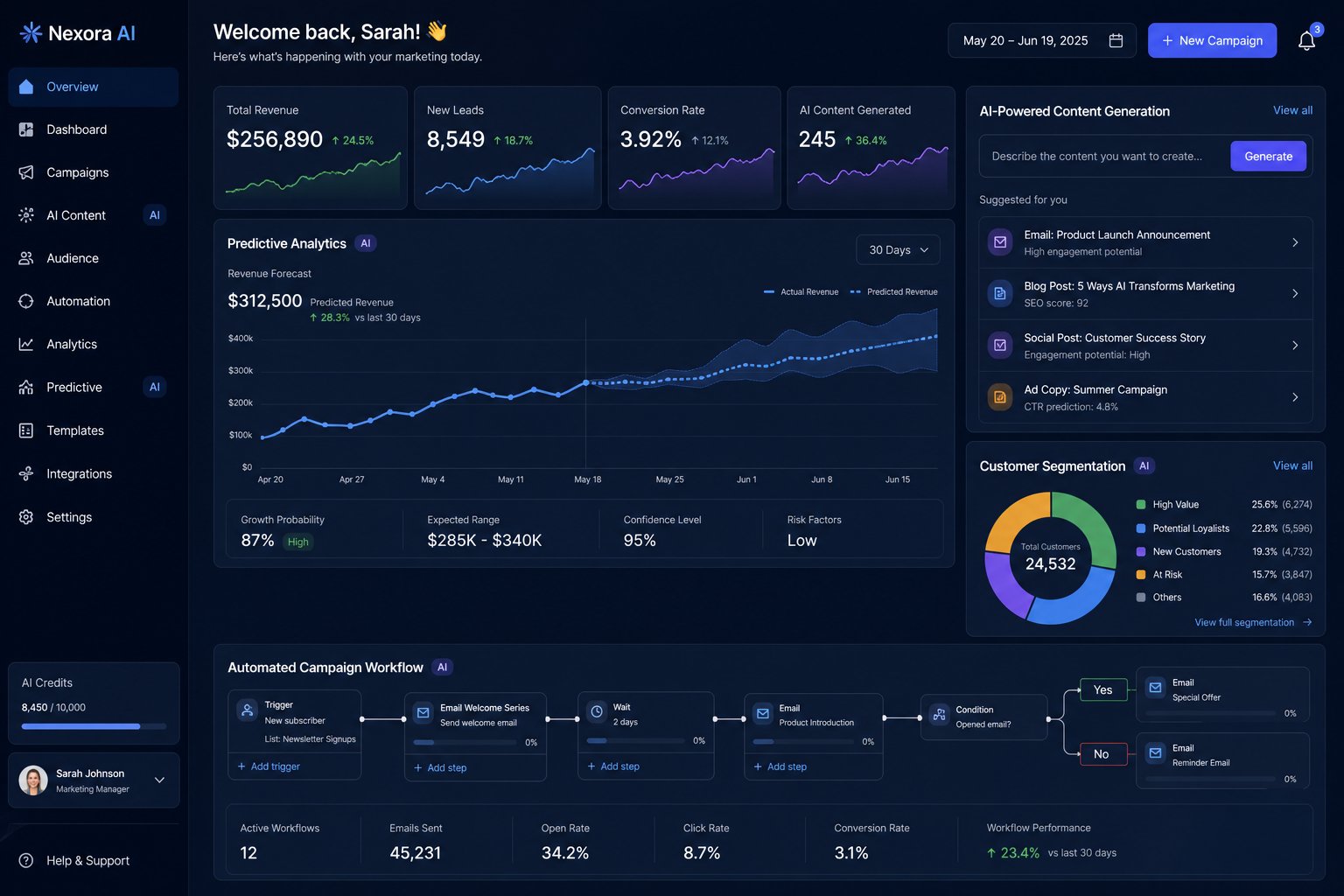
AI-driven predictive analytics can forecast customer behavior with remarkable accuracy. By analyzing historical data, browsing patterns, and engagement metrics, AI systems can predict which customers are most likely to convert, churn, or make repeat purchases.
Key applications include:
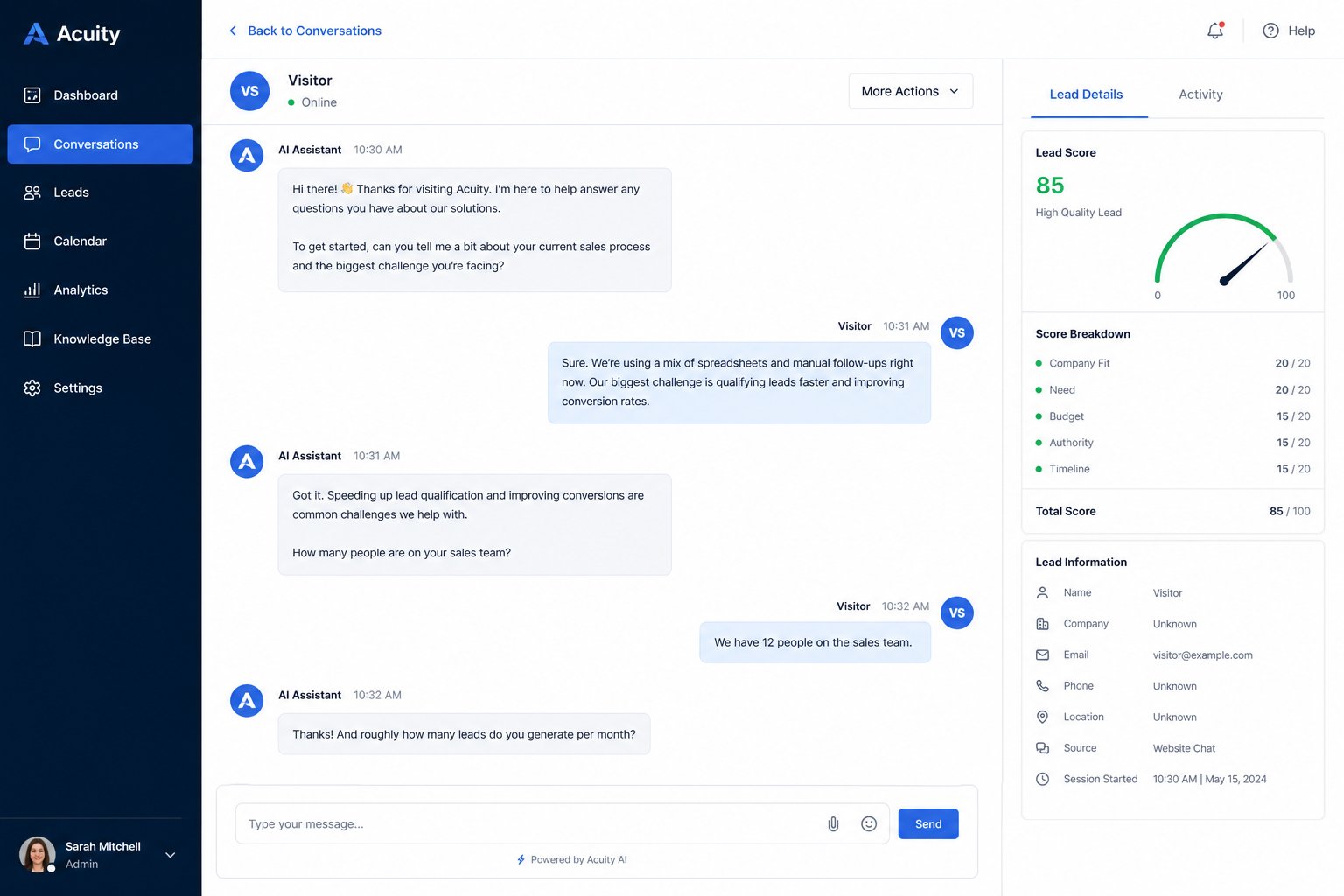
- Lead Scoring: AI assigns scores to leads based on their likelihood to convert, helping sales teams prioritize their efforts
- Churn Prediction: Identify at-risk customers before they leave and trigger retention campaigns automatically
- Lifetime Value Prediction: Forecast the long-term value of each customer to optimize acquisition spending
- Demand Forecasting: Predict product demand to optimize inventory and marketing spend
3. AI-Enhanced Advertising and PPC
Google, Meta, and other advertising platforms now use AI extensively to optimize ad delivery, bidding, and targeting. Smart campaigns powered by AI consistently outperform manually managed campaigns across key metrics.
- Automated Bidding: AI adjusts bids in real-time based on conversion probability, competition, and budget constraints
- Audience Expansion: AI identifies high-value audience segments you might have missed
- Creative Optimization: AI tests thousands of ad variations to find the best-performing combinations
- Performance Max Campaigns: Google’s AI-driven campaign type that automatically optimizes across all channels
4. Chatbots and Conversational AI
Modern AI chatbots have evolved far beyond simple FAQ responses. Today’s conversational AI can handle complex customer interactions, qualify leads, book appointments, and even close sales—all while providing a natural, human-like experience.
Businesses using AI chatbots report:
- 70% reduction in customer service response times
- 45% increase in lead qualification efficiency
- 30% boost in after-hours conversion rates
- 60% decrease in support ticket volume for common issues
5. Hyper-Personalization at Scale
AI enables businesses to deliver truly personalized experiences to millions of customers simultaneously. From product recommendations to email content to website layouts, every touchpoint can be customized based on individual user data.
- Dynamic Website Content: Pages that change based on visitor behavior, source, and history
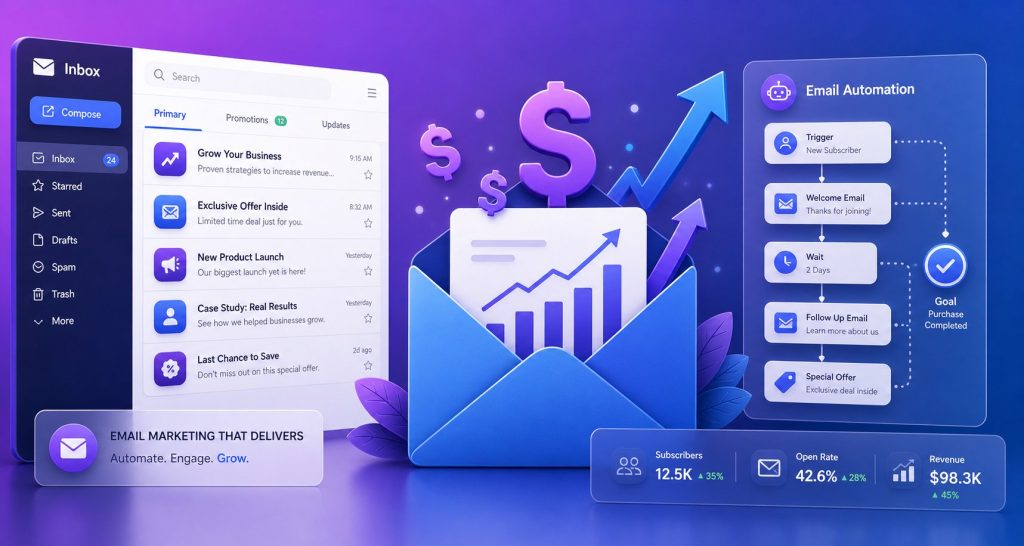
- Personalized Email Sequences: Emails triggered by specific behaviors with content tailored to individual preferences
- Product Recommendations: AI-powered suggestions that improve with every interaction
- Custom Landing Pages: Automatically generated landing pages optimized for specific audience segments
Implementing AI in Your Marketing Strategy
Step 1: Audit Your Current Marketing Stack
Before adding AI tools, evaluate your current marketing technology stack. Identify gaps, redundancies, and opportunities where AI could have the most significant impact. Focus on areas where you’re spending the most time with the least return.
Step 2: Start with Quick Wins
Don’t try to implement everything at once. Start with AI applications that deliver fast results:
- AI-powered email subject line optimization
- Automated social media scheduling and content suggestions
- Chatbot implementation for lead qualification
- AI-enhanced Google Ads bidding strategies
Step 3: Build a Data Foundation
AI is only as good as the data it works with. Invest in proper data collection, storage, and management before implementing advanced AI features. Ensure you have clean, organized data across all customer touchpoints.
Step 4: Measure and Iterate
Set clear KPIs for every AI implementation. Track metrics like conversion rate, cost per acquisition, customer lifetime value, and engagement rates. Use this data to refine your AI strategies continuously.
AI Marketing Tools Every Business Should Consider in 2026
| Category | Top Tools | Best For |
|---|---|---|
| Content Creation | ChatGPT, Jasper, Copy.ai | Blog posts, ad copy, emails |
| SEO | Semrush, Ahrefs, SurferSEO | Keyword research, content optimization |
| Advertising | Google Performance Max, Meta Advantage+ | Automated ad optimization |
| Email Marketing | HubSpot, Mailchimp, ActiveCampaign | Personalization and automation |
| Analytics | Google Analytics 4, Mixpanel | Predictive analytics and insights |
| Chatbots | Drift, Intercom, ManyChat | Lead qualification and support |
The Future of AI in Digital Marketing
Looking ahead, several AI trends will shape the future of digital marketing:
- Generative Engine Optimization (GEO): Optimizing content not just for search engines, but for AI systems like ChatGPT, Perplexity, and Google AI Overviews
- Agentic AI: AI agents that can autonomously execute marketing tasks, from campaign creation to budget allocation
- Voice and Visual Search: AI-powered optimization for voice assistants and visual search platforms
- Privacy-First AI: AI systems that deliver personalization while respecting user privacy and data protection regulations
Partner with an AI-Powered Digital Marketing Agency
Implementing AI in your marketing strategy requires expertise, the right tools, and a data-driven approach. At Unified Management Consulting, we combine cutting-edge AI technology with proven marketing strategies to deliver exceptional results for businesses across the United States.
Whether you need digital marketing services that leverage the latest AI tools or a website built for the AI era, our team has the expertise to help you succeed.
Frequently Asked Questions
Is AI replacing digital marketers?
No. AI is augmenting marketers, not replacing them. The most successful marketing teams use AI to handle repetitive tasks and data analysis while humans focus on strategy, creativity, and relationship building.
How much does AI marketing cost?
AI marketing tools range from free to thousands of dollars per month. Many businesses see positive ROI within the first month of implementation through improved efficiency and higher conversion rates.
Can small businesses benefit from AI marketing?
Absolutely. Many AI tools are affordable and specifically designed for small businesses. Even basic implementations like AI-powered email optimization or chatbots can deliver significant results.
What’s the best AI tool for beginners?
Start with tools that integrate with platforms you already use. Google’s built-in AI features in Ads and Analytics are excellent starting points, along with ChatGPT for content creation.